Hosseini Beinabaj Seyyed Mahdi, Heydariyan Hossein, Mohammad Aleii Hamed, Hosseinzadeh Ali
Department of Environmental Engineering, Faculty of Engineering, University of Tehran, Tehran, Iran.
Department of Environmental Science and Engineering, West Tehran Branch, Islamic Azad University, Tehran, Iran.
Heliyon. 2023 Jan 16;9(1):e13017. doi: 10.1016/j.heliyon.2023.e13017. eCollection 2023 Jan.
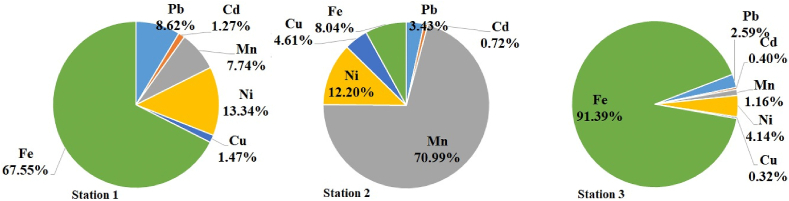
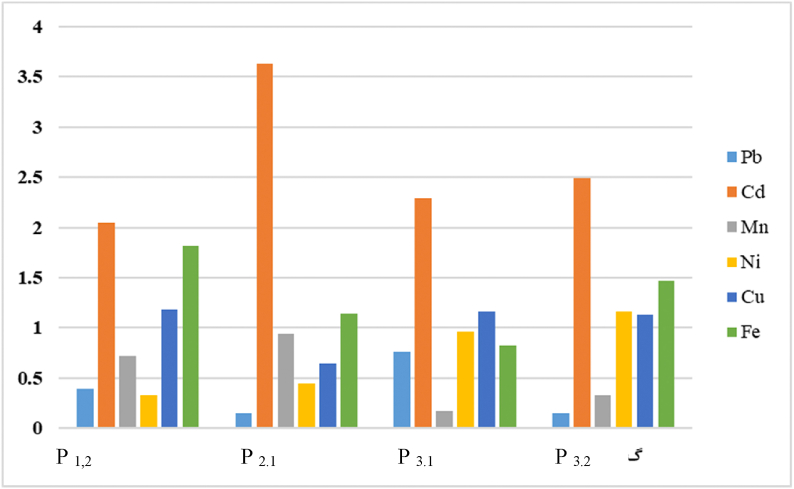
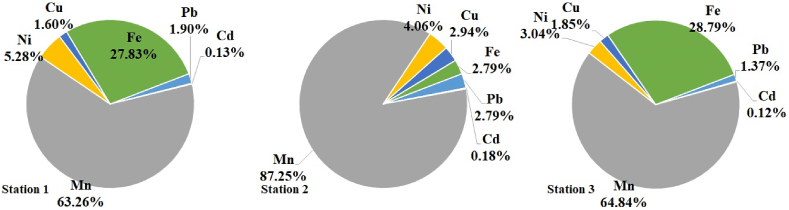
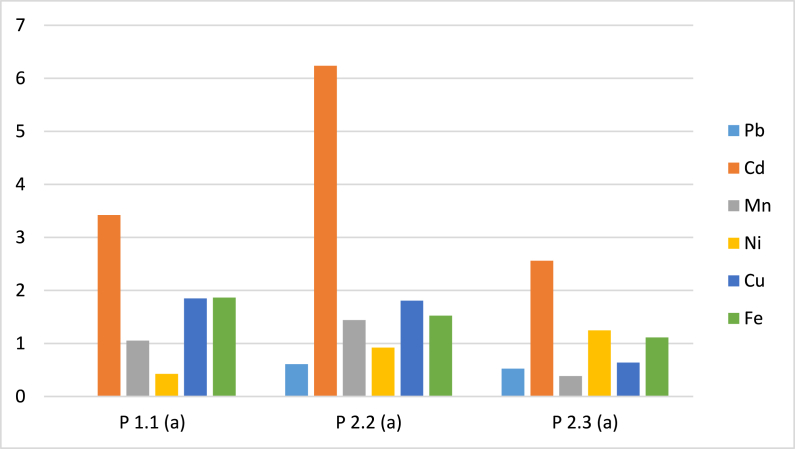
Heavy metals are one of the important pollutants in landfill leachate. Plants and soil near the landfill may be contaminated by leachate. In this study, by evaluating the heavy metals in the leachate of two landfills and the soil and plants near them, the amount of pollution caused by the leachate in the environment around the landfills in Tehran was investigated. This study was conducted in three stations, soil and plant samples were prepared according to a specific protocol. Also, three indexes including PI, PI, and BF were used to interpret the results. The results showed that the concentration of total metals in the old landfill leachate and new landfill leachate was only 12% different and was 24.13 mg/L on average. In the new landfill leachate, iron had the highest concentration among metals, which was 22.94 and 17.01 mg/L in two samples. In the old landfill leachate, the concentration of manganese was 15.71 mg/L, which was the highest among the studied metals. The concentration of heavy metals in the soil of the old landfill was 24.6% lower than the concentration of metals in the soil of the new landfill. In all samples, the highest metal concentration in the soil was related to manganese, which was 33.65-34.14 mg/L. Cadmium had the lowest concentration in soil compared to other metals. The concentration of total metals in the studied plants was 29-60 ppm. The PInemerow for studied stations was 0.1711, 0.1708, and 0.1463. The highest PI in the case of lead was observed at the second station equal to 0.54. The highest BF in case of Atriplex Undulata was more than 6 and related to cadmium, while the highest BF in case of Atriplex Cinearea was more than 3.5 related to cadmium. This study showed that the soil and plants of the landfill were contaminated with heavy metals under the influence of leachate, and the ability of plants to uptake and accumulate metals can be used to manage soil pollution near the landfill.
重金属是垃圾渗滤液中的重要污染物之一。垃圾填埋场附近的植物和土壤可能会被渗滤液污染。在本研究中,通过评估两个垃圾填埋场渗滤液以及附近土壤和植物中的重金属,调查了德黑兰垃圾填埋场周围环境中渗滤液造成的污染程度。本研究在三个站点进行,土壤和植物样本按照特定方案采集。此外,还使用了包括PI、PI和BF在内的三个指标来解释结果。结果表明,旧垃圾填埋场渗滤液和新垃圾填埋场渗滤液中总金属浓度仅相差12%,平均为24.13毫克/升。在新垃圾填埋场渗滤液中,铁在金属中浓度最高,在两个样本中分别为22.94毫克/升和17.01毫克/升。在旧垃圾填埋场渗滤液中,锰的浓度为15.71毫克/升,在所研究的金属中最高。旧垃圾填埋场土壤中重金属浓度比新垃圾填埋场土壤中的金属浓度低24.6%。在所有样本中,土壤中金属浓度最高的是锰,为33.65 - 34.14毫克/升。与其他金属相比,镉在土壤中的浓度最低。所研究植物中总金属浓度为29 - 60 ppm。所研究站点的PInemerow分别为0.1711、0.1708和0.1463。在第二个站点观察到铅的PI最高,为0.54。对于波状滨藜,最高的BF超过6且与镉有关,而对于灰绿滨藜,最高的BF超过3.5且与镉有关。本研究表明,垃圾填埋场的土壤和植物在渗滤液的影响下受到重金属污染,植物吸收和积累金属的能力可用于管理垃圾填埋场附近的土壤污染。