Department of Sociology and Anthropology, Utah State University, Logan, UT, USA.
Department of Business Administration, North East University Bangladesh, Sylhet, Bangladesh.
Hum Vaccin Immunother. 2023 Dec 31;19(1):2172923. doi: 10.1080/21645515.2023.2172923. Epub 2023 Feb 6.
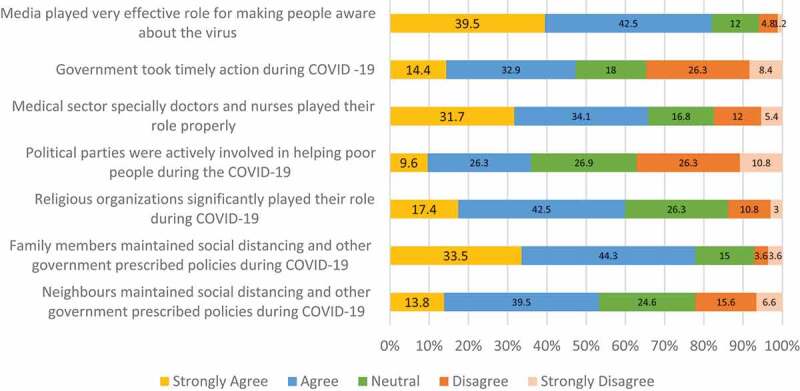
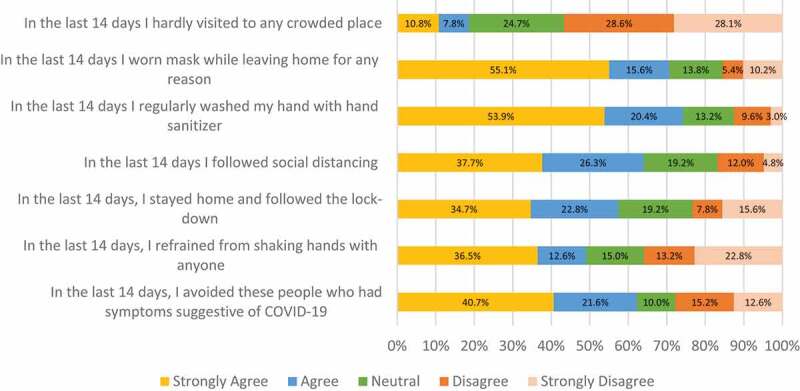
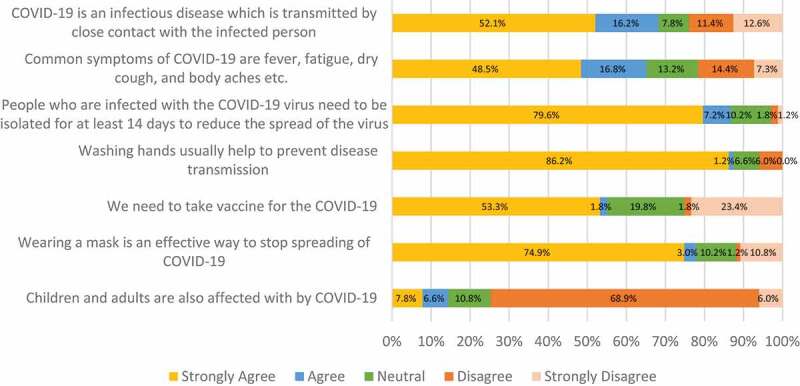
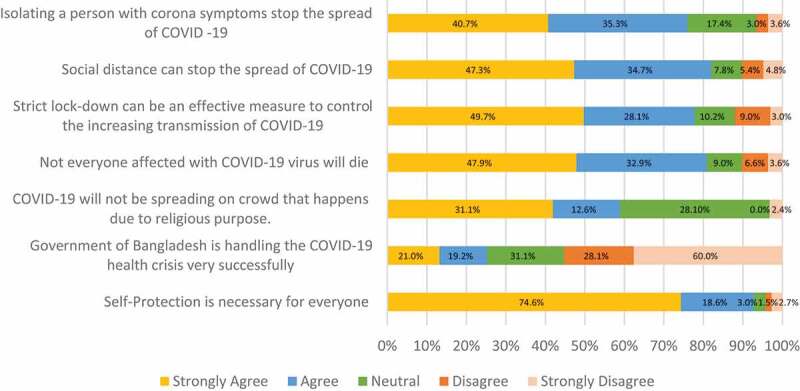
The global expansion of the COVID-19 outbreak is one of the worst disasters the world has faced in recent decades. This study explored various factors of knowledge, attitude, and practice regarding COVID-19 among Bangladeshi undergraduate university students. In addition, we also look at how COVID-19 based knowledge, attitude, and practice influence each other. Using a random sampling technique and a self-administered structured questionnaire survey, this study collected data from 167 private university students in Bangladesh from 1st October to 30th October 2020. Data were analyzed using descriptive statistics (including frequencies, percentages, and means), binary logistic regression, bivariate regression analysis, and factor analysis. The findings suggest that most of the students learned about COVID-19 from various sources, including news media (TV, radio, newspapers, etc.), international organizations (WHO, UN, etc.), various government programs, or from their friends, family members, or neighbors. Most of the students were concerned about becoming sick, keeping social distance, and family members' job insecurity, followed by the university shutdown and the subsequent quarantine. Many students believe Bangladesh's media, government, medical sector, and religious organizations played a significant role during COVID-19. Binary logistic regression demonstrates that students' gender, department, and residency significantly explained their COVID-19 knowledge. In addition, students' attitudes significantly vary with their religion and place of residence. Students' departments and semesters found significant in explaining their practice regarding COVID-19. Moreover, factor analysis results also identified several crucial factors in explaining students' overall knowledge, attitude, and practice of COVID-19. Finally, we found a statistically significant relationship between knowledge, attitude, and practice.
新冠疫情的全球大流行是近几十年来全球面临的最严重灾难之一。本研究探讨了孟加拉国本科大学生对新冠疫情的知识、态度和实践的各种因素。此外,我们还研究了新冠疫情相关知识、态度和实践之间的相互影响。本研究采用随机抽样技术和自填式结构化问卷调查,于 2020 年 10 月 1 日至 30 日期间,从孟加拉国的 167 名私立大学学生中收集了数据。数据使用描述性统计(包括频率、百分比和平均值)、二元逻辑回归、双变量回归分析和因子分析进行分析。研究结果表明,大多数学生通过多种途径了解新冠疫情,包括新闻媒体(电视、广播、报纸等)、国际组织(世卫组织、联合国等)、各种政府计划或从朋友、家人或邻居那里了解到相关信息。大多数学生担心生病、保持社交距离和家人的工作不稳定,其次是大学关闭和随后的隔离。许多学生认为孟加拉国的媒体、政府、医疗部门和宗教组织在新冠疫情期间发挥了重要作用。二元逻辑回归表明,学生的性别、专业和居住地点对其新冠疫情知识有显著影响。此外,学生的态度因宗教信仰和居住地的不同而存在显著差异。学生的专业和学期对其新冠疫情实践有显著影响。此外,因子分析结果还确定了一些关键因素,可以解释学生对新冠疫情的整体知识、态度和实践。最后,我们发现知识、态度和实践之间存在统计学上显著的关系。