Department of Radiation Oncology, ACTREC/TMH, Tata Memorial Centre, Homi Bhabha National Institute (HBNI), Mumbai, Maharashtra 410210, India.
Department of Neuro-Oncology Laboratory, ACTREC/TMH, Tata Memorial Centre, Homi Bhabha National Institute (HBNI), Mumbai, Maharashtra 410210, India.
Oncotarget. 2023 Feb 7;14:105-110. doi: 10.18632/oncotarget.28360.
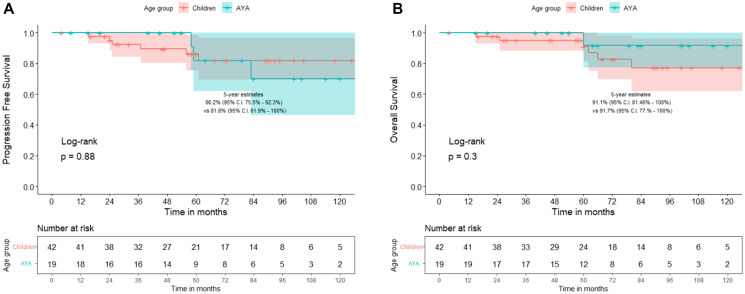
Novel biological insights have established that medulloblastoma is a heterogenous disease comprising four broad molecular subgroups - WNT, SHH, Group 3, and Group 4 respectively, resulting in the incorporation of molecular/genetic information in 5th edition of WHO classification and contemporary risk-stratification. Concerns regarding therapy-related late toxicity in long-term survivors have led to systematic attempts at treatment de-intensification in good-risk medulloblastoma. Given the excellent survival (>90%) of WNT-pathway medulloblastoma, prospective clinical trials have focused on optimization of therapy to balance survival versus quality of survival. The currently accepted definition of low-risk WNT-pathway medulloblastoma includes children <16 years of age with residual tumour <1.5 cm and no evidence of metastases. This systematically excludes adolescents and young adults who have been perceived to have worse outcomes. We have previously reported long-term survival of our adolescent and young adult cohort that were largely comparable to childhood medulloblastoma. We now report on molecularly characterized WNT-subgroup patients treated between 2004-2020 with risk-stratified multi-modality therapy to identify differences between childhood (<15 years) versus adolescent and young adults (>15 years). Despite modest differences in disease status at presentation and treatment modality, there were no significant differences in patterns of failure or survival between childhood versus adolescent and young adult WNT-pathway medulloblastoma. Two de-intensification trials in low-risk WNT-pathway medulloblastoma - first testing omission of upfront craniospinal irradiation and second a primary chemotherapy approach after surgery - had to be terminated prematurely due to unacceptably high relapse rates suggesting that craniospinal irradiation remains an integral component of treatment. The presence of mutations and gains have recently been reported as independent negative prognostic factors in a multi-institutional cohort of WNT-pathway medulloblastoma raising questions on eligibility of such patients for de-escalation trials. The definition of low-risk WNT-pathway medulloblastoma may need to be refined in light of recent clinical data and newer biological information.
新的生物学研究结果表明,髓母细胞瘤是一种异质性疾病,包含四个主要的分子亚型 - WNT、SHH、Group 3 和 Group 4,这导致了 2021 年版 WHO 分类和当代风险分层中纳入了分子/遗传信息。由于长期幸存者的治疗相关迟发性毒性问题,在低危髓母细胞瘤中系统性地尝试了治疗强度降低。鉴于 WNT 通路髓母细胞瘤的出色生存率(>90%),前瞻性临床试验集中在优化治疗方案,以平衡生存率和生存质量。目前公认的低危 WNT 通路髓母细胞瘤的定义包括肿瘤残留<1.5cm 且无转移证据的<16 岁儿童。这一标准系统地排除了青少年和青年患者,因为他们被认为预后更差。我们之前报告了我们的青少年和青年患者队列的长期生存情况,这些患者与儿童髓母细胞瘤的生存情况大致相当。我们现在报告了 2004 年至 2020 年间接受风险分层多模式治疗的分子特征明确的 WNT 亚组患者,以确定儿童(<15 岁)与青少年和青年(>15 岁)患者之间的差异。尽管在疾病表现和治疗方式上存在适度差异,但儿童与青少年和青年 WNT 通路髓母细胞瘤之间的失败模式或生存无显著差异。两项低危 WNT 通路髓母细胞瘤的减量化疗试验 - 首次测试是否可以省略 upfront craniospinal irradiation,第二次测试手术后是否可以直接进行化疗 - 由于复发率过高而不得不提前终止,这表明 craniospinal irradiation 仍然是治疗的重要组成部分。最近在多机构 WNT 通路髓母细胞瘤队列中报道了 突变和 获得是独立的负预后因素,这引发了对这些患者是否有资格参加减量化疗试验的质疑。鉴于最近的临床数据和新的生物学信息,低危 WNT 通路髓母细胞瘤的定义可能需要进一步细化。