Department of Hand Surgery, Union Hospital, Tongji Medical College, Huazhong University of Science and Technology, Wuhan, 430022, China.
Drug Deliv Transl Res. 2023 Sep;13(9):2286-2296. doi: 10.1007/s13346-023-01306-x. Epub 2023 Feb 7.
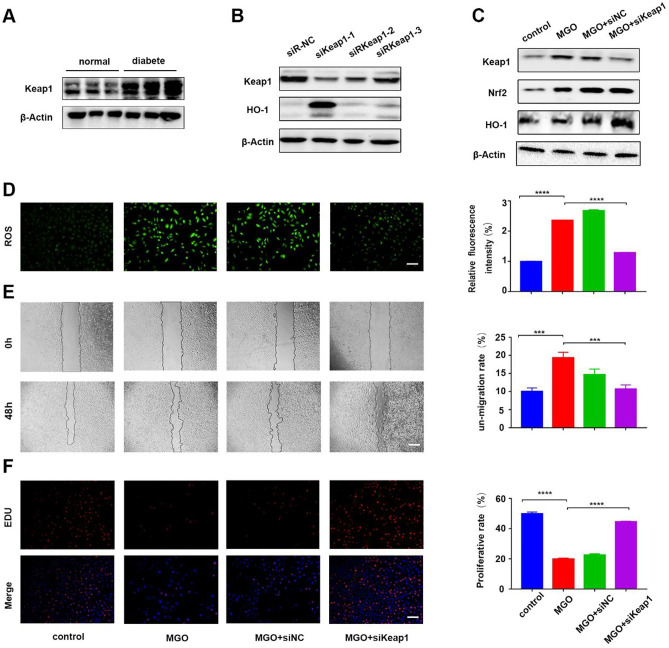
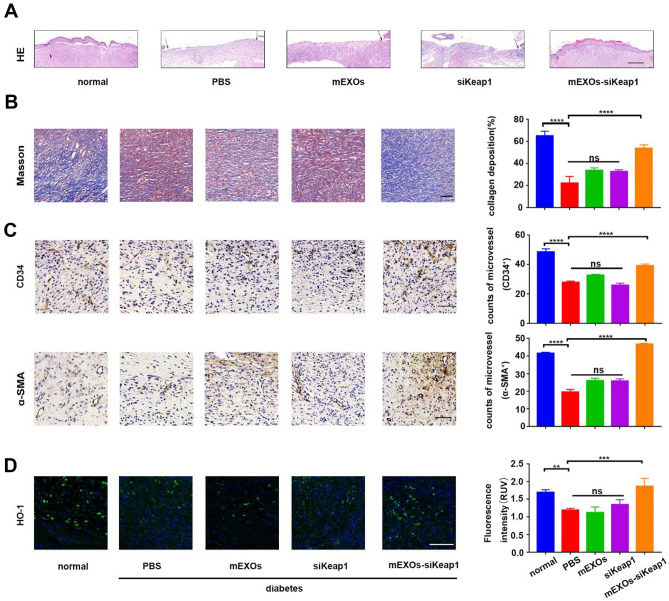
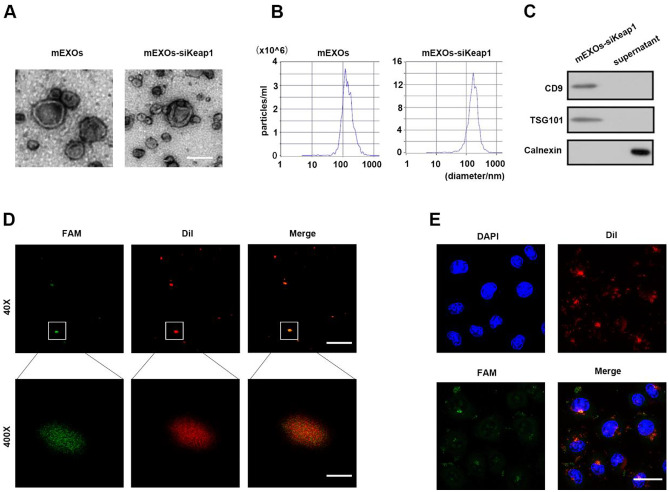
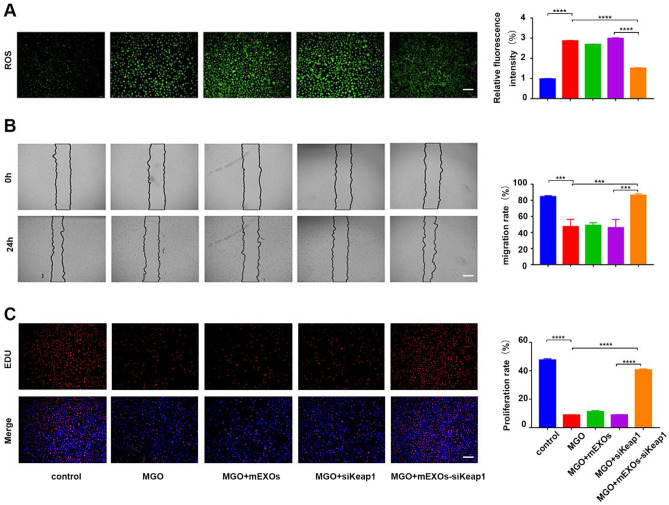
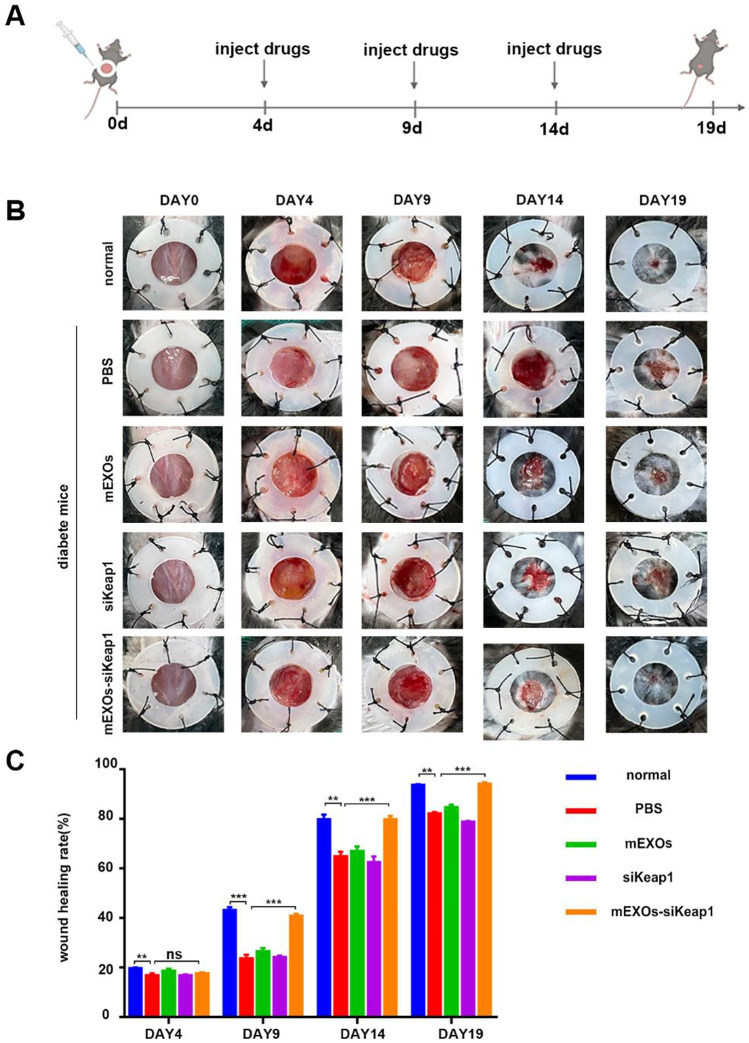
Diabetic wounds are a serious complication of diabetes mellitus (DM) that can lead to persistent infection, amputation, and even death. Prolonged oxidative stress has been widely recognized as a major instigator in the development of diabetic wounds; therefore, oxidative stress is considered a promising therapeutic target. In the present study, Keap1/Nrf2 signaling was confirmed to be activated in streptozotocin (STZ)-induced diabetic mice and methylglyoxal (MGO)-treated human umbilical vein endothelial cells (HUVECs). Knockdown of Keap1 by siRNA reversed the increase in Keap1 levels, promoted the nuclear translocation of Nrf2, and increased the expression of HO-1, an antioxidant protein. To explore therapeutic delivery strategies, milk-derived exosomes (mEXOs) were developed as a novel, efficient, and non-toxic siRNA carrier. SiRNA-Keap1 (siKeap1) was loaded into mEXOs by sonication, and the obtained mEXOs-siKeap1 were found to promote HUVEC proliferation and migration while relieving oxidative stress in MGO-treated HUVECs. Meanwhile, in a mouse model of diabetic wounds, injection of mEXOs-siKeap1 significantly accelerated diabetic wound healing with enhanced collagen formation and neovascularization. Taken together, these data support the development of Keap1 knockdown as a potential therapeutic strategy for diabetic wounds and demonstrated the feasibility of mEXOs as a scalable, biocompatible, and cost-effective siRNA delivery system. The therapeutic effect of siKeap1-loaded mEXOs on diabetic wound healing was assessed. First, we found that the expression of Keap1 was upregulated in the wounds of diabetic mice and in human umbilical vein endothelial cells (HUVECs) pretreated with methylglyoxal (MGO). Next, we extracted exosomes from raw milk by differential centrifugation and loaded siKeap1 into milk-derived exosomes by sonication. The in vitro application of the synthetic complex (mEXOs-siKeap1) was found to increase the nuclear localization of Nrf2 and the expression of the antioxidant protein HO-1, thus reversing oxidative stress. Furthermore, in vivo mEXOs-siKeap1 administration significantly accelerated the healing rate of diabetic wounds (Scheme 1). Scheme 1 Schematic diagram. A Synthesis of mEXOs-siKeap1 complex. B Mechanism of mEXOs-siKeap1 in vitro. C The treatment effect of mEXOs-siKeap1 on an in vivo mouse model of diabetic wounds.
糖尿病伤口是糖尿病(DM)的一种严重并发症,可导致持续感染、截肢,甚至死亡。长期氧化应激被广泛认为是糖尿病伤口发展的主要诱因;因此,氧化应激被认为是一种有前途的治疗靶点。在本研究中,证实了链脲佐菌素(STZ)诱导的糖尿病小鼠和甲基乙二醛(MGO)处理的人脐静脉内皮细胞(HUVEC)中 Keap1/Nrf2 信号被激活。通过 siRNA 敲低 Keap1 逆转了 Keap1 水平的增加,促进了 Nrf2 的核易位,并增加了抗氧化蛋白 HO-1 的表达。为了探索治疗性递药策略,开发了乳源外泌体(mEXOs)作为一种新型、高效、无毒的 siRNA 载体。通过超声处理将 siRNA-Keap1(siKeap1)加载到 mEXOs 中,发现 mEXOs-siKeap1 可促进 MGO 处理的 HUVEC 增殖和迁移,同时缓解氧化应激。同时,在糖尿病伤口模型的小鼠中,注射 mEXOs-siKeap1 可显著加速糖尿病伤口愈合,增强胶原形成和新生血管形成。总之,这些数据支持将 Keap1 敲低作为糖尿病伤口的一种潜在治疗策略,并证明了 mEXOs 作为一种可扩展、生物相容和具有成本效益的 siRNA 递送系统的可行性。评估了负载 siKeap1 的 mEXOs 对糖尿病伤口愈合的治疗效果。首先,我们发现糖尿病小鼠伤口和预先用甲基乙二醛(MGO)处理的人脐静脉内皮细胞(HUVEC)中 Keap1 的表达上调。接下来,我们通过差速离心从原乳中提取外泌体,并通过超声处理将 siKeap1 加载到乳源外泌体中。体外应用合成复合物(mEXOs-siKeap1)可增加 Nrf2 的核定位和抗氧化蛋白 HO-1 的表达,从而逆转氧化应激。此外,体内 mEXOs-siKeap1 给药可显著加快糖尿病伤口的愈合速度(方案 1)。方案 1 示意图。A mEXOs-siKeap1 复合物的合成。B mEXOs-siKeap1 在体外的作用机制。C mEXOs-siKeap1 对糖尿病小鼠模型体内的治疗效果。