Department of Anesthesiology and Pain Medicine, Hyperbaric Medicine Unit, The Ottawa Hospital, Ottawa, Canada.
Department of Innovation in Medical Education, The Ottawa Hospital, Ottawa, Canada.
PLoS One. 2023 Feb 7;18(2):e0281406. doi: 10.1371/journal.pone.0281406. eCollection 2023.
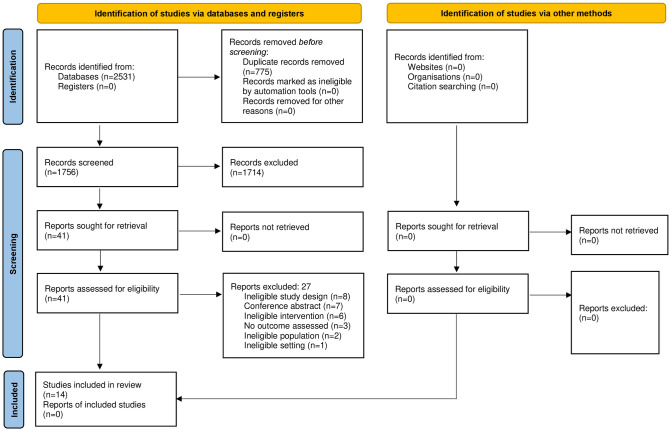
Physician wellness is critical for patient safety and quality of care. Coaching has been successfully and widely applied across many industries to enhance well-being but has only recently been considered for physicians. This review aimed to summarize the existing evidence on the effect of coaching by trained coaches on physician well-being, distress and burnout. MEDLINE, Embase, ERIC, PsycINFO and Web of Science were searched without language restrictions to December 21, 2022. Studies of any design were included if they involved physicians of any specialty undergoing coaching by trained coaches and assessed at least one measure along the wellness continuum. Pairs of independent reviewers determined reference eligibility. Risk of bias was assessed using the Cochrane Risk of Bias Tools for Randomized Controlled Trials (RCTs) and for Non-randomized Studies of Interventions (ROBINS-I). Meta-analysis was not possible due to heterogeneity in study design and outcome measures as well as inconsistent reporting. The search retrieved 2531 references, of which 14 were included (5 RCTs, 2 non-randomized controlled studies, 4 before-and-after studies, 2 mixed-methods studies, 1 qualitative study). There were 1099 participants across all included studies. Risk of bias was moderate or serious for non-RCTs, while the 5 RCTs were of lower risk. All quantitative studies reported effectiveness of coaching for at least one outcome assessed. The included qualitative study reported a perceived positive impact of coaching by participants. Evidence from available RCTs suggests coaching for physicians can improve well-being and reduce distress/burnout. Non-randomized interventional studies have similar findings but face many limitations. Consistent reporting and standardized outcome measures are needed.
医生的健康对于患者安全和医疗质量至关重要。教练在许多行业中已成功且广泛应用,以提高幸福感,但直到最近才被考虑用于医生。本综述旨在总结现有关于经过培训的教练对医生幸福感、苦恼和倦怠的影响的证据。检索了 MEDLINE、Embase、ERIC、PsycINFO 和 Web of Science,无语言限制,检索时间截至 2022 年 12 月 21 日。如果研究涉及任何专业的医生,接受经过培训的教练的教练,并评估了至少一个沿着健康连续体的措施,则纳入任何设计的研究。独立的两位评审员确定参考文献的资格。使用 Cochrane 随机对照试验(RCT)和非随机干预研究(ROBINS-I)风险偏倚工具评估风险偏倚。由于研究设计和结果测量的异质性以及报告不一致,因此无法进行荟萃分析。检索到 2531 条参考文献,其中 14 条被纳入(5 项 RCT、2 项非随机对照研究、4 项前后研究、2 项混合方法研究、1 项定性研究)。所有纳入的研究中共有 1099 名参与者。非 RCT 的风险偏倚为中度或严重,而 5 项 RCT 的风险较低。所有定量研究都报告了教练对至少一项评估结果的有效性。纳入的定性研究报告了参与者对教练的积极影响。现有 RCT 的证据表明,针对医生的教练可以提高幸福感并减少苦恼/倦怠。非随机干预研究有类似的发现,但面临许多限制。需要一致的报告和标准化的结果测量。