Department of Physical Therapy, College of Health Sciences, University of Kentucky, Lexington, Kentucky, USA.
Center for Muscle Biology, University of Kentucky, Lexington, Kentucky, USA.
Physiol Rep. 2023 Feb;11(3):e15596. doi: 10.14814/phy2.15596.
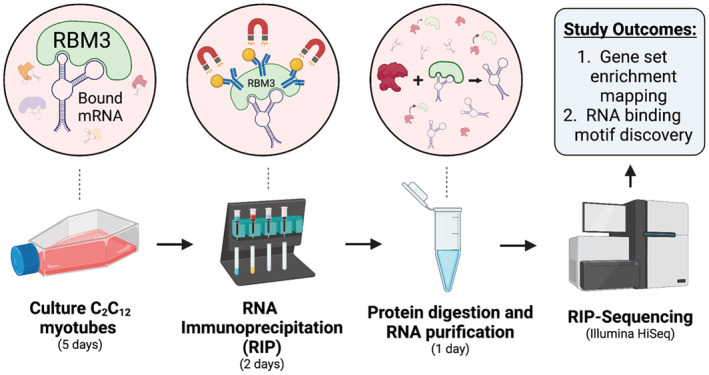
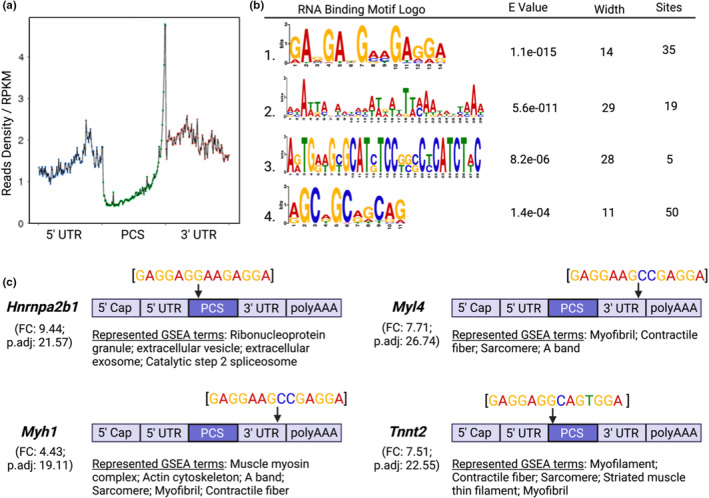
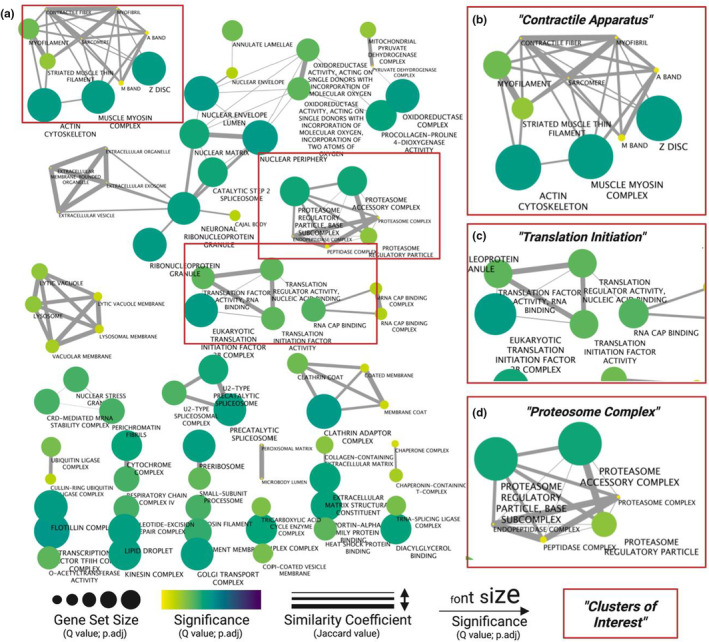
Post-transcriptional regulation of gene expression represents a critical regulatory step in the production of a functional proteome. Elevated expression of post-transcriptional regulator RNA binding motif protein 3 (RBM3), an RNA binding protein in the cold-shock family, is positively correlated with skeletal muscle growth in adult mice. However, mechanisms through which RBM3 exerts its effects are largely unknown. The purpose of this study was to perform RNA immunoprecipitation followed by RNA sequencing (RIP-seq) and apply a network science approach to understand biological processes (BPs) most associated with RBM3-bound mRNAs. In addition, through nucleotide-sequence-scanning of enriched transcripts, we predicted the motif for skeletal muscle RBM3 binding. Gene set enrichment analysis followed by enrichment mapping of RBM3-bound transcripts (fold change >3; p.adj <0.01) revealed significant enrichment of BPs associated with "Contractile apparatus," "Translation initiation," and "Proteosome complex." Clusters were driven largely by enrichment of Myh1 (FC: 4.43), Eif4b (FC: 5.03), and Trim63 (FC: 5.84), respectively. Motif scanning of enriched sequences revealed a discrete 14 nucleotide-wide motif found most prominently at the junction between the protein coding region's termination sequence and the start of the 3' untranslated region (UTR; E-Value: 1.1 e ). Proof of concept investigation of motif location along enriched transcripts Myh1 and Myl4 revealed 3' UTR binding, suggesting RBM3 involvement in transcript half-life regulation. Together, these results demonstrate the potential influence of RBM3 in reshaping the skeletal muscle proteome through post-transcriptional regulation of mRNAs crucial to muscle adaptations.
基因表达的转录后调控是产生功能性蛋白质组的关键调控步骤。RNA 结合基序蛋白 3(RBM3)是冷休克家族中的一种 RNA 结合蛋白,其在成年小鼠中的表达升高与骨骼肌生长呈正相关。然而,RBM3 发挥作用的机制在很大程度上尚不清楚。本研究旨在进行 RNA 免疫沉淀结合 RNA 测序(RIP-seq),并应用网络科学方法来了解与 RBM3 结合的 mRNA 最相关的生物学过程 (BP)。此外,通过对富集转录本进行核苷酸序列扫描,我们预测了骨骼肌 RBM3 结合的基序。对 RBM3 结合转录本进行基因集富集分析(fold change >3;p.adj <0.01),随后进行富集映射,发现与“收缩器”、“翻译起始”和“蛋白酶体复合物”相关的 BP 显著富集。聚类主要由 Myh1(FC: 4.43)、Eif4b(FC: 5.03)和 Trim63(FC: 5.84)的富集驱动。富集序列的基序扫描显示了一个离散的 14 个核苷酸宽的基序,该基序主要出现在蛋白编码区终止序列和 3'非翻译区 (UTR) 起始之间的交界处(E-Value: 1.1e)。对富集的 Myh1 和 Myl4 转录本中基序位置的概念验证研究表明,UTR 结合,这表明 RBM3 参与调节转录本半衰期。总之,这些结果表明,RBM3 通过对肌肉适应至关重要的 mRNA 的转录后调控,有可能重塑骨骼肌蛋白质组。