Kibesa Saraphina J, Kitua Yona W, Kitua Daniel W
Institute of Rural Development Planning, Dodoma, Tanzania.
University of Iringa, Iringa, Tanzania.
East Afr Health Res J. 2022;6(2):155-161. doi: 10.24248/eahrj.v6i2.701. Epub 2022 Nov 30.
Antenatal Care (ANC) coverage is a key determinant of maternal and perinatal morbidity and mortality. Low utilization of ANC services and high Maternal Mortality Ratio (MMR) have been reported in the East African Region. Due to the paucity of information on the determinants of ANC utilization in this region, we conducted the study aiming at exploring factors influencing the utilization of ANC services. We further sought opinions that will aid the improvement of utilization of ANC services.
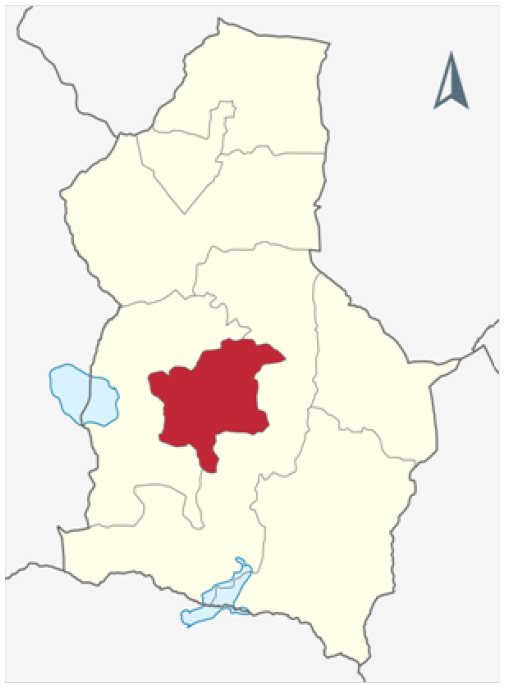
A triangulation mixed-method study was conducted in August 2021 among forty-five women and ten healthcare providers in a selected health center located in Dodoma Urban District, Tanzania. Information was gathered using semi-structured questionnaires and in-depth interviews. Quantitative data were analysed using IBM SPSS Statistics. The relationship between the outcome variable and the predictor variables was assessed by either the Chi-square test or Fisher's exact test and a was considered statistically significant. Manual thematic analysis was used for qualitative data after thorough transcript and documentary reviews.
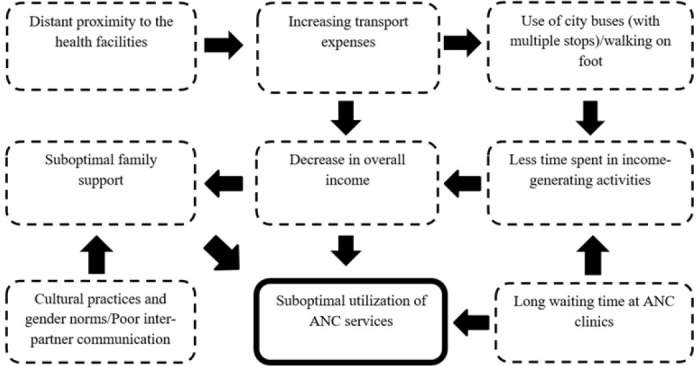
Almost half (48.9%) of the interviewed women attended ANC services at least once during their last pregnancy. Women who reported having a low income and those who spent more than an hour reaching the health facility had poor ANC attendance (). The main themed factors that negatively impacted ANC utilization included cultural practices and gender norms, poor communication between partners, and long waiting time at the ANC clinics.
Utilization of ANC services was found to be low among women living in Dodoma Urban District. ANC attendance varied with the level of income and the time women spent reachingt the health facility. Cultural practices and gender norms, communication between spouses, and service waiting time were mentioned to influence ANC attendance.
Public and private sectors should invest in maternal health, provide affordable services and formulate strategies to improve the accessibility of ANC services. Interventions should target women of low socio-economic class and those living in remote areas. Moreover, schemes to address the sociocultural barriers to ANC utilization need to be formulated.
产前保健(ANC)覆盖率是孕产妇和围产期发病率及死亡率的关键决定因素。据报道,东非地区产前保健服务利用率较低,孕产妇死亡率(MMR)较高。由于该地区缺乏关于产前保健服务利用决定因素的信息,我们开展了这项研究,旨在探索影响产前保健服务利用的因素。我们还征求了有助于提高产前保健服务利用率的意见。
2021年8月,在坦桑尼亚多多马市区一家选定的健康中心,对45名妇女和10名医疗保健提供者进行了三角混合方法研究。通过半结构化问卷和深入访谈收集信息。使用IBM SPSS Statistics对定量数据进行分析。通过卡方检验或费舍尔精确检验评估结果变量与预测变量之间的关系,P<0.05被认为具有统计学意义。在对转录本和文献进行全面审查后,使用手动主题分析对定性数据进行分析。
近一半(48.9%)接受访谈的妇女在其上次怀孕期间至少参加过一次产前保健服务。报告收入较低以及前往医疗机构花费超过一小时的妇女产前保健服务利用率较低(P<0.05)。对产前保健服务利用产生负面影响的主要主题因素包括文化习俗和性别规范、伴侣之间沟通不畅以及产前保健诊所等待时间过长。
发现多多马市区的妇女产前保健服务利用率较低。产前保健服务的参与情况因收入水平和妇女前往医疗机构所花费的时间而异。文化习俗和性别规范、配偶之间的沟通以及服务等待时间被提及会影响产前保健服务的参与情况。
公共和私营部门应投资于孕产妇健康,提供负担得起的服务,并制定战略以提高产前保健服务的可及性。干预措施应针对社会经济阶层较低的妇女和居住在偏远地区的妇女。此外,需要制定解决产前保健服务利用的社会文化障碍的方案。