Khatun Khadeza, Farhana Nasreen
Department of Hospital Management, National Institute of Preventive and Social Medicine (NIPSOM), Dhaka, Bangladesh.
Department of Microbiology and Mycology, National Institute of Preventive and Social Medicine (NIPSOM), Dhaka, Bangladesh.
Microbiol Spectr. 2023 Feb 8;11(2):e0465122. doi: 10.1128/spectrum.04651-22.
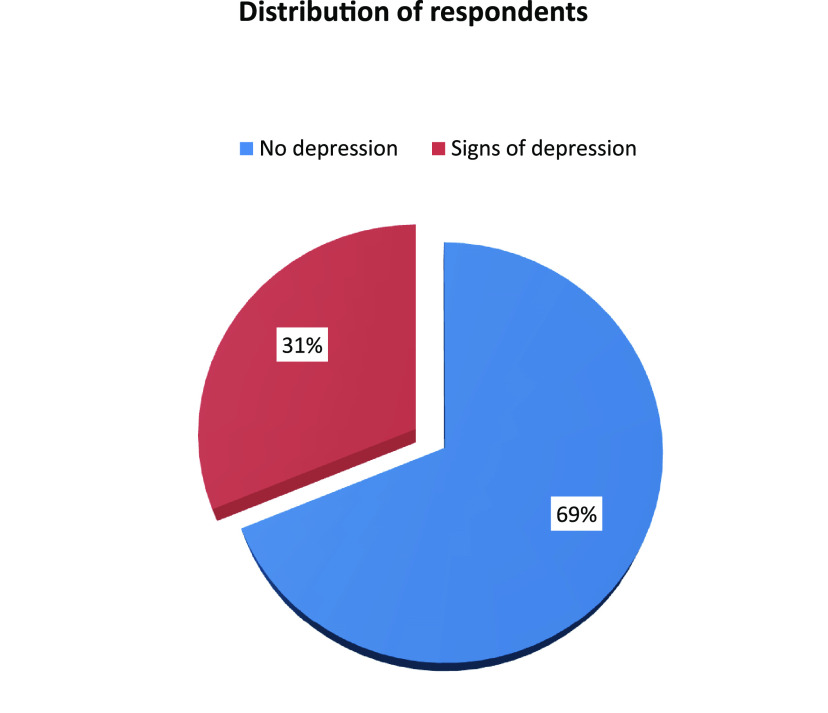
The coronavirus disease 2019 (COVID-19) pandemic has psychological consequences such as increased risk of depression, anxiety, and stress problems, exacerbating human health disparities. This study aimed to analyze depression and its causes in COVID-19-recovered patients in Bangladesh. A cross-sectional study was conducted on COVID-19-recovered patients who attended follow-up visits after 14 days to 3 months at Dhaka Medical College Hospital (DMCH) and Dhaka North City Corporation Hospital (DNCCH), Dhaka, Bangladesh, from 1 January to 31 December 2021. Respondents were face-to-face interviewed with a semistructured questionnaire after written agreement. The Patient Health Questionnaire (PHQ-9) was used to assess respondents' depression, and data were analyzed using SPSS version 23, with a value of <0.05 indicating statistical significance. A total of 325 COVID-19-recovered patients aged from 15 to 65 years (mean, 44.34 ± 13.87 years) were included in this study, the highest proportion (23.1%) of them were aged 46 to 55 years, and the majority (61.5%) of them were male. There were 69.5% of respondents who had no signs of depression while 31% of them did have signs, with 26.7% being mildly depressed, 2.5% being extremely depressed, and 1.2% being severely depressed. Diabetes mellitus, hospitalization duration, social distancing, social media posts on COVID-19, loss of employment, family damage, and fear of reinfection were significantly associated with depression level of respondents. This study gives us a glimpse into the psychological health of COVID-19-recovered patients, and its findings highlight the imperative of alleviating their psychological anguish in Bangladesh. The COVID-19 pandemic had a significant psychological impact on healthy populations, with increased depression, perceived stress, posttraumatic stress disorder, and insomnia reported. The COVID-19 pandemic affects people's mental health by instilling fear of infection and depression. In the post-COVID-19 syndrome, depressive symptoms and clinically significant depression may have serious consequences for quality-of-life outcomes. To combat the spread of COVID-19, the Bangladesh government has implemented a number of measures, including lockdown, social distancing, self-isolation, and quarantine. Given the negative consequences, it is critical to investigate potential factors and mechanisms that may shed light on mental health improvement. The purpose of the study is to determine the level of depression in patients 3 months after recovering from acute COVID-19. The study's findings highlight the need for COVID-19-infected people in Bangladesh to receive health education and interventions.
2019年冠状病毒病(COVID-19)大流行产生了心理影响,如抑郁、焦虑和压力问题风险增加,加剧了人类健康差距。本研究旨在分析孟加拉国COVID-19康复患者的抑郁情况及其成因。2021年1月1日至12月31日,在孟加拉国达卡的达卡医学院医院(DMCH)和达卡北城公司医院(DNCCH),对14天至3个月后前来复诊的COVID-19康复患者进行了一项横断面研究。在获得书面同意后,通过半结构化问卷对受访者进行面对面访谈。使用患者健康问卷(PHQ-9)评估受访者的抑郁情况,并使用SPSS 23版软件进行数据分析,P值<0.05表示具有统计学意义。本研究共纳入325名年龄在15至65岁(平均44.34±13.87岁)的COVID-19康复患者,其中年龄在46至55岁的比例最高(23.1%),大多数(61.5%)为男性。69.5%的受访者没有抑郁迹象,而31%的受访者有抑郁迹象,其中26.7%为轻度抑郁,2.5%为极度抑郁,1.2%为重度抑郁。糖尿病、住院时长、社交距离、关于COVID-19的社交媒体帖子、失业、家庭破裂以及对再次感染的恐惧与受访者的抑郁程度显著相关。本研究让我们得以了解COVID-19康复患者的心理健康状况,其研究结果凸显了在孟加拉国缓解他们心理痛苦的紧迫性。COVID-19大流行对健康人群产生了重大心理影响,据报告抑郁、感知压力、创伤后应激障碍和失眠有所增加。COVID-19大流行通过引发对感染和抑郁的恐惧来影响人们的心理健康。在COVID-19后综合征中,抑郁症状和具有临床意义的抑郁症可能对生活质量产生严重影响。为了抗击COVID-19的传播,孟加拉国政府实施了多项措施,包括封锁、社交距离、自我隔离和检疫。鉴于这些负面后果,调查可能有助于改善心理健康的潜在因素和机制至关重要。本研究的目的是确定急性COVID-19康复3个月后患者的抑郁水平。该研究的结果凸显了孟加拉国COVID-19感染者接受健康教育和干预的必要性。