Hu Yu, Zhai Wenjuan, Tan Duanling, Chen Haipeng, Zhang Guiyu, Tan Xuanjing, Zheng Yuting, Gao Wenhui, Wei Yijie, Wu Jinjun, Yang Xin
Guangdong Provincial Key Laboratory of Translational Cancer Research of Chinese Medicines, Joint International Research Laboratory of Translational Cancer Research of Chinese Medicines, School of Pharmaceutical Sciences, International Institute for Translational Chinese Medicine, Guangzhou University of Chinese Medicine, Guangzhou, Guangdong, China.
Key Laboratory of Molecular Target and Clinical Pharmacology and the State, NMPA Key Laboratory of Respiratory Disease, School of Pharmaceutical Sciences and The Fifth Affiliated Hospital, Guangzhou Medical University, Guangzhou, China.
Front Pharmacol. 2023 Jan 23;14:1111912. doi: 10.3389/fphar.2023.1111912. eCollection 2023.
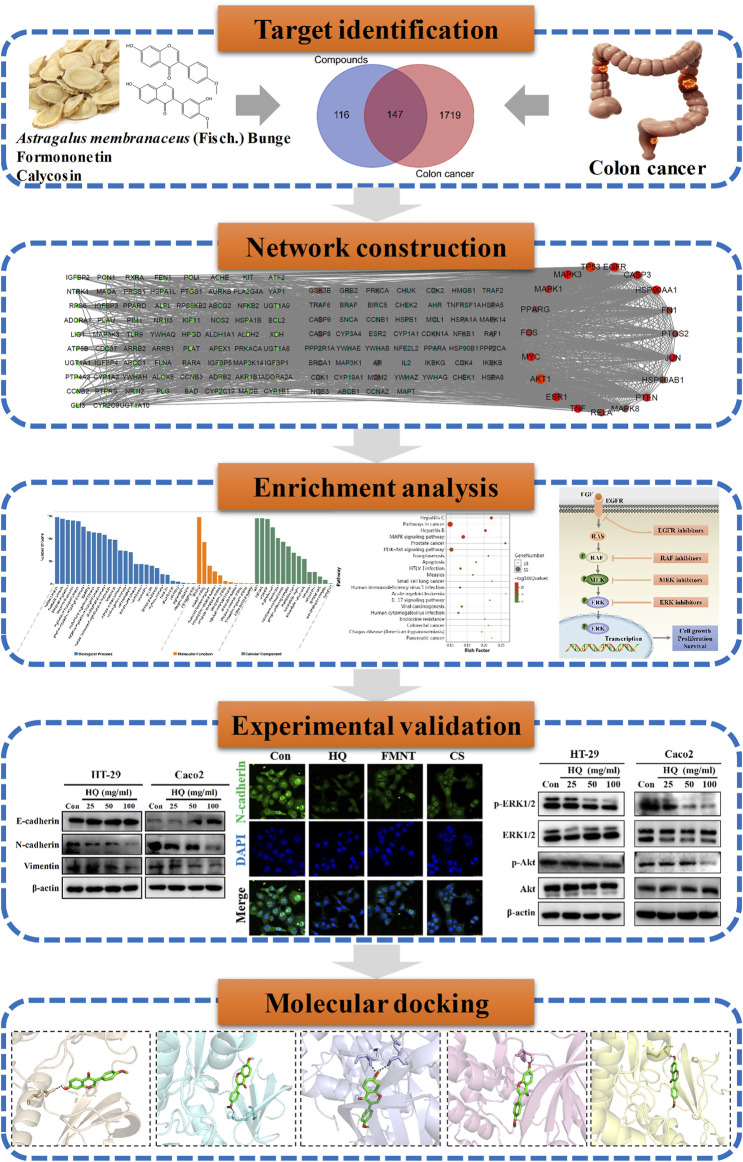
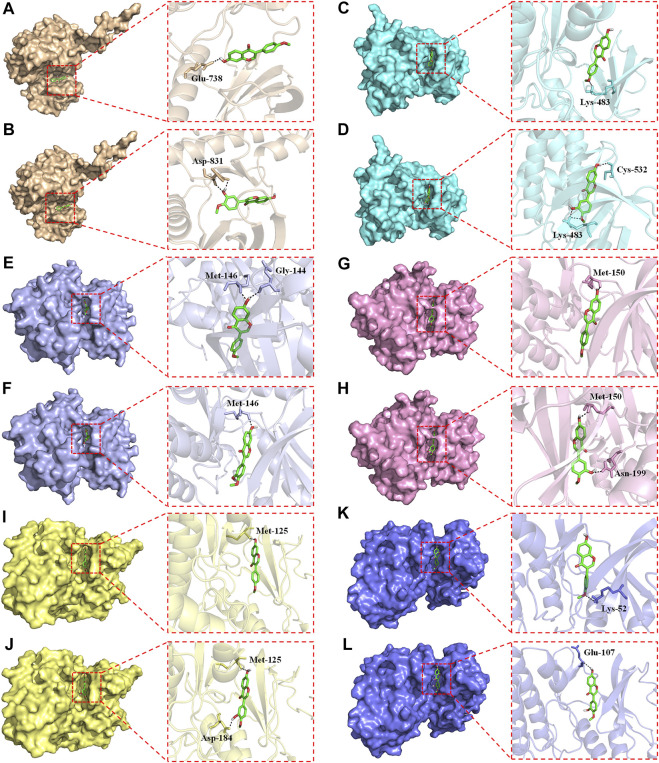
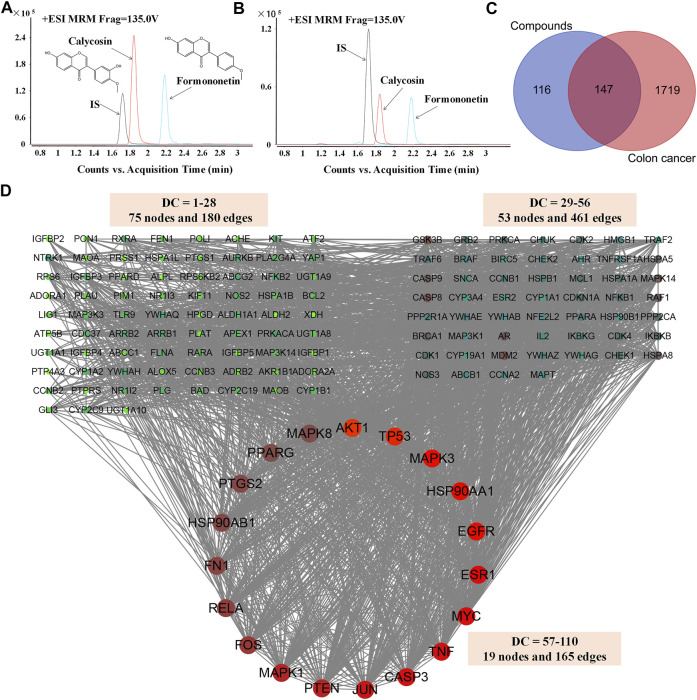
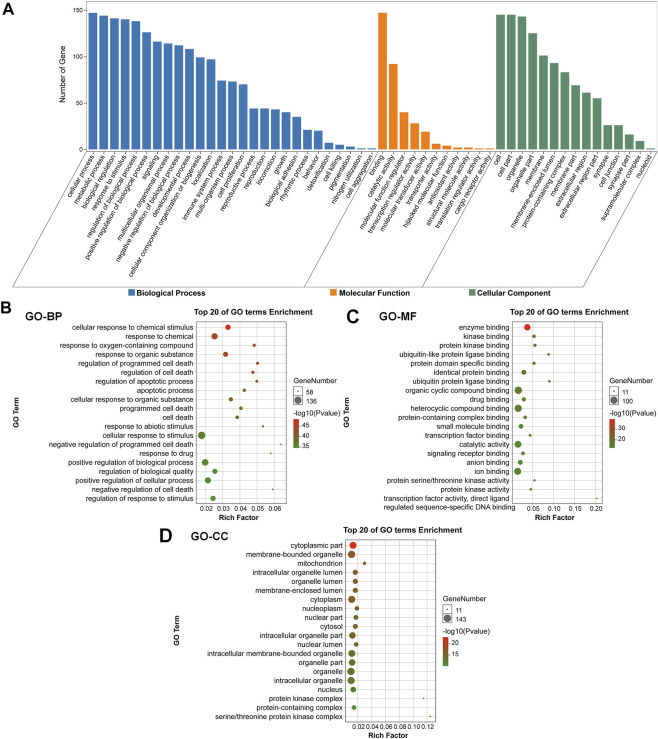
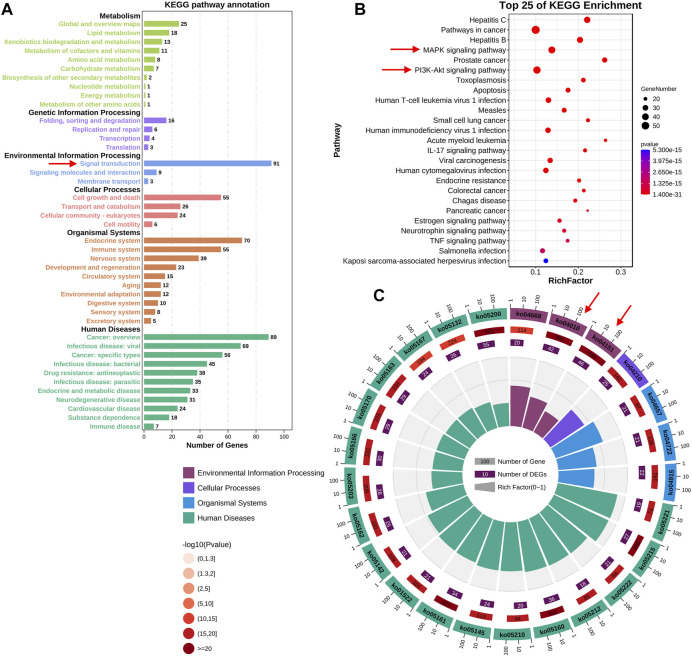
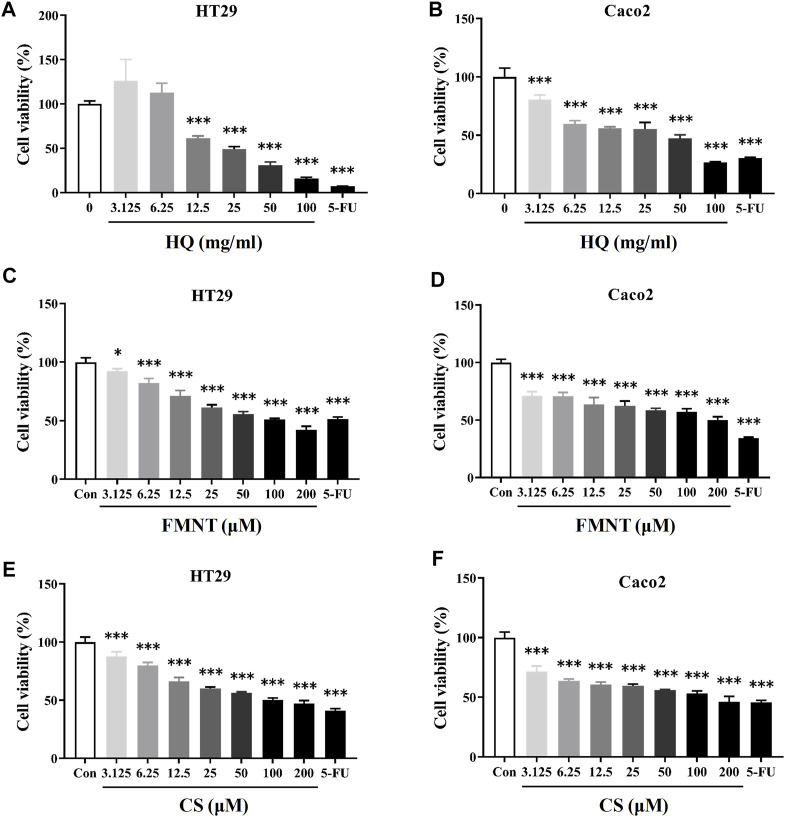
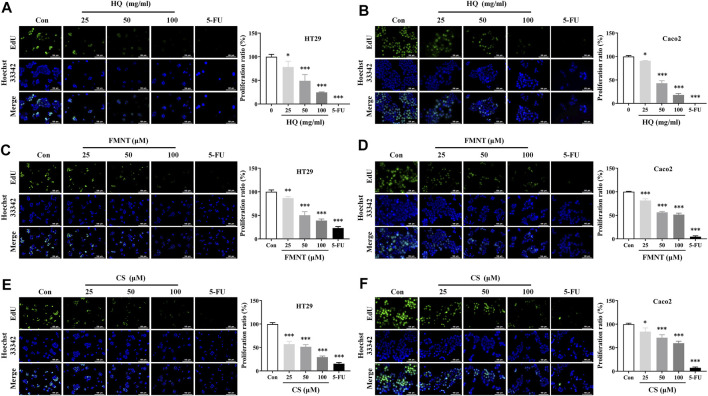
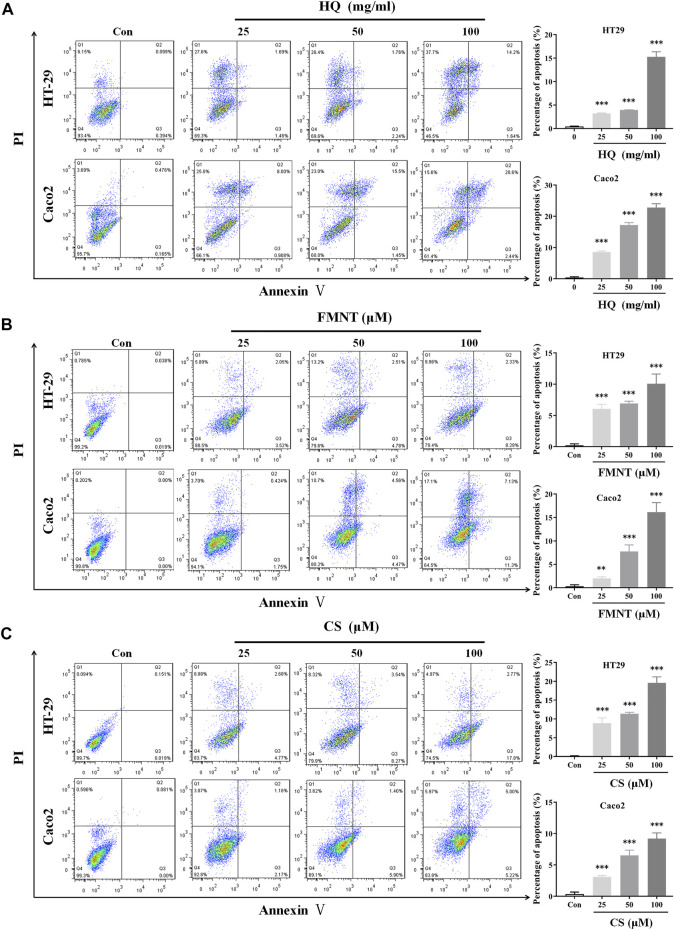
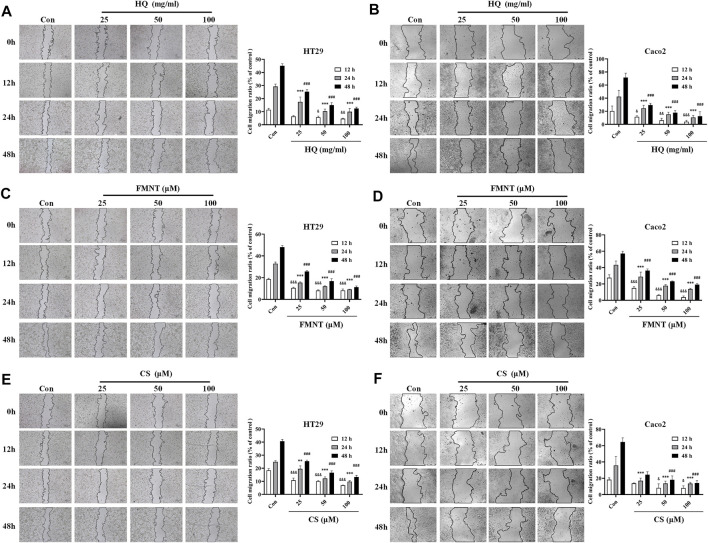
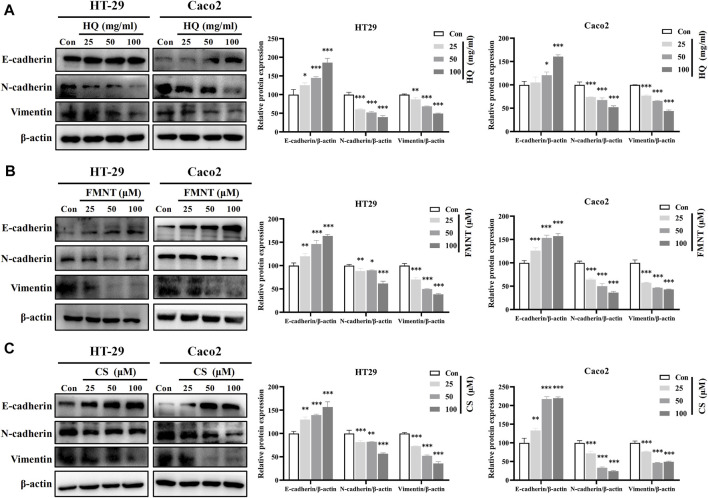
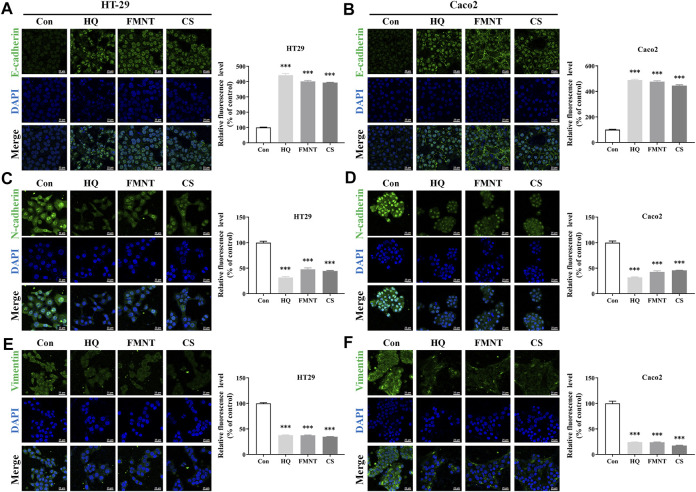
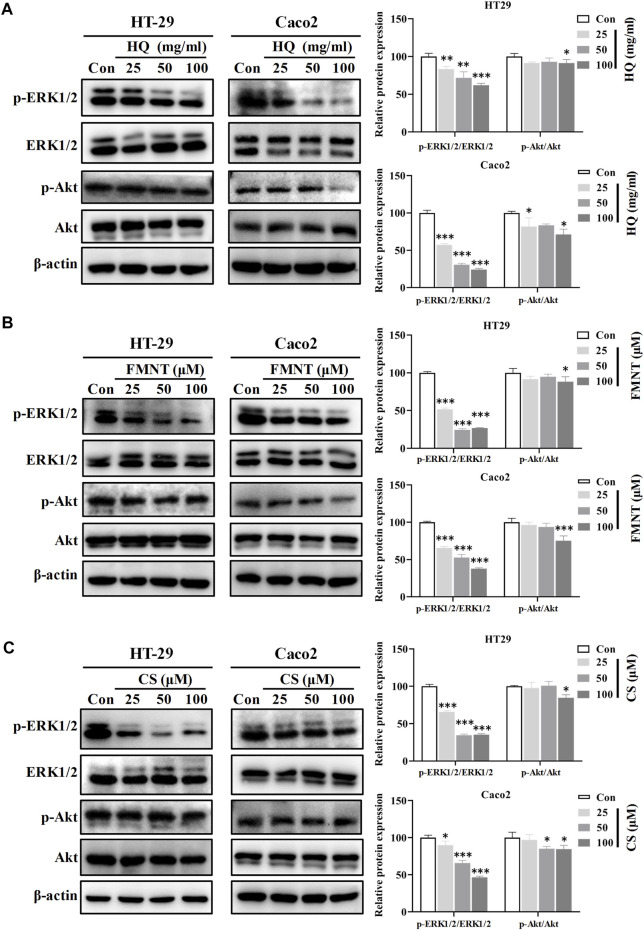
Colon cancer is a highly malignant cancer with poor prognosis. (Fisch.) Bunge (Huang Qi in Chinese, HQ), a well-known Chinese herbal medicine and a popular food additive, possesses various biological functions and has been frequently used for clinical treatment of colon cancer. However, the underlying mechanism is not fully understood. Isoflavonoids, including formononetin (FMNT) and calycosin (CS), are the main bioactive ingredients isolated from HQ. Thus, this study aimed to explore the inhibitory effects and mechanism of HQ, FMNT and CS against colon cancer by using network pharmacology coupled with experimental validation and molecular docking. The network pharmacology analysis revealed that FMNT and CS exerted their anticarcinogenic actions against colon cancer by regulating multiple signaling molecules and pathways, including MAPK and PI3K-Akt signaling pathways. The experimental validation data showed that HQ, FMNT and CS significantly suppressed the viability and proliferation, and promoted the apoptosis in colon cancer Caco2 and HT-29 cells. HQ, FMNT and CS also markedly inhibited the migration of Caco2 and HT-29 cells, accompanied by a marked increase in E-cadherin expression, and a notable decrease in N-cadherin and Vimentin expression. In addition, HQ, FMNT and CS strikingly decreased the expression of ERK1/2 phosphorylation (p-ERK1/2) without marked change in total ERK1/2 expression. They also slightly downregulated the p-Akt expression without significant alteration in total Akt expression. Pearson correlation analysis showed a significant positive correlation between the inactivation of ERK1/2 signaling pathway and the HQ, FMNT and CS-induced suppression of colon cancer. The molecular docking results indicated that FMNT and CS had a strong binding affinity for the key molecules of ERK1/2 signaling pathway. Conclusively, HQ, FMNT and CS exerted good therapeutic effects against colon cancer by mainly inhibiting the ERK1/2 signaling pathway, suggesting that HQ, FMNT and CS could be useful supplements that may enhance chemotherapeutic outcomes and benefit colon cancer patients.
结肠癌是一种预后较差的高恶性肿瘤。(菲施。)邦格(中文名为黄芪,HQ)是一种著名的中药材和常用的食品添加剂,具有多种生物学功能,常用于结肠癌的临床治疗。然而,其潜在机制尚未完全明确。异黄酮,包括芒柄花黄素(FMNT)和毛蕊异黄酮(CS),是从黄芪中分离出的主要生物活性成分。因此,本研究旨在通过网络药理学结合实验验证和分子对接,探索黄芪、FMNT和CS对结肠癌的抑制作用及其机制。网络药理学分析表明,FMNT和CS通过调节包括MAPK和PI3K-Akt信号通路在内的多种信号分子和途径,对结肠癌发挥抗癌作用。实验验证数据显示,黄芪、FMNT和CS显著抑制结肠癌Caco2和HT-29细胞的活力和增殖,并促进其凋亡。黄芪、FMNT和CS还明显抑制Caco2和HT-29细胞的迁移,同时E-钙黏蛋白表达显著增加,N-钙黏蛋白和波形蛋白表达显著降低。此外,黄芪、FMNT和CS显著降低ERK1/2磷酸化(p-ERK1/2)的表达,而总ERK1/2表达无明显变化。它们还轻微下调p-Akt表达,而总Akt表达无显著改变。Pearson相关性分析表明,ERK1/2信号通路的失活与黄芪、FMNT和CS诱导的结肠癌抑制之间存在显著正相关。分子对接结果表明,FMNT和CS与ERK1/2信号通路的关键分子具有很强的结合亲和力。总之,黄芪、FMNT和CS主要通过抑制ERK1/2信号通路对结肠癌发挥良好的治疗作用,表明黄芪、FMNT和CS可能是有用的补充剂,可增强化疗效果并使结肠癌患者受益。