Wu Jinjun, Kong Muyan, Lou Yanmei, Li Leyan, Yang Chunlin, Xu Huifang, Cui Yuqi, Hao Hong, Liu Zhenguo
Joint Laboratory for Translational Cancer Research of Chinese Medicine of the Ministry of Education of the People's Republic of China, International Institute for Translational Chinese Medicine, Guangzhou University of Chinese Medicine, Guangzhou, China.
Center for Precision Medicine and Division of Cardiovascular Medicine, University of Missouri School of Medicine, Columbia, MO, United States.
Front Pharmacol. 2021 Jan 11;11:608518. doi: 10.3389/fphar.2020.608518. eCollection 2020.
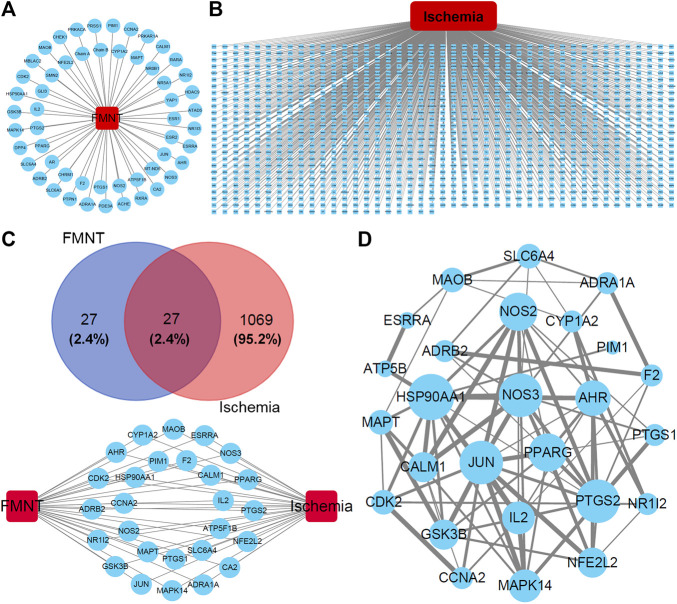
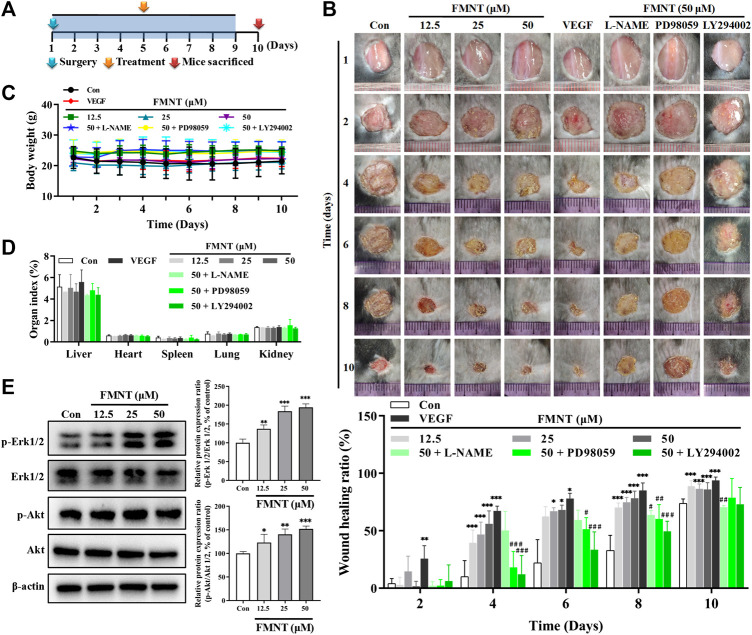
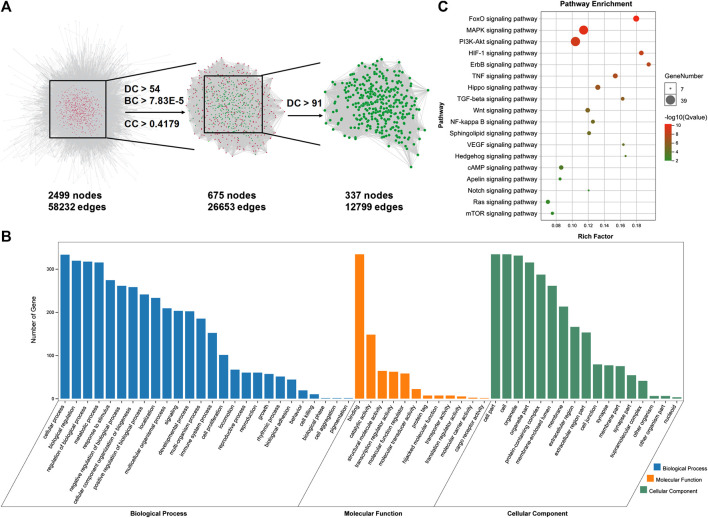
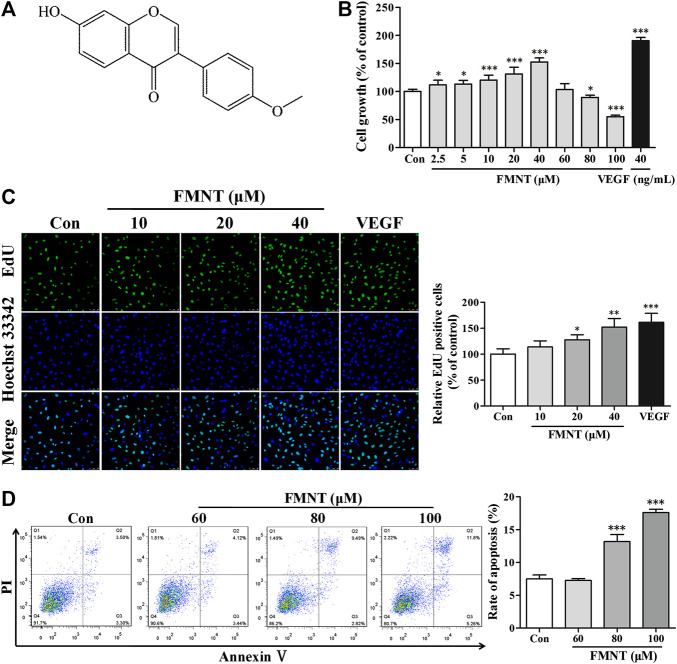
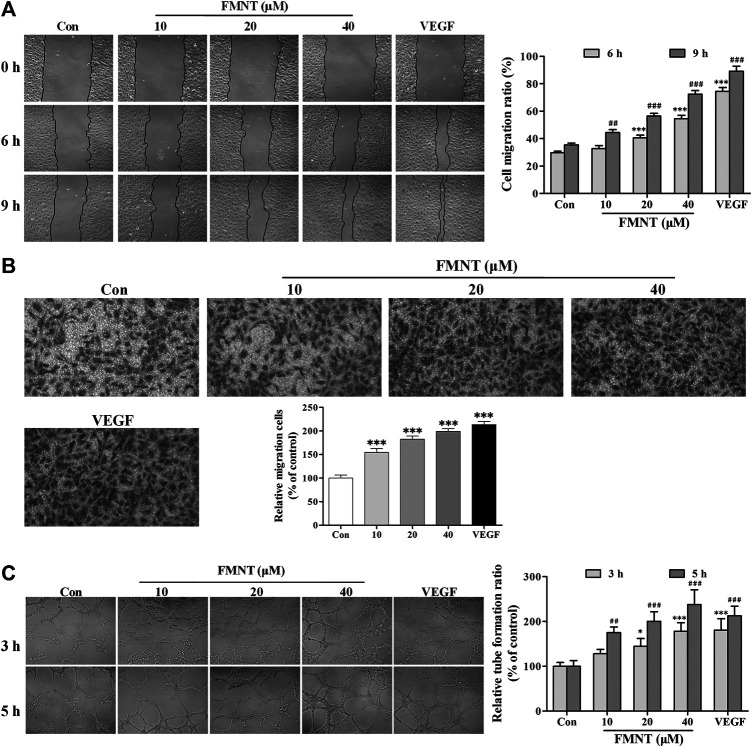
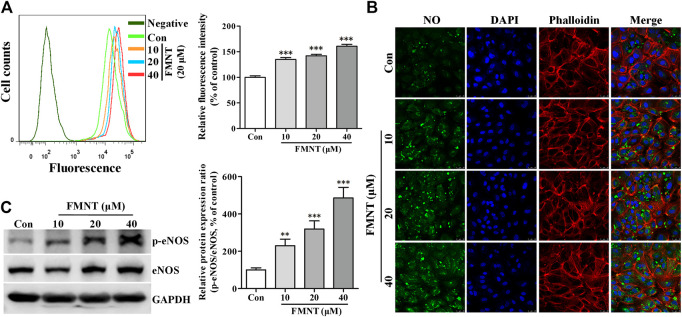
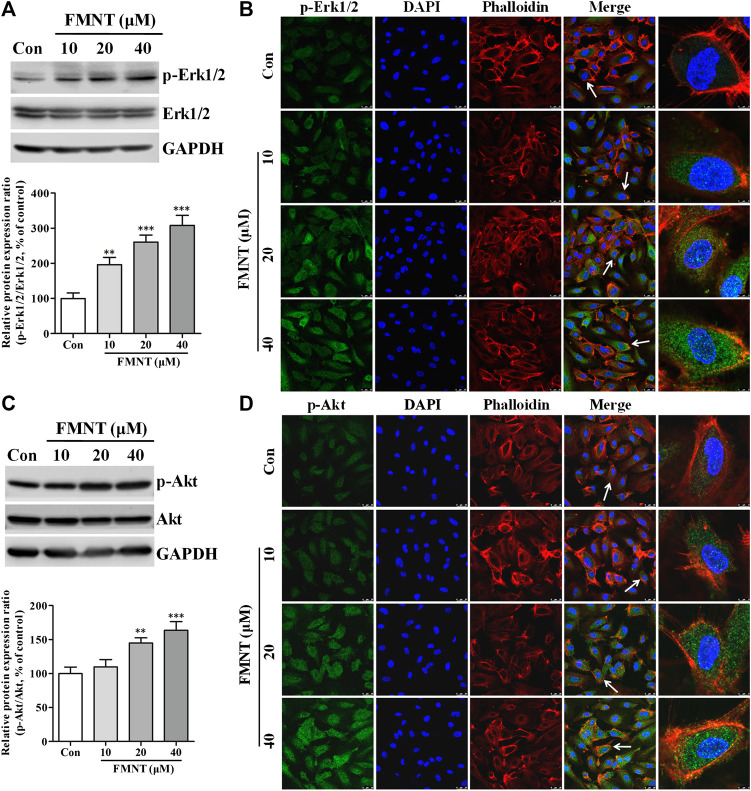
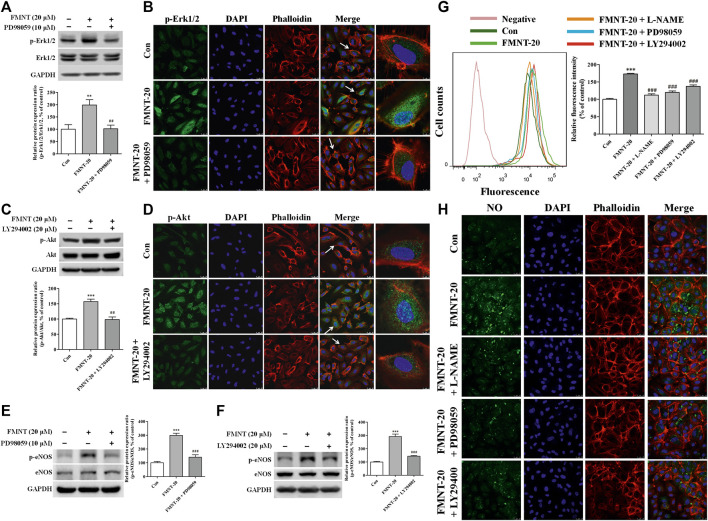
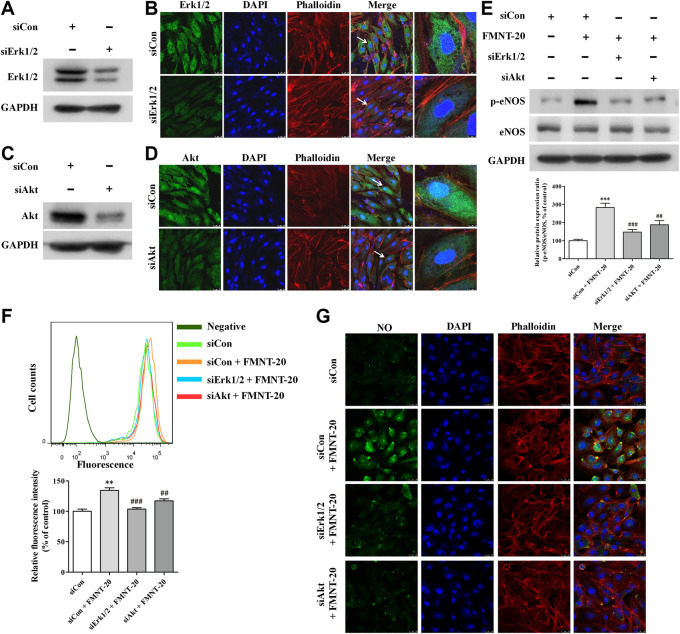
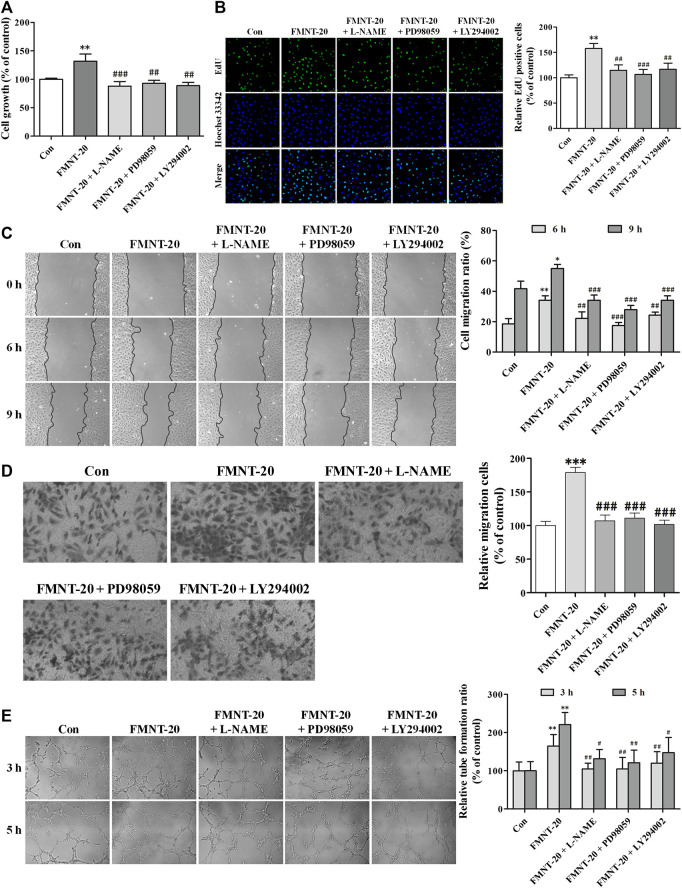
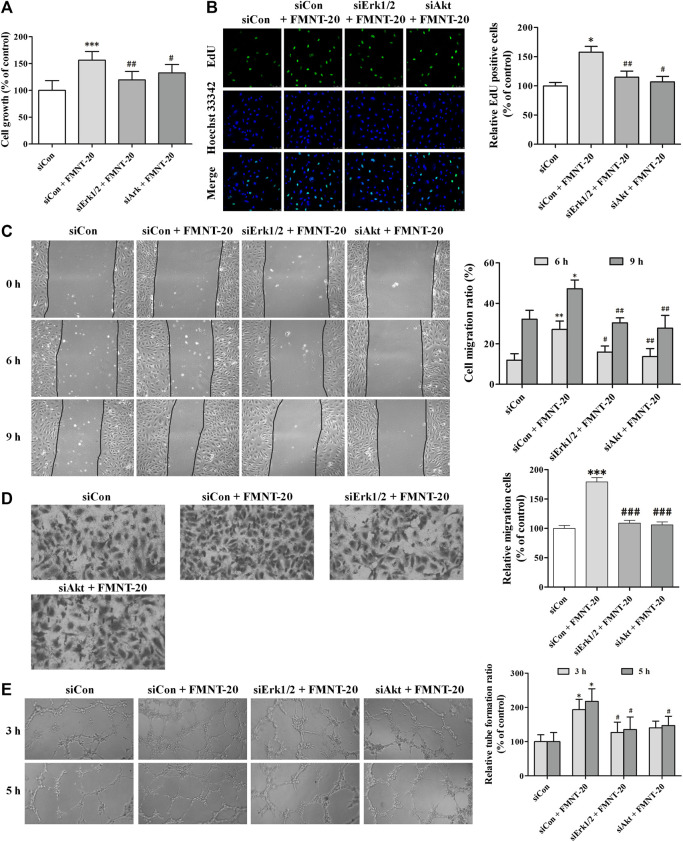
Formononetin (FMNT) is a major bioactive compound from (Fisch.) Bunge, and has been widely used to treat conditions related to vascular insufficiency. However, the molecular mechanism for the therapeutic effect has not been well defined. This study aimed to investigate the effect and mechanism of FMNT on endothelial function. The potential targets and signaling pathways of FMNT in the setting of ischemia were predicted using network pharmacology analysis. Human umbilical vein endothelial cells (HUVECs) were used for the studies and C57BL/6 mice were used for experiments. The results of the network pharmacology analysis showed that multiple signaling molecules including MAPK and PI3K-Akt pathways could be involved in the pharmacological actions of FMNT against ischemic diseases. The experimental validation data showed that FMNT significantly promoted the growth, proliferation, migration and tube formation of HUVECs in association with activation of endothelial nitric oxide synthase (eNOS) and promotion of intracellular nitric oxide (NO) production. FMNT also markedly activated Erk1/2 and Akt signaling in HUVECs. The enhanced endothelial function by FMNT was abolished when the cells were pre-treated with eNOS inhibitor. FMNT-induced eNOS/NO activation, endothelial function and angiogenesis was also effectively attenuated when Erk1/2 or Akt signaling pathway was inhibited. In addition, FMNT significantly promoted wound healing in C57BL/6 mice associated with activation of Erk1/2 and Akt signaling. Enhanced wound healing by FMNT in mice was prevented when eNOS-, Erk1/2, or Akt-medicated signaling was inhibited. Moreover, when Akt signaling was inhibited in HUVECs, FMNT was still able to activate Erk1/2 signaling without promotion of endothelial function. Similarly, FMNT could activate Akt signaling with no change in endothelial function when Erk1/2 signaling was attenuated in HUVECs. Conclusively, the present study demonstrated that FMNT significantly enhanced endothelial function and promoted angiogenesis and through activating Erk1/2- and Akt-mediated eNOS/NO signaling pathway. The data also suggested that simultaneous activation of Erk1/2 and Akt signaling was required for FMNT-induced promotion of endothelial function. Results from the present study might provide support and evidence for the application of FMNT during the clinical treatment of conditions related to vascular insufficiency.
大豆苷元(FMNT)是豆科植物(Fisch.)Bunge中的一种主要生物活性化合物,已被广泛用于治疗与血管功能不全相关的病症。然而,其治疗效果的分子机制尚未明确。本研究旨在探讨FMNT对内皮功能的影响及其机制。利用网络药理学分析预测FMNT在缺血情况下的潜在靶点和信号通路。人脐静脉内皮细胞(HUVECs)用于体外研究,C57BL/6小鼠用于体内实验。网络药理学分析结果表明,包括MAPK和PI3K-Akt通路在内的多种信号分子可能参与FMNT对缺血性疾病的药理作用。实验验证数据表明,FMNT通过激活内皮型一氧化氮合酶(eNOS)和促进细胞内一氧化氮(NO)生成,显著促进HUVECs的生长、增殖、迁移和管腔形成。FMNT还显著激活HUVECs中的Erk1/2和Akt信号。当细胞用eNOS抑制剂预处理时,FMNT增强的内皮功能被消除。当Erk1/2或Akt信号通路被抑制时,FMNT诱导的eNOS/NO激活、内皮功能和血管生成也被有效减弱。此外,FMNT显著促进C57BL/6小鼠的伤口愈合,这与Erk1/2和Akt信号的激活有关。当eNOS、Erk1/2或Akt介导的信号被抑制时,FMNT在小鼠中增强的伤口愈合被阻止。此外,当HUVECs中的Akt信号被抑制时,FMNT仍能激活Erk1/2信号而不促进内皮功能。同样,当HUVECs中的Erk1/2信号减弱时,FMNT可以激活Akt信号而内皮功能无变化。总之,本研究表明FMNT通过激活Erk1/2和Akt介导的eNOS/NO信号通路显著增强内皮功能并促进血管生成。数据还表明,FMNT诱导的内皮功能促进需要同时激活Erk1/2和Akt信号。本研究结果可能为FMNT在临床治疗与血管功能不全相关病症中的应用提供支持和证据。