Breffka Esther, Jagoe Caroline, Murphy Susan P, Tsegaw Belestie B
Department of Clinical Speech and Language Studies, Faculty of Arts, Humanities and Social Sciences, Trinity College Dublin, University of Dublin, Dublin, Ireland.
Department of Geography, Faculty of Science, Technology, Maths and Engineering, Trinity College Dublin, University of Dublin, Dublin, Ireland.
Afr J Disabil. 2023 Jan 23;12:1085. doi: 10.4102/ajod.v12i0.1085. eCollection 2023.
Community-based inclusive development (CBID) acknowledges society's critical role in supporting the active participation of persons with disabilities. However, research on how this approach relates to the context-sensitive socially situated barriers of disability stigma is underexplored.
This study aimed to understand the drivers and experiences of disability stigma in Ethiopia, from the perspective of persons with disabilities engaged in CBID programmes, and to establish how disability stigma acts as a barrier to participation.
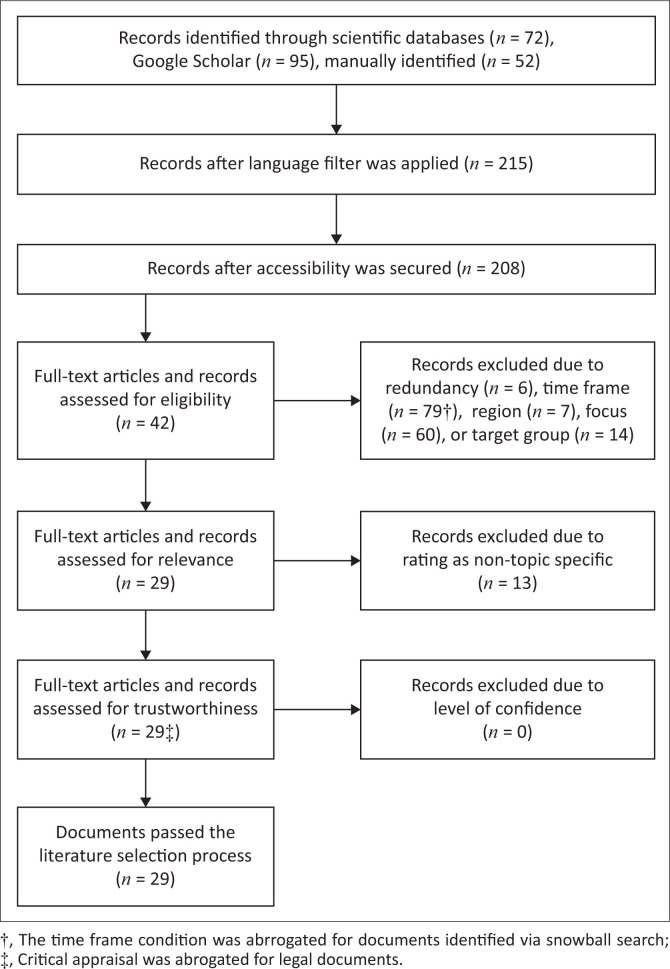
An inductive methodological approach guided the research design. Mixed methods were used including a narrative review of disabilities studies literature, 16 semi-structured interviews with persons with disabilities, and a quantitative survey of 970 persons with disabilities across three communities in Ethiopia.
Informed by theories of epistemic justice, this study identified specific indicators of meaningful participation and examined how these relate to experiences of disability stigma. The study found that the participation of adults with disabilities in society is restricted across different areas of life. Misconceptions about the causes of disability and social perceptions regarding the capacities of persons with disabilities are found to exacerbate stigma and act as a barrier to participation.
Targeted efforts to challenge internalised norms and harmful beliefs within CBID approaches are required to address disadvantages arising from embedded disability stigma.
This study makes conceptual, empirical and practical contributions that advance insights into the relationship between disability stigma and participation in Ethiopia and the dimensions of epistemic justice relevant to understanding the nature and drivers of disability stigma.
基于社区的包容性发展(CBID)承认社会在支持残疾人积极参与方面的关键作用。然而,关于这种方法如何与残疾污名的情境敏感型社会障碍相关联的研究却未得到充分探索。
本研究旨在从参与CBID项目的残疾人的角度,了解埃塞俄比亚残疾污名的驱动因素和经历,并确定残疾污名如何成为参与的障碍。
归纳法指导研究设计。采用了混合方法,包括对残疾研究文献的叙述性综述、对16名残疾人进行的半结构化访谈,以及对埃塞俄比亚三个社区的970名残疾人进行的定量调查。
本研究以认知正义理论为依据,确定了有意义参与的具体指标,并研究了这些指标与残疾污名经历的关系。研究发现,成年残疾人在社会生活的不同领域的参与受到限制。对残疾成因的误解以及对残疾人能力的社会认知被发现会加剧污名化,并成为参与的障碍。
需要在CBID方法中针对性地努力挑战内化规范和有害信念,以解决因根深蒂固的残疾污名而产生的不利因素。
本研究在概念、实证和实践方面做出了贡献,增进了对埃塞俄比亚残疾污名与参与之间关系以及与理解残疾污名的性质和驱动因素相关的认知正义维度的理解。