Center for Precision Health Research, National Human Genome Research Institute, NIH, Bethesda, MD 20892.
British Heart Foundation Cardiovascular Epidemiology Unit, Department of Public Health and Primary Care, University of Cambridge, Cambridge CB2 0BB, UK.
Proc Natl Acad Sci U S A. 2023 Feb 14;120(7):e2206797120. doi: 10.1073/pnas.2206797120. Epub 2023 Feb 9.
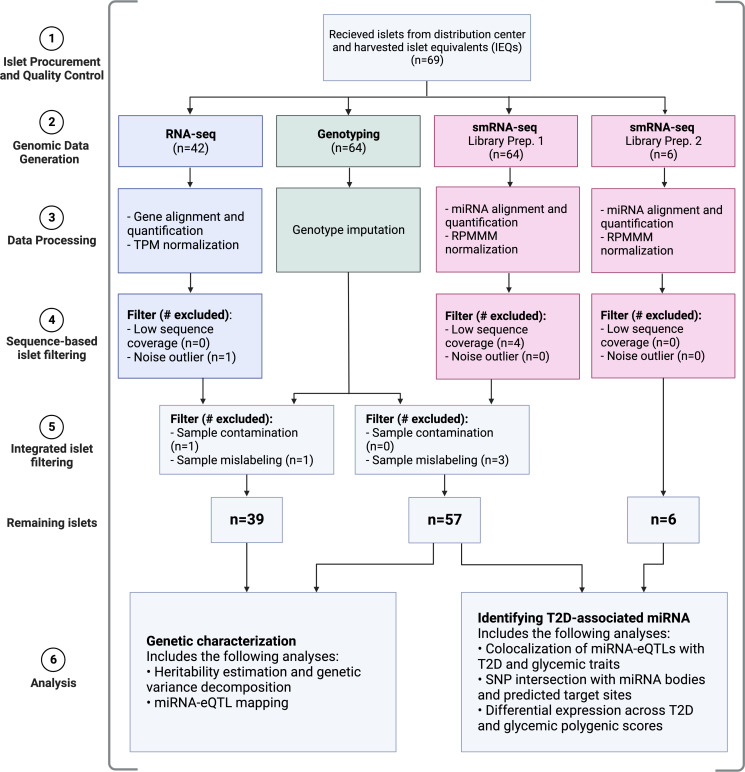
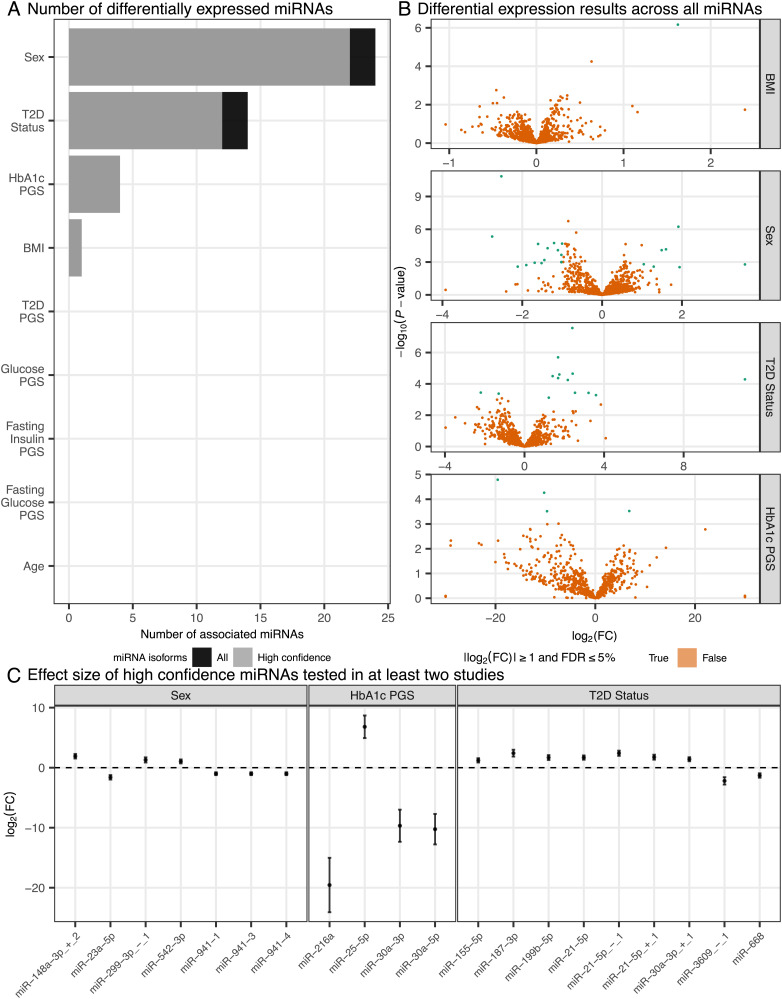
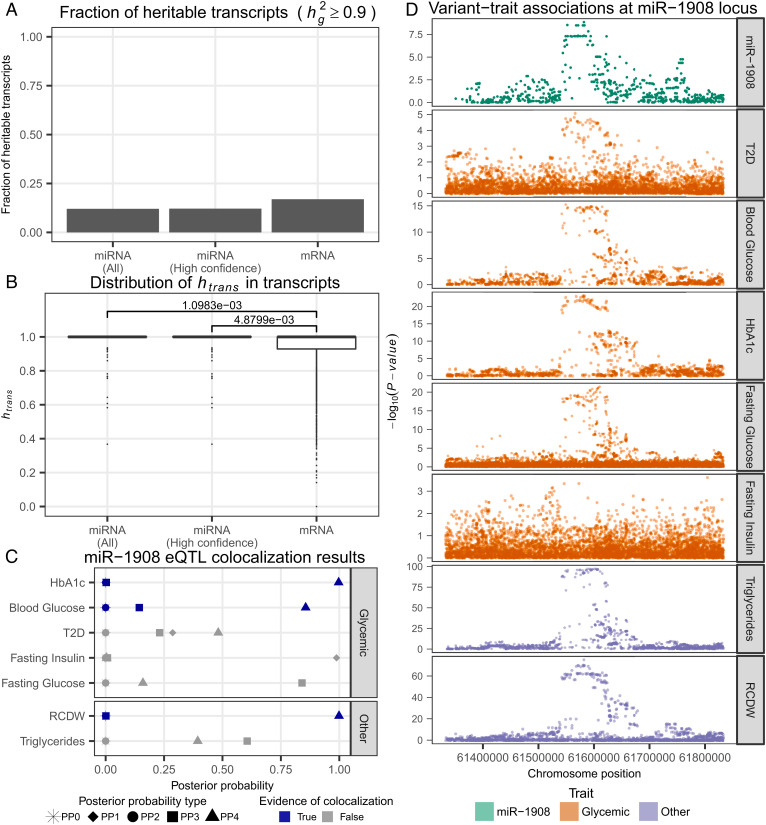
Genetic studies have identified ≥240 loci associated with the risk of type 2 diabetes (T2D), yet most of these loci lie in non-coding regions, masking the underlying molecular mechanisms. Recent studies investigating mRNA expression in human pancreatic islets have yielded important insights into the molecular drivers of normal islet function and T2D pathophysiology. However, similar studies investigating microRNA (miRNA) expression remain limited. Here, we present data from 63 individuals, the largest sequencing-based analysis of miRNA expression in human islets to date. We characterized the genetic regulation of miRNA expression by decomposing the expression of highly heritable miRNAs into and acting genetic components and mapping -acting loci associated with miRNA expression [miRNA-expression quantitative trait loci (eQTLs)]. We found i) 84 heritable miRNAs, primarily regulated by -acting genetic effects, and ii) 5 miRNA-eQTLs. We also used several different strategies to identify T2D-associated miRNAs. First, we colocalized miRNA-eQTLs with genetic loci associated with T2D and multiple glycemic traits, identifying one miRNA, miR-1908, that shares genetic signals for blood glucose and glycated hemoglobin (HbA1c). Next, we intersected miRNA seed regions and predicted target sites with credible set SNPs associated with T2D and glycemic traits and found 32 miRNAs that may have altered binding and function due to disrupted seed regions. Finally, we performed differential expression analysis and identified 14 miRNAs associated with T2D status-including miR-187-3p, miR-21-5p, miR-668, and miR-199b-5p-and 4 miRNAs associated with a polygenic score for HbA1c levels-miR-216a, miR-25, miR-30a-3p, and miR-30a-5p.
遗传研究已经确定了≥240 个与 2 型糖尿病(T2D)风险相关的位点,但这些位点大多位于非编码区域,掩盖了潜在的分子机制。最近研究人类胰岛中的 mRNA 表达,为正常胰岛功能和 T2D 病理生理学的分子驱动因素提供了重要的见解。然而,类似研究 miRNA 表达仍然有限。在这里,我们展示了 63 个人的数据,这是迄今为止对人类胰岛中 miRNA 表达进行的最大规模的测序分析。我们通过将高度遗传 miRNA 的表达分解为 和 作用的遗传成分,并绘制与 miRNA 表达相关的 作用基因座(miRNA 表达数量性状基因座(eQTLs))来描述 miRNA 表达的遗传调控。我们发现 i)84 个具有遗传能力的 miRNA,主要受 作用的遗传效应调控,ii)5 个 miRNA-eQTL。我们还使用了几种不同的策略来识别与 T2D 相关的 miRNA。首先,我们将 miRNA-eQTL 与与 T2D 和多种血糖特征相关的遗传基因座进行 colocalization,确定了一个 miRNA,miR-1908,它与血糖和糖化血红蛋白(HbA1c)的遗传信号共享。接下来,我们将 miRNA 种子区域与与 T2D 和血糖特征相关的可信集 SNP 进行交叉,并发现 32 个 miRNA,由于种子区域的破坏,其结合和功能可能发生改变。最后,我们进行了差异表达分析,确定了 14 个与 T2D 状态相关的 miRNA,包括 miR-187-3p、miR-21-5p、miR-668 和 miR-199b-5p,以及与 HbA1c 水平多基因评分相关的 4 个 miRNA,包括 miR-216a、miR-25、miR-30a-3p 和 miR-30a-5p。