Department of Neurology, Medisch Spectrum Twente, Enschede, The Netherlands.
Department of Internal Medicine, Erasmus Medisch Centrum, Rotterdam, The Netherlands.
PLoS One. 2023 Feb 9;18(2):e0280153. doi: 10.1371/journal.pone.0280153. eCollection 2023.
Hyperglycemia is common in acute ischemic stroke and is associated with larger infarct volume and unfavorable functional outcome, also in patients who undergo reperfusion therapy. Hyperglycemia during reperfusion may be a therapeutic target. However, previous randomized trials on the effect of glucose lowering in the acute phase of ischemic stroke failed to demonstrate effects on clinical outcome. Inaccurate glucose measurements and not focussing on patients who undergo reperfusion therapy are possible explanations. Our aim was to study the feasibility and accuracy of continuous glucose monitoring (CGM) in patients with acute ischemic stroke undergoing endovascular treatment (EVT).
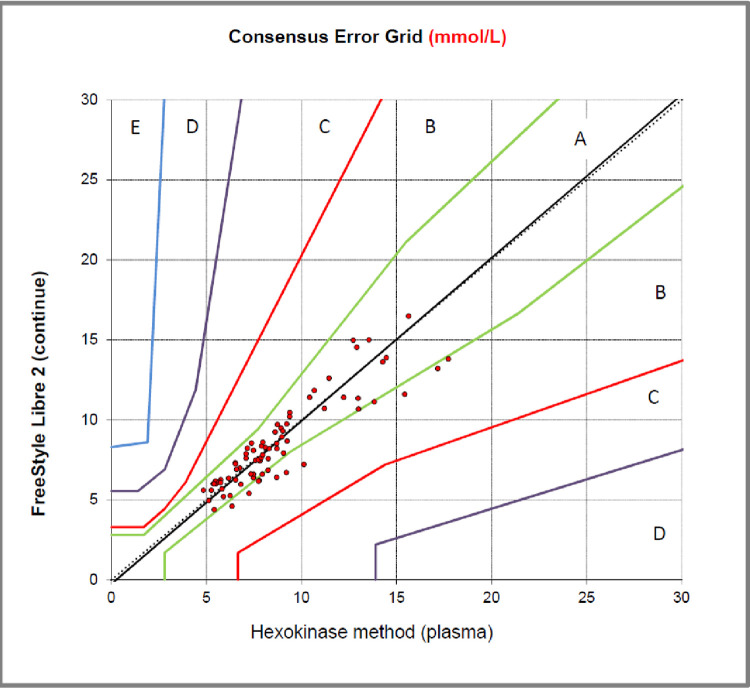
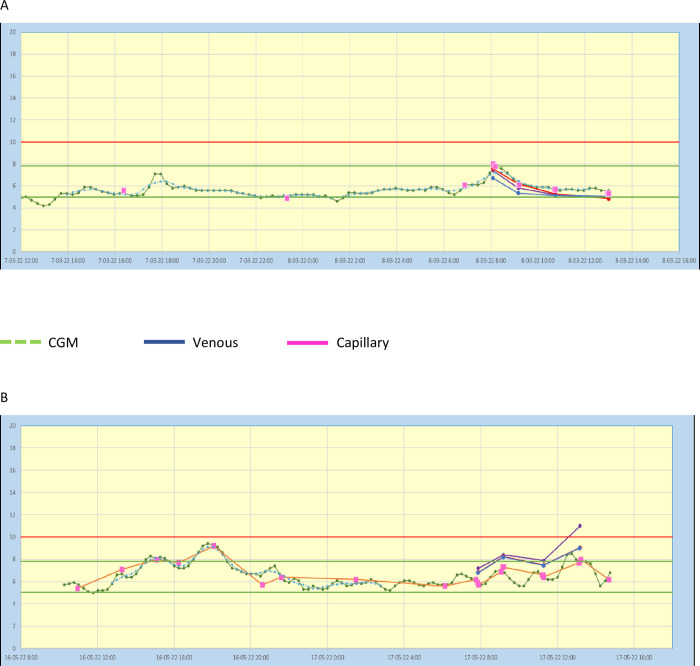
All consecutive patients with ischemic stroke and large vessel occlusion (LVO) of the anterior circulation who were eligible for endovascular therapy within 24 hours of symptom onset and presenting at the emergency department of Isala Hospital Zwolle, the Netherlands, were enrolled in this study. CGM was performed using a Freestyle Libre Flash 2 device (FSL-CGM, Abbot Diabetes Care, Alameda, California, USA) which was implanted on arrival at the emergency department. Feasibility was defined as the number of patients who could be registered for 24 hours and delay in door-to-groin time because of sensor implantation. Accuracy of CGM versus capillary and venous based plasma glucose values was determined with the Parkes error grid analysis.
Twenty-three patients were included of whom 20 completed 24 hours monitoring (87%). One patient did not give permission to use the data; one sensor broke during implantation and one meter was broken after a sensor was shot in so no measurements could be recorded. There was no significant delay in treatment due to implantation of the sensor and no adverse events. One hundred percent of CGM data are in zones A and B of the Parkes error grid analysis so data out of the sensor can be interpreted as accurate.
In this study, we showed that continuous glucose monitoring in patients with acute ischemic stroke due to large vessel occlusion of the anterior circulation in patients who were treated with endovascular therapy is feasible, safe and accurate.
高血糖在急性缺血性脑卒中中很常见,与更大的梗死体积和不良的功能预后相关,即使在接受再灌注治疗的患者中也是如此。再灌注期间的高血糖可能是一个治疗靶点。然而,以前关于缺血性脑卒中急性期降低血糖对临床结局影响的随机试验未能显示出效果。血糖测量不准确以及没有关注接受再灌注治疗的患者,这可能是解释。我们的目的是研究连续血糖监测(CGM)在接受血管内治疗(EVT)的急性缺血性脑卒中患者中的可行性和准确性。
所有符合条件的急性缺血性脑卒中且在前循环大血管闭塞(LVO)的患者,在症状发作后 24 小时内适合接受血管内治疗,并在荷兰 Isala 医院 Zwolle 的急诊部就诊,都被纳入本研究。入院时使用 Freestyle Libre Flash 2 设备(FSL-CGM,Abbott Diabetes Care,加利福尼亚州阿拉米达)进行 CGM。将传感器植入,以评估 24 小时的可行性。由于传感器植入导致门到腹股沟时间延迟,将可行性定义为能够注册 24 小时的患者数量。通过 Parkes 误差网格分析来确定 CGM 与毛细血管和静脉血浆葡萄糖值的准确性。
共纳入 23 例患者,其中 20 例完成了 24 小时监测(87%)。一名患者不同意使用数据;一个传感器在植入过程中破裂,一个仪器在传感器被植入后破裂,因此无法记录任何测量值。由于植入传感器,没有导致治疗延迟,也没有发生不良事件。100%的 CGM 数据都在 Parkes 误差网格分析的 A 和 B 区,因此可以解释传感器之外的数据是准确的。
在这项研究中,我们表明在前循环大血管闭塞的急性缺血性脑卒中患者中,接受血管内治疗的患者中进行连续血糖监测是可行的、安全的和准确的。