School of Biology and Biological Engineering, South China University of Technology, Guangzhou, China; National Laboratory of Biomacromolecules, Institute of Biophysics, Chinese Academy of Sciences, Beijing, China.
National Laboratory of Biomacromolecules, Institute of Biophysics, Chinese Academy of Sciences, Beijing, China.
J Biol Chem. 2023 Mar;299(3):102990. doi: 10.1016/j.jbc.2023.102990. Epub 2023 Feb 8.
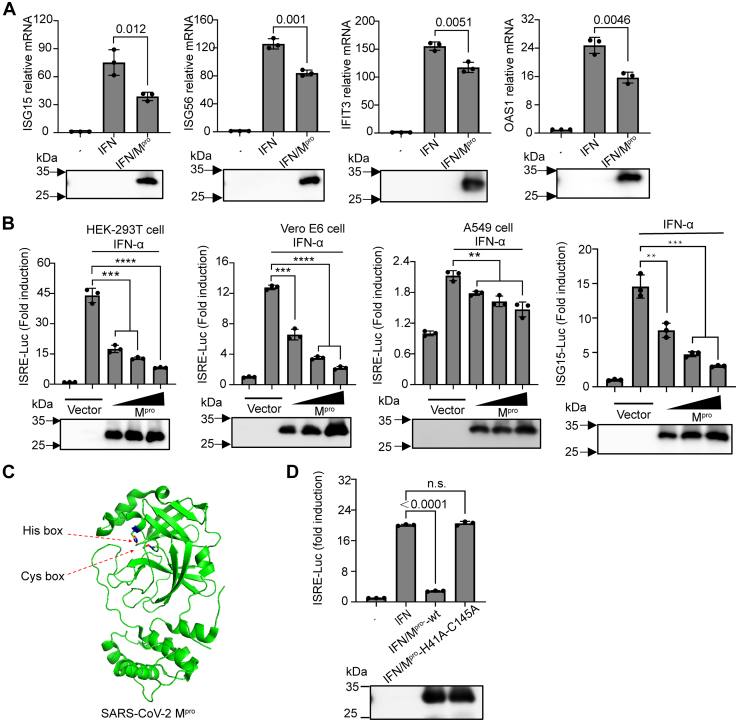
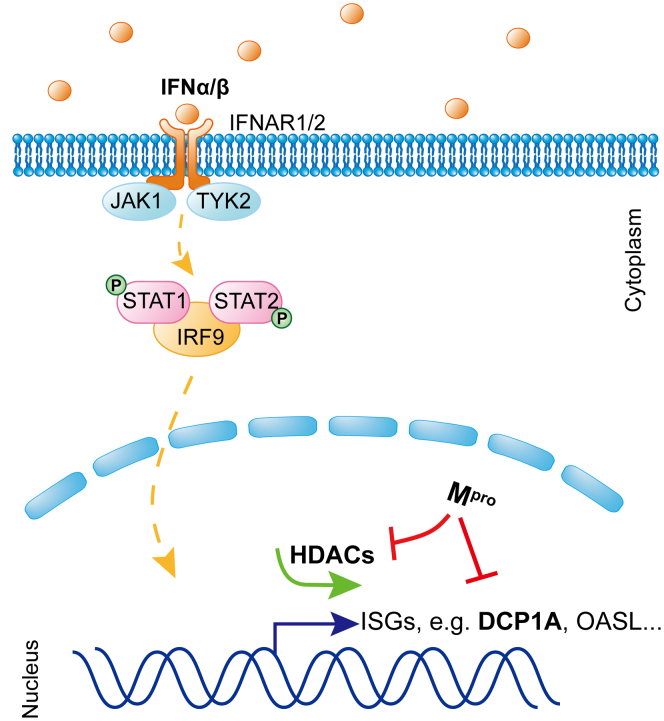
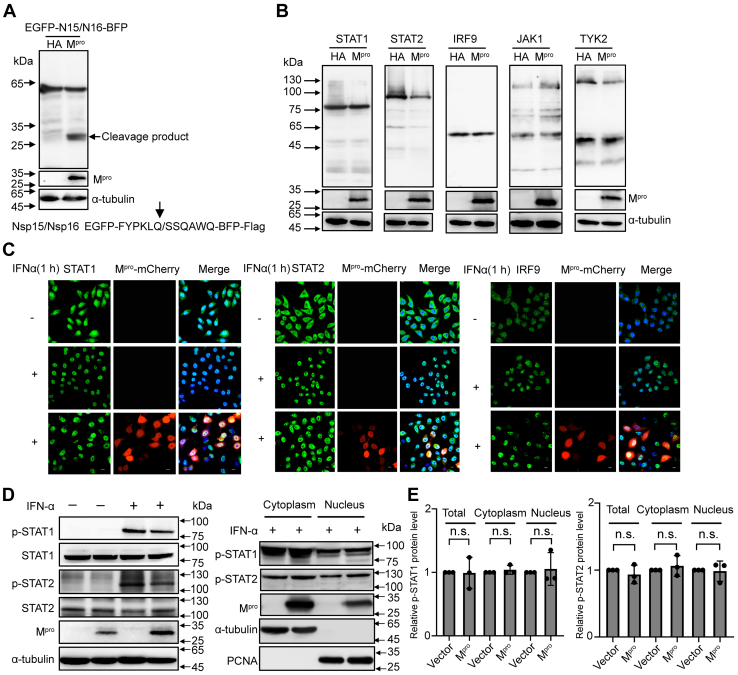
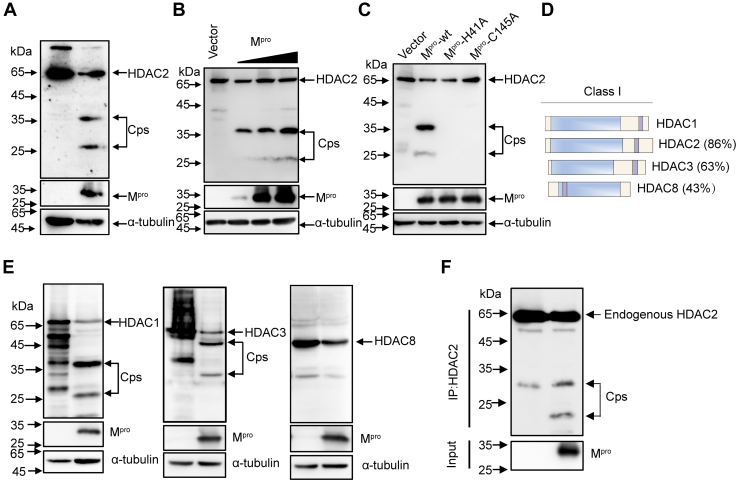
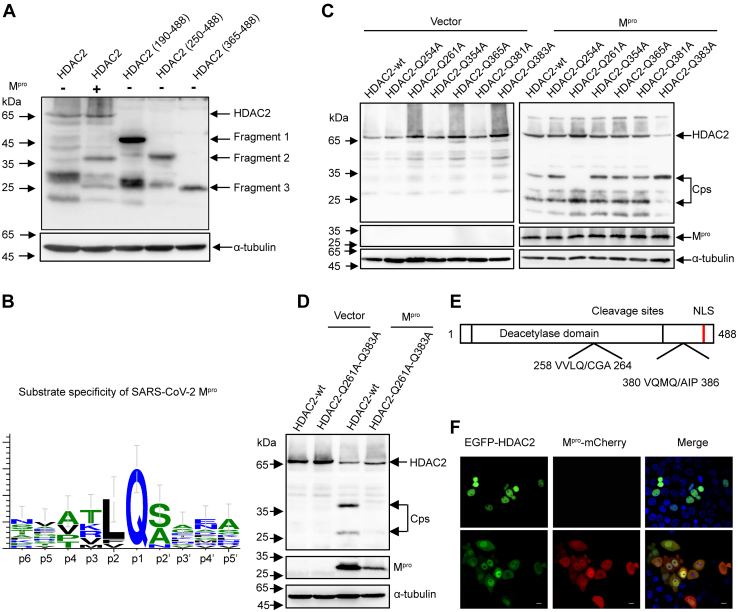
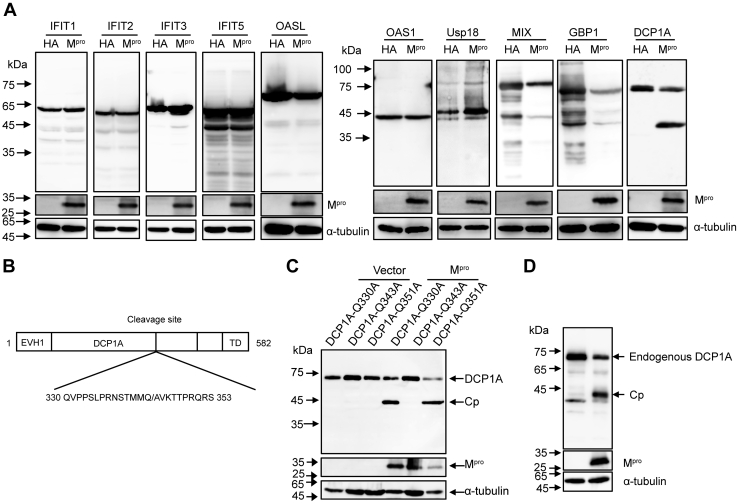
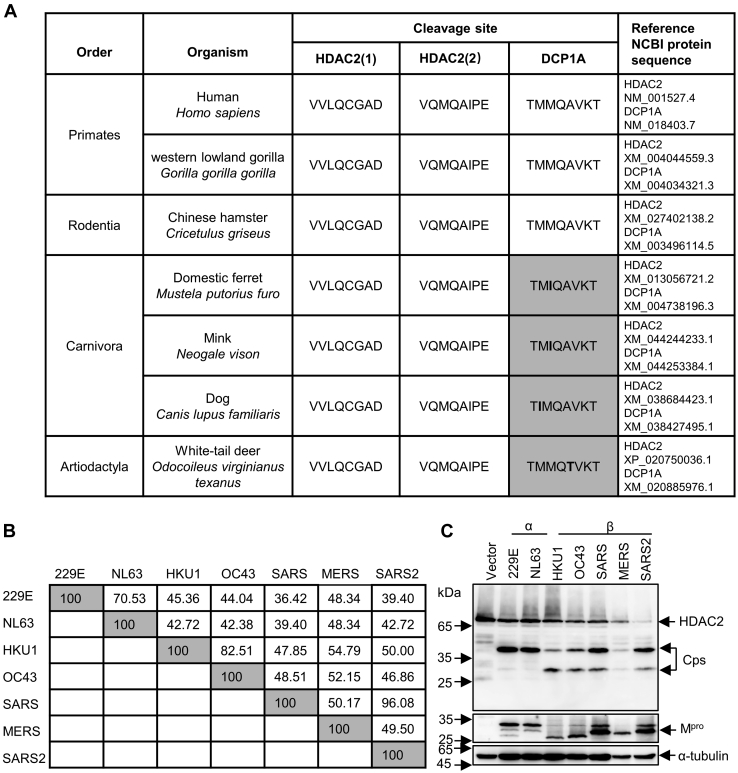
Severe acute respiratory syndrome coronavirus 2 (SARS-CoV-2), which causes coronavirus disease 2019, constitutes an emerging human pathogen of zoonotic origin. A critical role in protecting the host against invading pathogens is carried out by interferon-stimulated genes (ISGs), the primary effectors of the type I interferon (IFN) response. All coronaviruses studied thus far have to first overcome the inhibitory effects of the IFN/ISG system before establishing efficient viral replication. However, whether SARS-CoV-2 evades IFN antiviral immunity by manipulating ISG activation remains to be elucidated. Here, we show that the SARS-CoV-2 main protease (M) significantly suppresses the expression and transcription of downstream ISGs driven by IFN-stimulated response elements in a dose-dependent manner, and similar negative regulations were observed in two mammalian epithelial cell lines (simian Vero E6 and human A549). Our analysis shows that to inhibit the ISG production, M cleaves histone deacetylases (HDACs) rather than directly targeting IFN signal transducers. Interestingly, M also abolishes the activity of ISG effector mRNA-decapping enzyme 1a (DCP1A) by cleaving it at residue Q343. In addition, M from different genera of coronaviruses has the protease activity to cleave both HDAC2 and DCP1A, even though the alphacoronaviruse M exhibits weaker catalytic activity in cleaving HDAC2. In conclusion, our findings clearly demonstrate that SARS-CoV-2 M constitutes a critical anti-immune effector that modulates the IFN/ISG system at multiple levels, thus providing a novel molecular explanation for viral immune evasion and allowing for new therapeutic approaches against coronavirus disease 2019 infection.
严重急性呼吸综合征冠状病毒 2(SARS-CoV-2)引起 2019 年冠状病毒病,是一种源自动物的新兴人类病原体。干扰素刺激基因(ISGs)在保护宿主免受入侵病原体的侵害方面发挥着关键作用,是 I 型干扰素(IFN)反应的主要效应物。迄今为止,所有研究的冠状病毒都必须首先克服 IFN/ISG 系统的抑制作用,才能建立有效的病毒复制。然而,SARS-CoV-2 是否通过操纵 ISG 激活来逃避 IFN 抗病毒免疫仍有待阐明。在这里,我们表明 SARS-CoV-2 主要蛋白酶(M)以剂量依赖的方式显著抑制 IFN 刺激反应元件驱动的下游 ISG 的表达和转录,并且在两种哺乳动物上皮细胞系(猴 Vero E6 和人 A549)中观察到类似的负调控。我们的分析表明,为了抑制 ISG 的产生,M 切割组蛋白去乙酰化酶(HDACs)而不是直接针对 IFN 信号转导器。有趣的是,M 通过切割 Q343 残基还使 ISG 效应物 mRNA 去帽酶 1a(DCP1A)失活。此外,来自冠状病毒不同属的 M 具有蛋白酶活性,可切割 HDAC2 和 DCP1A,尽管α冠状病毒的 M 在切割 HDAC2 时表现出较弱的催化活性。总之,我们的研究结果清楚地表明,SARS-CoV-2 M 构成了一种关键的抗病毒效应物,可在多个水平上调节 IFN/ISG 系统,从而为病毒免疫逃避提供了新的分子解释,并为针对 2019 年冠状病毒病感染的新治疗方法提供了可能。