Department of Neurological Surgery, Northwestern University, Chicago, Illinois, USA.
Northwestern Medicine Malnati Brain Tumor Institute of the Lurie Comprehensive Cancer Center, Feinberg School of Medicine, Northwestern University, Chicago, Illinois, USA.
J Immunother Cancer. 2023 Feb;11(2). doi: 10.1136/jitc-2022-006239.
The immunosuppressive tumor microenvironment (TME) is a major barrier to the efficacy of chimeric antigen receptor T cells (CAR-T cells) in glioblastoma (GBM). Transgenic expression of IL15 is one attractive strategy to modulate the TME. However, at present, it is unclear if IL15 could be used to directly target myeloid-derived suppressor cells (MDSCs), a major cellular component of the GBM TME. Here, we explored if MDSC express IL15Rα and the feasibility of exploiting its expression as an immunotherapeutic target.
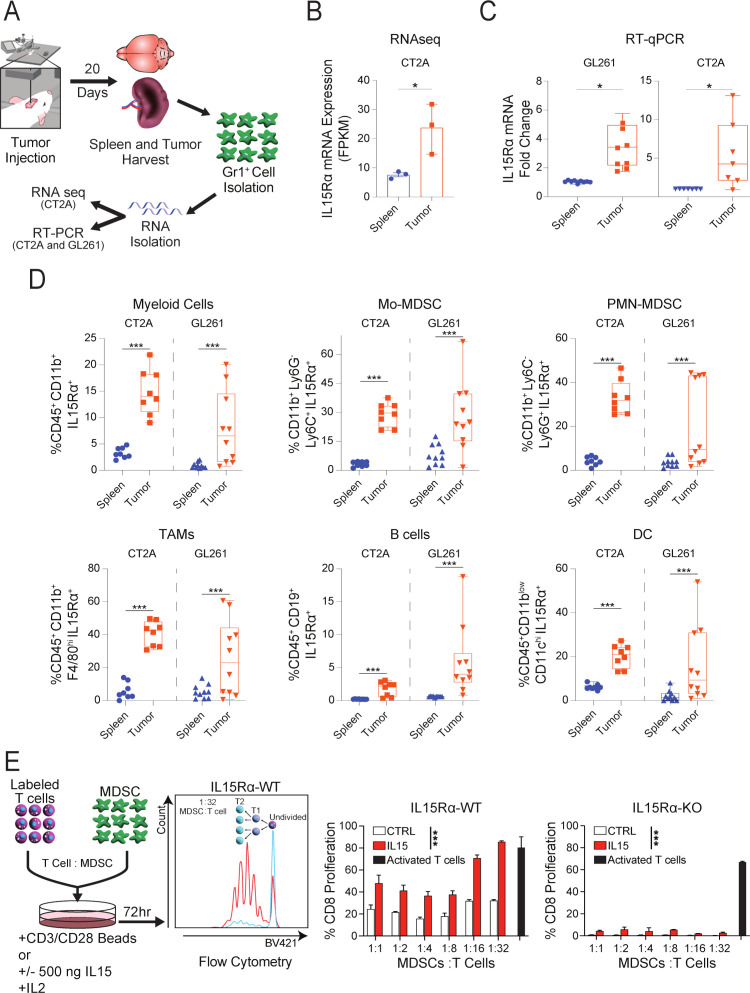
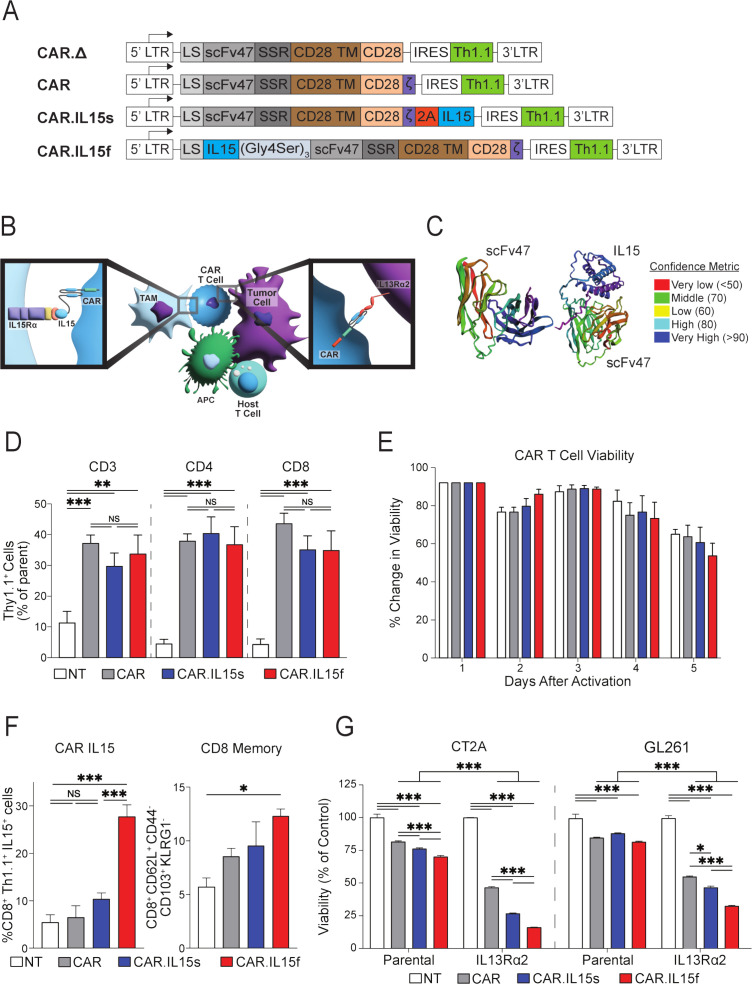
RNA-seq, RT-qPCR, and flow cytometry were used to determine IL15Rα expression in paired peripheral and tumor-infiltrating immune cells of GBM patients and two syngeneic murine GBM models. We generated murine T cells expressing IL13Rα2-CARs and secretory IL15 (CAR.IL15s) or IL13Rα2-CARs in which IL15 was fused to the CAR to serve as an IL15Rα-targeting moiety (CAR.IL15f), and characterized their effector function in vitro and in syngeneic IL13Rα2+glioma models.
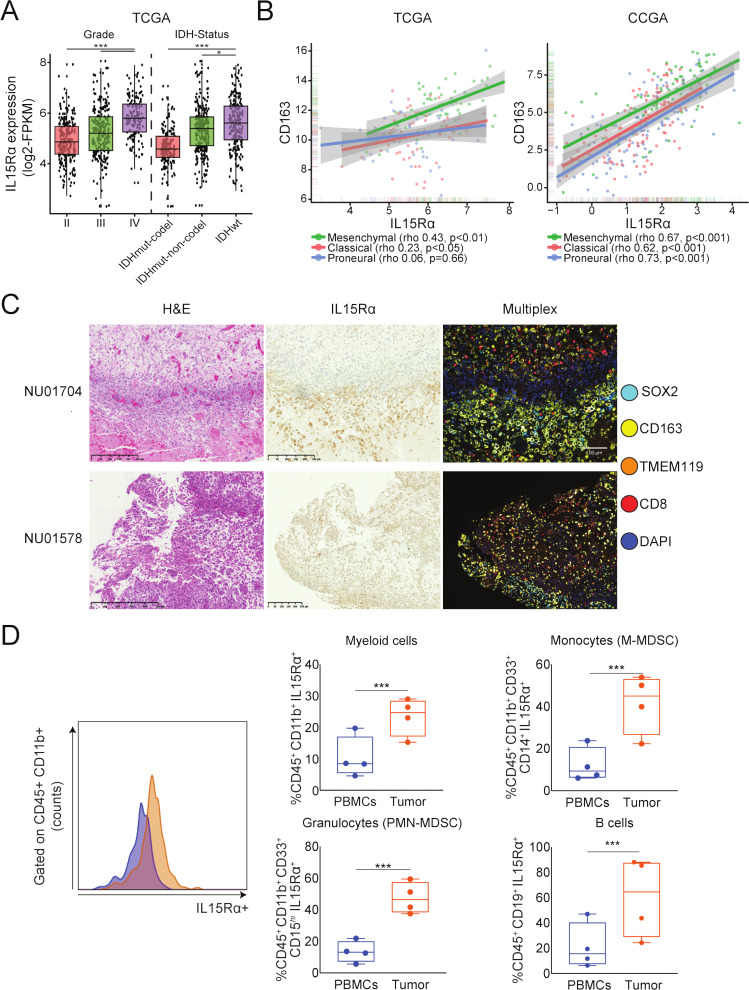
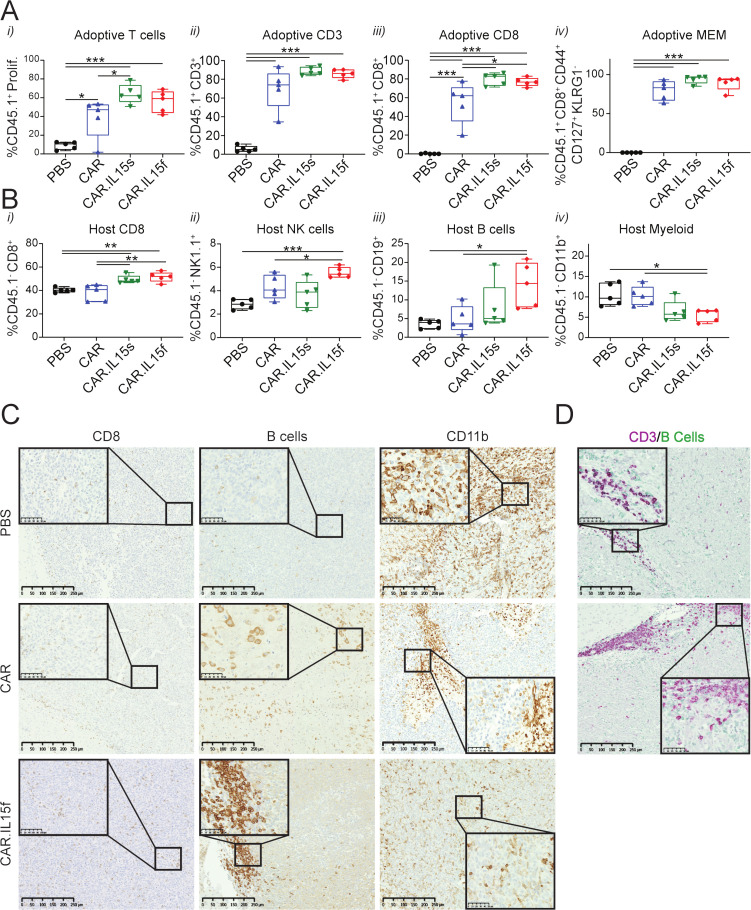
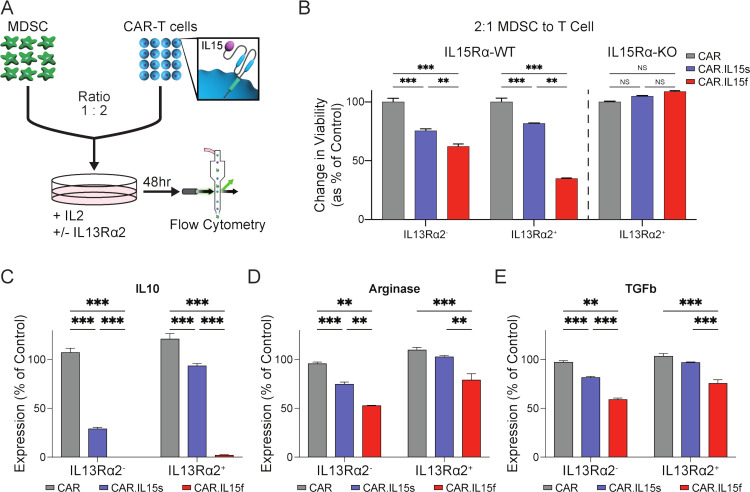
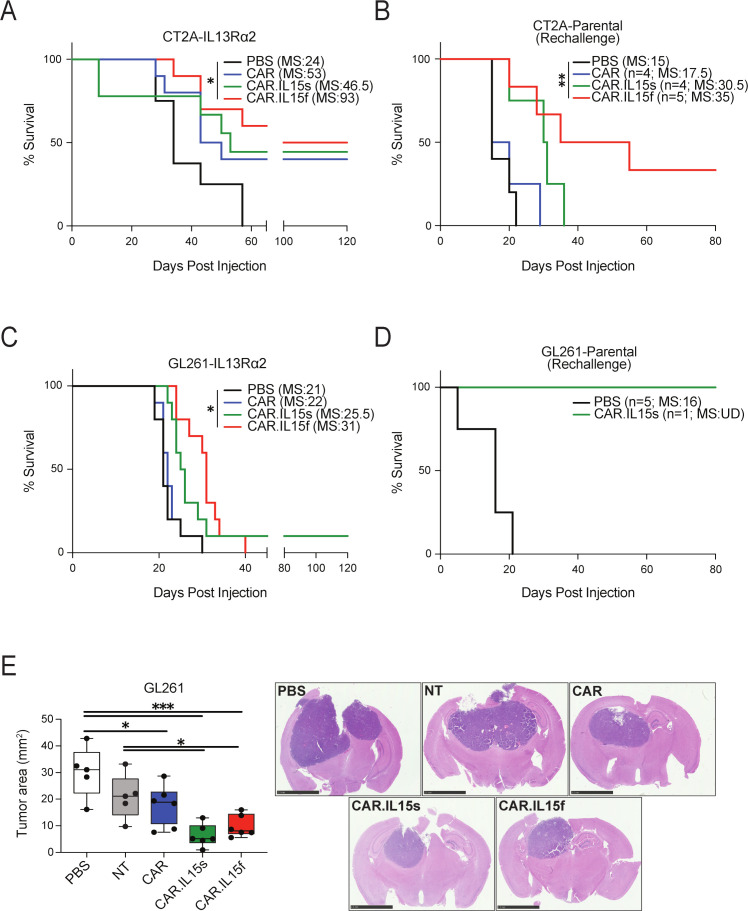
IL15Rα was preferentially expressed in myeloid, B, and dendritic cells in patients' and syngeneic GBMs. In vitro, CAR.IL15s and CAR.IL15f T cells depleted MDSC and decreased their secretion of immunosuppressive molecules with CAR.IL15f T cells being more efficacious. Similarly, CAR.IL15f T cells significantly improved the survival of mice in two GBM models. TME analysis showed that treatment with CAR.IL15f T cells resulted in higher frequencies of CD8+T cells, NK, and B cells, but a decrease in CD11b+cells in tumors compared with therapy with CAR T cells.
We demonstrate that MDSC of the glioma TME express IL15Ra and that these cells can be targeted with secretory IL15 or an IL15Rα-targeting moiety incorporated into the CAR. Thus, IL15-modified CAR T cells act as a dual targeting agent against tumor cells and MDSC in GBM, warranting their future evaluation in early-phase clinical studies.
免疫抑制性肿瘤微环境(TME)是嵌合抗原受体 T 细胞(CAR-T 细胞)在胶质母细胞瘤(GBM)中疗效的主要障碍。转基因表达 IL15 是一种调节 TME 的有吸引力的策略。然而,目前尚不清楚 IL15 是否可直接靶向髓系来源的抑制性细胞(MDSC),这是 GBM TME 的主要细胞成分。在这里,我们探讨了 MDSC 是否表达 IL15Rα,以及利用其表达作为免疫治疗靶点的可行性。
使用 RNA-seq、RT-qPCR 和流式细胞术来确定 GBM 患者配对的外周和肿瘤浸润免疫细胞以及两种同源鼠 GBM 模型中 IL15Rα 的表达。我们生成了表达 IL13Rα2-CAR 和分泌型 IL15(CAR.IL15s)或 IL13Rα2-CAR 的鼠 T 细胞,其中 IL15 与 CAR 融合,作为 IL15Rα 靶向部分(CAR.IL15f),并在体外和同源性 IL13Rα2+胶质母细胞瘤模型中对其效应功能进行了表征。
IL15Rα 在患者和同源性 GBM 中的髓样细胞、B 细胞和树突状细胞中优先表达。在体外,CAR.IL15s 和 CAR.IL15f T 细胞耗尽了 MDSC,并减少了其免疫抑制分子的分泌,而 CAR.IL15f T 细胞更有效。同样,CAR.IL15f T 细胞显著改善了两种 GBM 模型中小鼠的存活率。TME 分析表明,与 CAR T 细胞治疗相比,CAR.IL15f T 细胞治疗导致肿瘤中 CD8+T 细胞、NK 和 B 细胞的频率升高,但 CD11b+细胞减少。
我们证明了胶质母细胞瘤 TME 中的 MDSC 表达 IL15Ra,并且可以使用分泌型 IL15 或与 CAR 融合的 IL15Rα 靶向部分来靶向这些细胞。因此,IL15 修饰的 CAR-T 细胞在 GBM 中充当针对肿瘤细胞和 MDSC 的双重靶向剂,值得在早期临床研究中进一步评估。