Microenvironment and Immunology Research Laboratory, Medical Center-University of Freiburg, Freiburg, Germany.
Department of Neurosurgery, Medical Center-University of Freiburg, Freiburg, Germany.
Nat Commun. 2022 Feb 17;13(1):925. doi: 10.1038/s41467-022-28523-1.
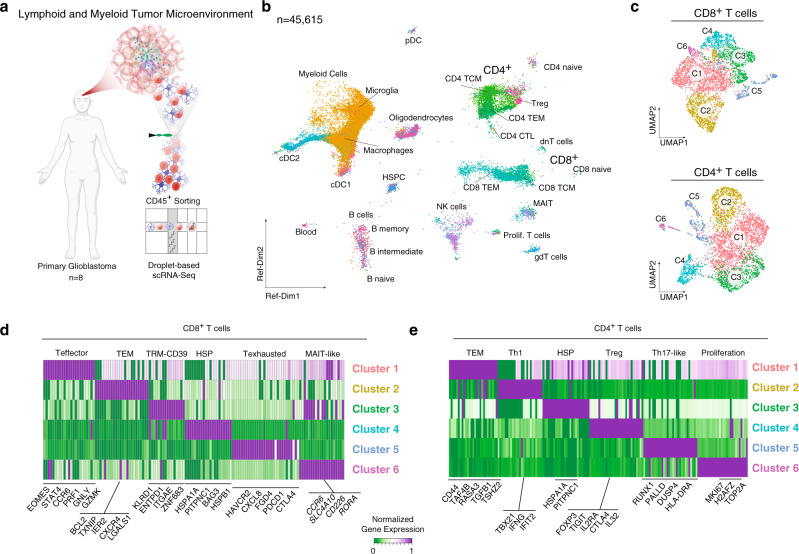
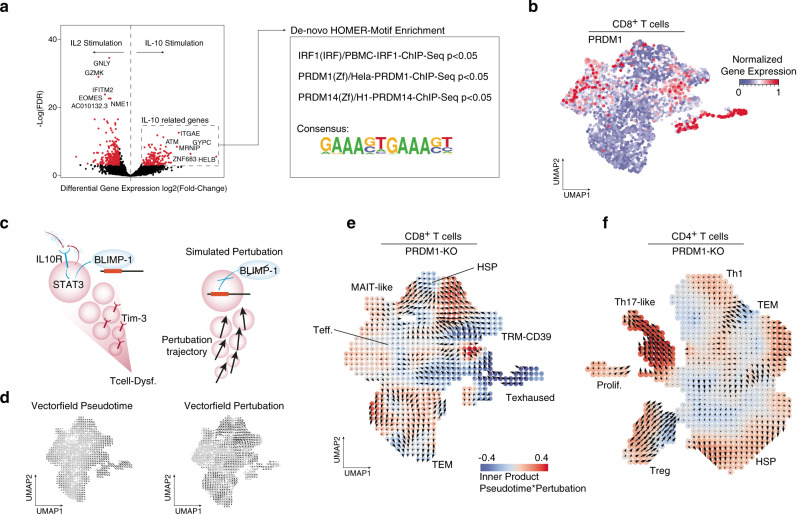
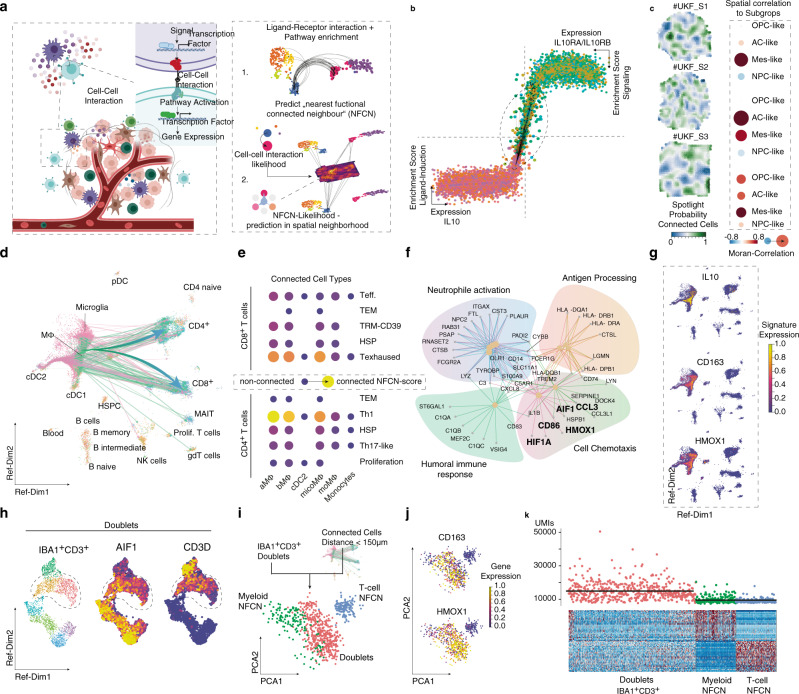
Despite recent advances in cancer immunotherapy, certain tumor types, such as Glioblastomas, are highly resistant due to their tumor microenvironment disabling the anti-tumor immune response. Here we show, by applying an in-silico multidimensional model integrating spatially resolved and single-cell gene expression data of 45,615 immune cells from 12 tumor samples, that a subset of Interleukin-10-releasing HMOX1 myeloid cells, spatially localizing to mesenchymal-like tumor regions, drive T-cell exhaustion and thus contribute to the immunosuppressive tumor microenvironment. These findings are validated using a human ex-vivo neocortical glioblastoma model inoculated with patient derived peripheral T-cells to simulate the immune compartment. This model recapitulates the dysfunctional transformation of tumor infiltrating T-cells. Inhibition of the JAK/STAT pathway rescues T-cell functionality both in our model and in-vivo, providing further evidence of IL-10 release being an important driving force of tumor immune escape. Our results thus show that integrative modelling of single cell and spatial transcriptomics data is a valuable tool to interrogate the tumor immune microenvironment and might contribute to the development of successful immunotherapies.
尽管癌症免疫疗法最近取得了进展,但某些肿瘤类型(如胶质母细胞瘤)由于其肿瘤微环境使抗肿瘤免疫反应失活而具有高度耐药性。在这里,我们通过应用一种整合了来自 12 个肿瘤样本的 45615 个免疫细胞的空间分辨和单细胞基因表达数据的多维计算模型表明,一组释放白细胞介素-10 的 HMOX1 髓样细胞,定位于间充质样肿瘤区域,驱动 T 细胞衰竭,从而有助于免疫抑制性肿瘤微环境。这些发现通过使用来自患者外周 T 细胞接种的人离体新皮质胶质母细胞瘤模型进行验证,以模拟免疫区室。该模型重现了肿瘤浸润性 T 细胞功能失调的转化。在我们的模型和体内,抑制 JAK/STAT 通路均可挽救 T 细胞功能,这进一步证明 IL-10 释放是肿瘤免疫逃逸的重要驱动力。因此,我们的研究结果表明,单细胞和空间转录组学数据的整合建模是一种研究肿瘤免疫微环境的有价值的工具,并可能有助于成功免疫疗法的发展。