REVAL Rehabilitation Research Center, Faculty of Rehabilitation Sciences, Hasselt University (UHasselt), Hasselt, Belgium.
Technology-Supported and Data-Driven Rehabilitation, Data Science Institute, UHasselt, Hasselt, Belgium.
Front Public Health. 2023 Jan 24;10:1072322. doi: 10.3389/fpubh.2022.1072322. eCollection 2022.
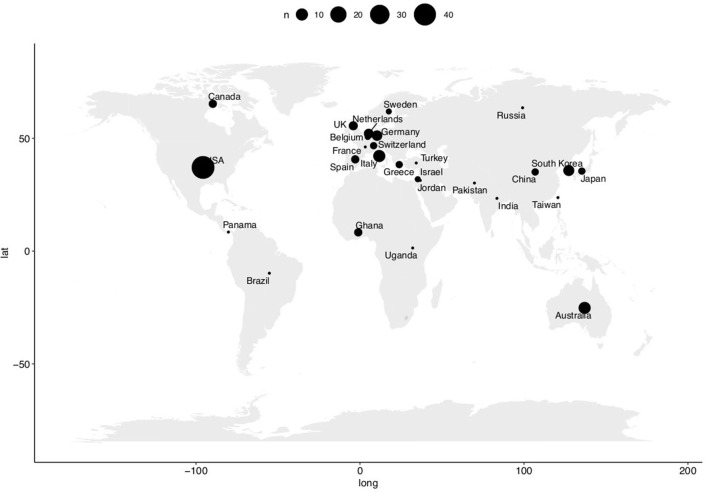
Mobile health (mHealth) development has advanced rapidly, indicating promise as an effective patient intervention. mHealth has many potential benefits that could help the treatment of patients, and the development of rehabilitation in low- and middle-income countries (LMICs). mHealth is a low-cost option that does not need rapid access to healthcare clinics or employees. It increases the feasibility and rationality of clinical treatment expectations in comparison to the conventional clinical model of management by promoting patient adherence to the treatment plan. mHealth can also serve as a basis for formulating treatment plans and partially compensate for the shortcomings of the traditional model. In addition, mHealth can help achieve universal rehabilitation service coverage by overcoming geographical barriers, thereby increasing the number of ways patients can benefit from the rehabilitation service, and by providing rehabilitation to individuals in remote areas and communities with insufficient healthcare services. However, despite these positive potential aspects, there is currently only a very limited number of studies performed in LMICs using mHealth. In this study, we first reviewed the current evidence supporting the use of mHealth in rehabilitation to identify the countries where studies have been carried out. Then, we identify the current limitations of the implementation of such mHealth solutions and propose a 10-point action plan, focusing on the macro (e.g., policymakers), meso (e.g., technology and healthcare institutions), and micro (e.g., patients and relatives) levels to ease the use, validation, and implementation in LMICs and thus participate in the development and recognition of public health and rehabilitation in these countries.
移动医疗(mHealth)发展迅速,有望成为一种有效的患者干预手段。mHealth 具有许多潜在的益处,可以帮助治疗患者,促进中低收入国家(LMICs)的康复发展。mHealth 是一种低成本的选择,不需要快速获得医疗诊所或员工的支持。与传统的临床管理模式相比,它通过提高患者对治疗计划的依从性,增加了临床治疗期望的可行性和合理性。mHealth 还可以作为制定治疗计划的基础,并在一定程度上弥补传统模式的不足。此外,mHealth 可以通过克服地理障碍来实现普及康复服务覆盖,从而增加患者从康复服务中受益的途径,并为医疗服务不足的偏远地区和社区的个人提供康复服务。然而,尽管有这些积极的潜在方面,目前在 LMICs 使用 mHealth 的研究非常有限。在本研究中,我们首先回顾了支持在康复中使用 mHealth 的现有证据,以确定已经开展研究的国家。然后,我们确定了目前实施此类 mHealth 解决方案的局限性,并提出了一个 10 点行动计划,重点关注宏观(如政策制定者)、中观(如技术和医疗机构)和微观(如患者和亲属)层面,以促进在 LMICs 中的使用、验证和实施,从而参与这些国家的公共卫生和康复的发展和认可。