Xue Xiao, Zhou Chen, Gao Yuan, Ji Xunming, Zhang Xuxiang
Department of Ophthalmology, Xuanwu Hospital, Capital Medical University, Beijing, China.
Department of Neurology, Xuanwu Hospital, Capital Medical University, Beijing, China.
Front Neurol. 2023 Jan 24;14:1065315. doi: 10.3389/fneur.2023.1065315. eCollection 2023.
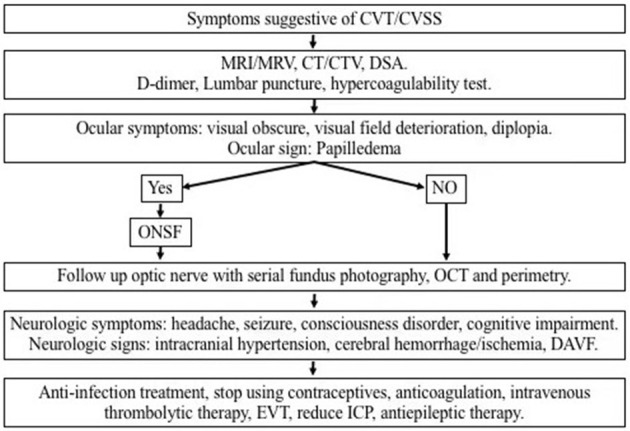
Visual impairment is the most common clinical feature of cerebral venous sinus occlusion or cerebral venous thrombosis-induced intracranial hypertension, which can result in optic atrophy, leading to irreversible vision loss, visual field defections, and finally, permanent blindness. Papilledema is a typical early pathophysiological alteration in visual impairment. Optic nerve sheath fenestration (ONSF) has become increasingly accepted as an option to prevent or halt progressive visual loss owing to its low risk and complications. The objective of this study is to review the latest research progress on ONSF for the treatment of visual impairment related to cerebral venous diseases.
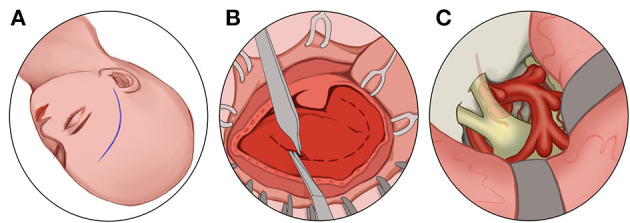
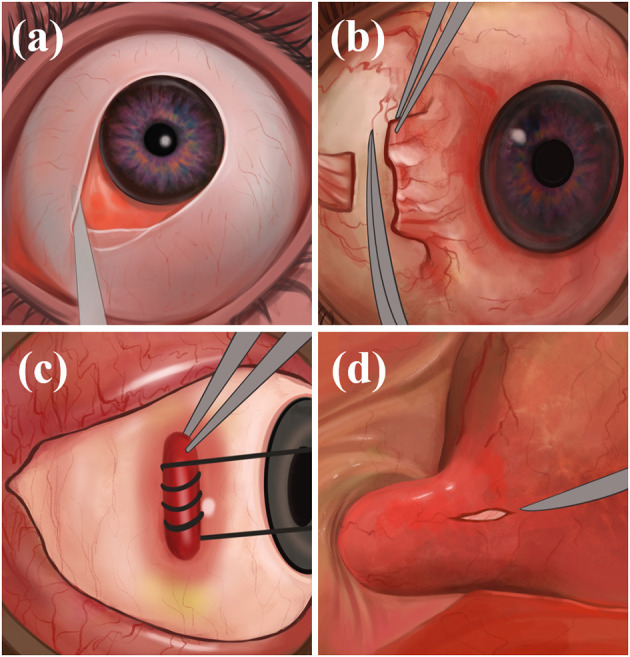
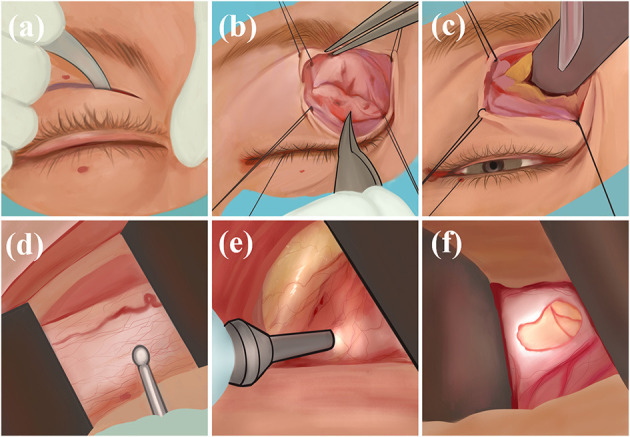
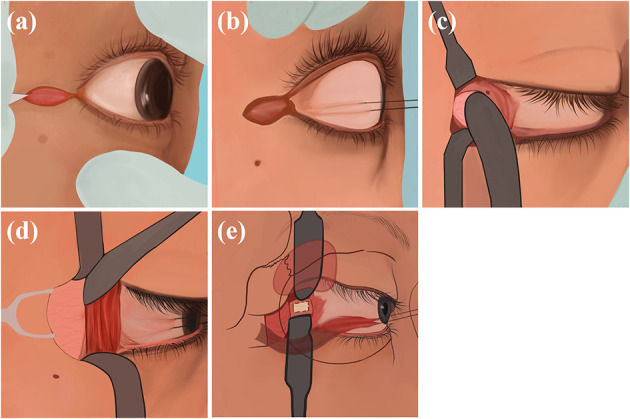
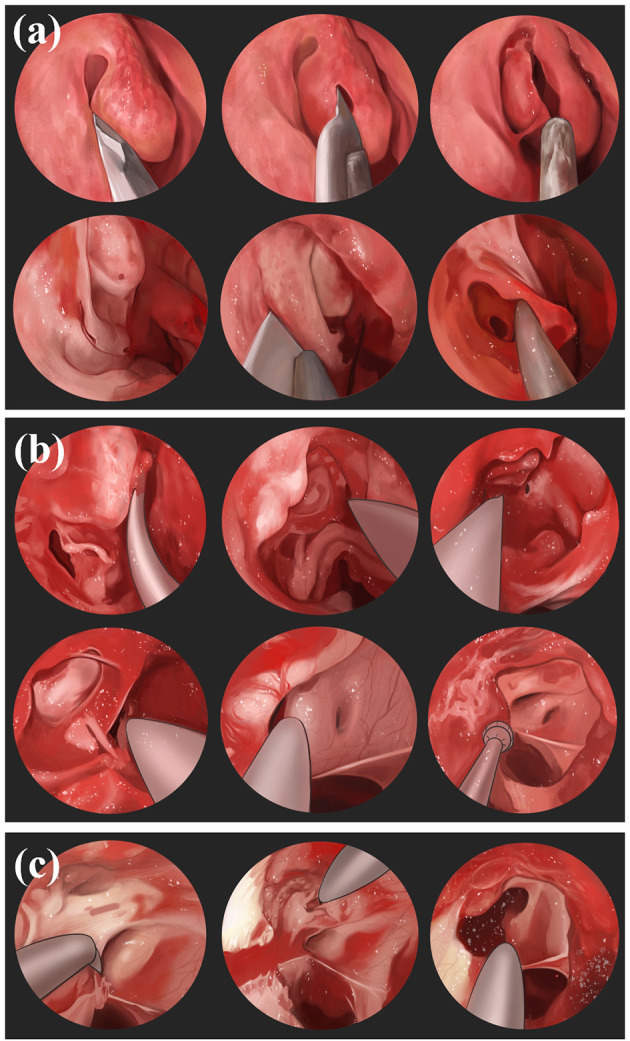
Study were searched following PRISMA guidelines based on three electronic databases (Pubmed, Embase and Medline-Ovid). We used the following keywords and variations as keywords to identify studies: "optic nerve sheath fenestration, papilledema, cerebral venous diseases, cerebral venous stenosis, cerebral venous thrombosis, idiopathic intracranial hypertension". The publication date of studies was restricted between 1,872.1.1 and 2,021.12.31. The application of ONSF in papilledema due to cerebral venous diseases is reviewed. Additionally, the common surgical approaches as well as advantages and disadvantages are also described graphically.
With the improvement of specific details of the ONSF procedure and surgical instruments, complications of ONSF have reduced and its safety has been significantly improved, although the number of clinically investigated cases in the literature remains low.
We recommend that ONSF should be considered as an imperative alternative to reduce or delay the visual morbidity of cerebral venous diseases, although there is yet no consensus on the optimal surgical timing.
视力障碍是脑静脉窦闭塞或脑静脉血栓形成所致颅内高压最常见的临床特征,可导致视神经萎缩,进而导致不可逆的视力丧失、视野缺损,最终导致永久性失明。视乳头水肿是视力障碍典型的早期病理生理改变。视神经鞘开窗术(ONSF)因其低风险和并发症,已越来越被视为预防或阻止进行性视力丧失的一种选择。本研究的目的是综述ONSF治疗脑静脉疾病相关视力障碍的最新研究进展。
根据PRISMA指南,在三个电子数据库(PubMed、Embase和Medline - Ovid)中进行检索。我们使用以下关键词及变体来识别研究:“视神经鞘开窗术、视乳头水肿、脑静脉疾病、脑静脉狭窄、脑静脉血栓形成、特发性颅内高压”。研究的发表日期限制在1872年1月1日至2021年12月31日之间。综述了ONSF在脑静脉疾病所致视乳头水肿中的应用。此外,还以图表形式描述了常见的手术方法以及优缺点。
随着ONSF手术细节和手术器械的改进,尽管文献中临床研究病例数仍然较少,但ONSF的并发症有所减少,其安全性得到了显著提高。
我们建议,尽管在最佳手术时机上尚未达成共识,但ONSF应被视为减少或延缓脑静脉疾病视力损害的必要替代方法。