Laboratory of Forest Sciences, Faculty of Agricultural Sciences, University of Abomey-Calavi (Benin), Abomey-Calavi, Benin.
Sci Rep. 2023 Feb 10;13(1):2430. doi: 10.1038/s41598-023-29048-3.
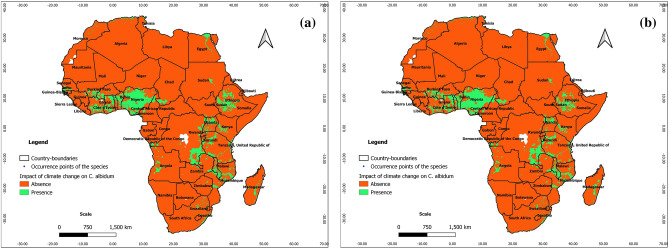
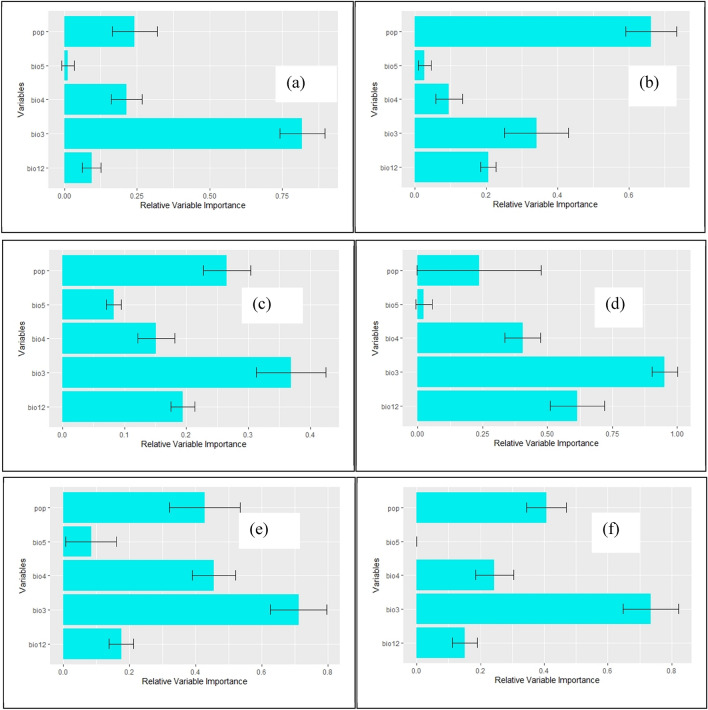
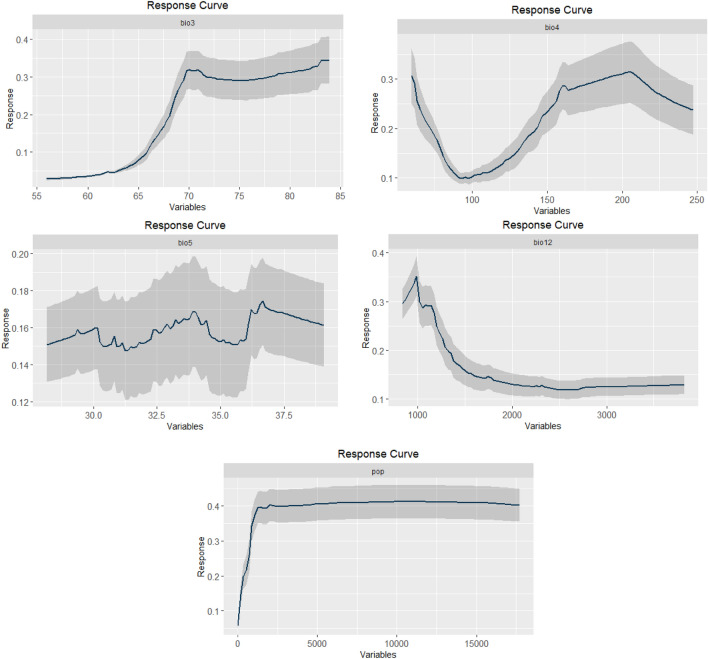
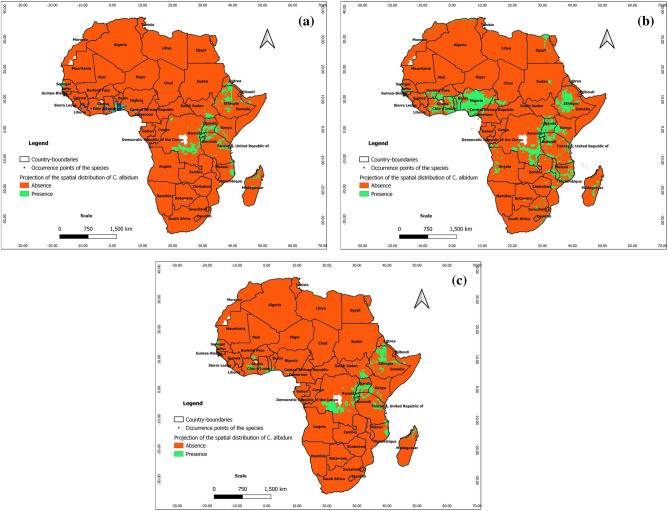
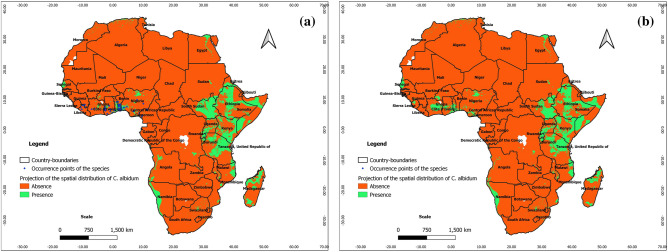
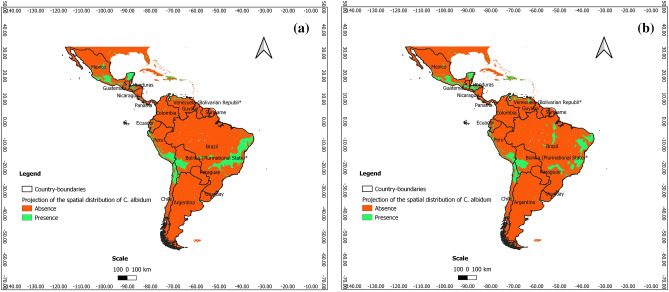
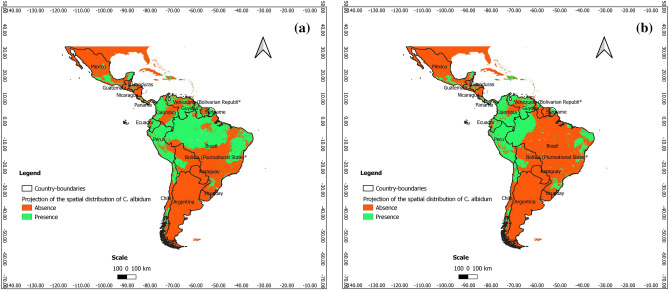
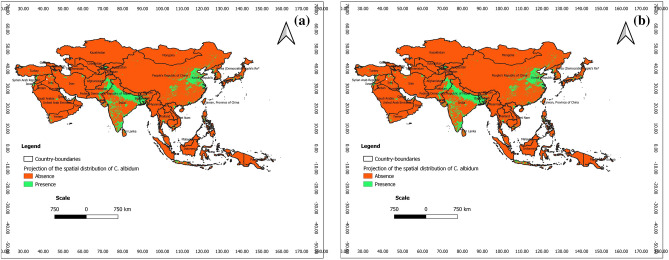
Chrysophyllum albidum is a forest food tree species of the Sapotaceae family bearing large berries of nutrition, sanitary, and commercial value in many African countries. Because of its socioeconomic importance, C. albidum is threatened at least by human pressure. However, we do not know to what extent climate change can impact its distribution or whether it is possible to introduce the species in other tropical regions. To resolve our concerns, we decided to model the spatial distribution of the species. We then used the SDM package for data modeling in R to compare the predictive performances of algorithms among the most commonly used: three machine learning algorithms (MaxEnt, boosted regression trees, and random forests) and three regression algorithms (generalized linear model, generalized additive models, and multivariate adaptive regression spline). We performed model transfers in tropical Asia and Latin America. At the scale of Africa, predictions with respect to Maxent under Africlim (scenarios RCP 4.5 and RCP 8.5, horizon 2055) and MIROCES2L (scenarios SSP245 and SSP585, horizon 2060) showed that the suitable areas of C. albidum, within threshold values of the most contributing variables to the models, will extend mostly in West, East, Central, and Southern Africa as well as in East Madagascar. As opposed to Maxent, in Africa, the predictions for the future of BRT and RF were unrealistic with respect to the known ecology of C. albidum. All the algorithms except Maxent (for tropical Asia only), were consistent in predicting a successful introduction of C. albidum in Latin America and tropical Asia, both at present and in the future. We therefore recommend the introduction and cultivation of Chrysophyllum albidum in the predicted suitable areas of Latin America and tropical Asia, along with vegetation inventories in order to discover likely, sister or vicarious species of Chrysophyllum albidum that can be new to Science. Africlim is more successful than MIROCES2L in predicting realistic suitable areas of Chrysophyllum albidum in Africa. We therefore recommend to the authors of Africlim an update of Africlim models to comply with the sixth Assessment Report (AR6) of IPCC.
象牙果是金虎尾科的一种森林食用树种,其果实硕大,富含营养,具有卫生和商业价值,在许多非洲国家广受欢迎。由于具有重要的社会经济意义,象牙果受到了人类压力的威胁。然而,我们不知道气候变化在何种程度上会影响其分布,也不知道是否有可能将该物种引入其他热带地区。为了解决这些问题,我们决定对该物种的空间分布进行建模。然后,我们使用 R 中的 SDM 包对数据进行建模,比较了最常用的算法的预测性能:三种机器学习算法(最大熵、增强回归树和随机森林)和三种回归算法(广义线性模型、广义加性模型和多元自适应回归样条)。我们在热带亚洲和拉丁美洲进行了模型转移。在非洲范围内,根据 Africlim(RCP4.5 和 RCP8.5 情景,2055 年)和 MIROCES2L(SSP245 和 SSP585 情景,2060 年)下的 MaxEnt 预测结果表明,象牙果的适宜区域将主要在西非、东非、中非和南非以及马达加斯加东部扩大。与 MaxEnt 不同的是,在非洲,BRT 和 RF 对未来的预测与象牙果已知的生态情况不符。除了 MaxEnt(仅适用于热带亚洲)之外,所有算法都一致预测,象牙果在拉丁美洲和热带亚洲的引入和种植在目前和未来都是成功的。因此,我们建议在拉丁美洲和热带亚洲的预测适宜地区引入和种植象牙果,并进行植被清查,以便发现象牙果可能是新的科学物种,或者是其姐妹种或替代种。与 MIROCES2L 相比, Africlim 更成功地预测了非洲象牙果的现实适宜区域。因此,我们建议 Africlim 的作者更新 Africlim 模型,以符合 IPCC 的第六次评估报告(AR6)。