Department of Neurology and Clinical Research Center of Neurological Disease, The Second Affiliated Hospital of Soochow University, Suzhou, 215004, China.
Department of Neurology, Huzhou Central Hospital, The Affiliated Huzhou Hospital, Zhejiang University School of Medicine, Huzhou, 313000, China.
Acta Pharmacol Sin. 2023 Jul;44(7):1322-1336. doi: 10.1038/s41401-023-01058-x. Epub 2023 Feb 10.
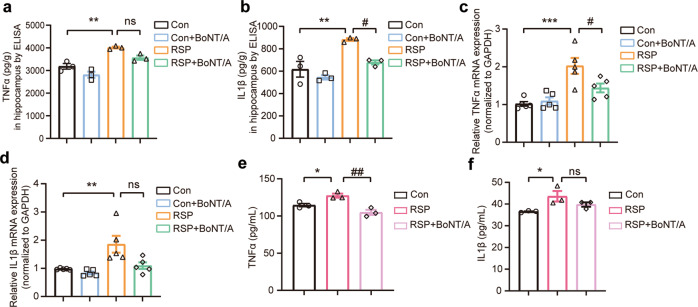
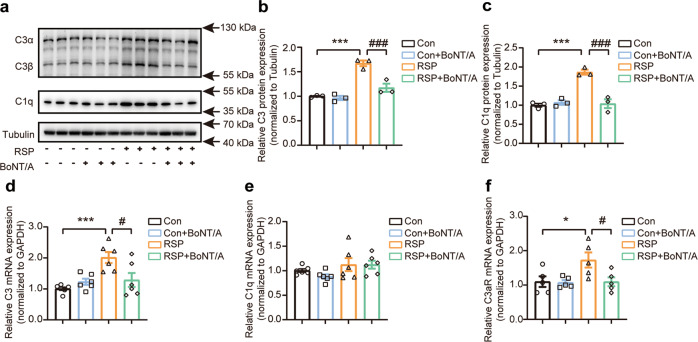
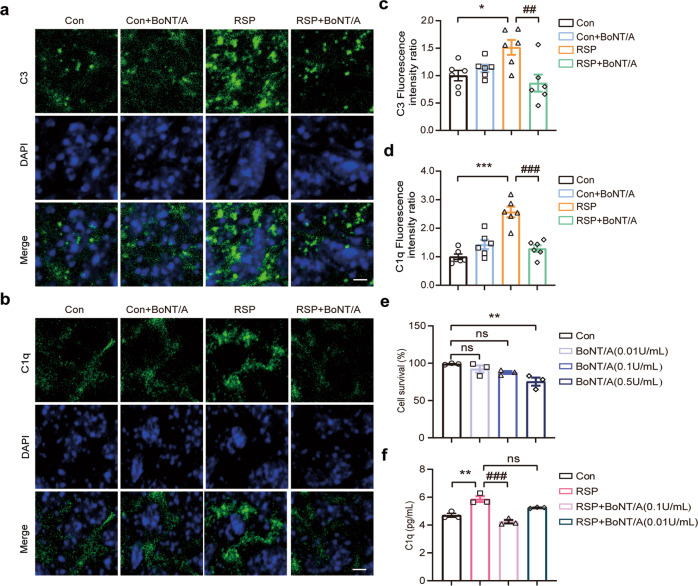
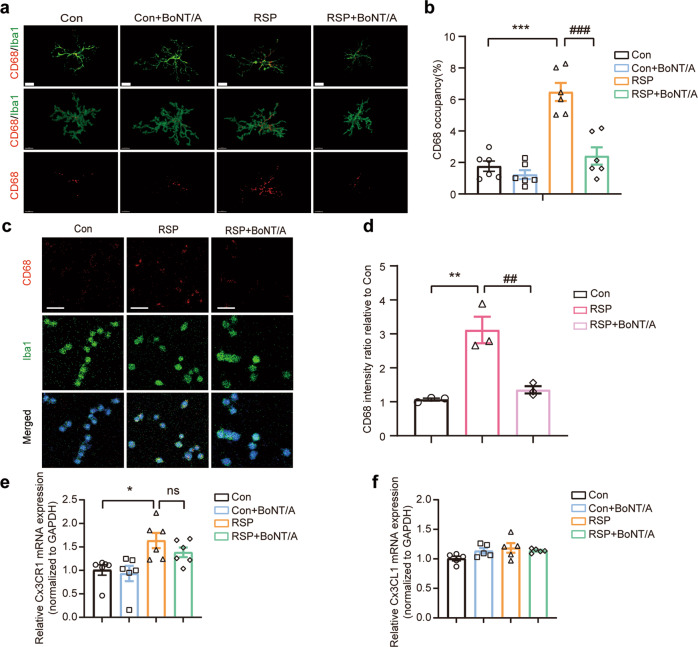
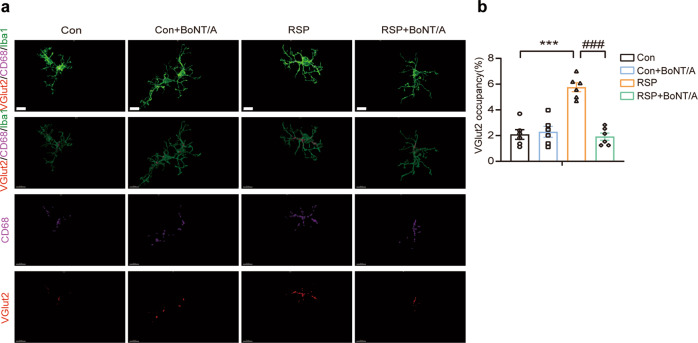
Depression is one of the common non-motor symptoms of Parkinson's disease (PD). In the clinic, botulinum neurotoxin A (BoNT/A) has been used to treat depression. In this study, we investigated the mechanisms underlying the anti-depressive effect of BoNT/A in a PD mouse model. Mice were administered reserpine (3 μg/mL in the drinking water) for 10 weeks. From the 10 week, BoNT/A (10 U·kg·d) was injected into the cheek for 3 consecutive days. We showed that chronic administration of reserpine produced the behavioral phenotypes of depression and neurochemical changes in the substantia nigra pars compacta (SNpc) and striatum. BoNT/A treatment significantly ameliorated the depressive-like behaviors, but did not improve TH activity in SNpc of reserpine-treated mice. We demonstrated that BoNT/A treatment reversed reserpine-induced complement and microglia activation in the hippocampal CA1 region. Furthermore, BoNT/A treatment significantly attenuated the microglial engulfment of presynaptic synapses, thus ameliorating the apparent synapse and spine loss in the hippocampus in the reserpine-treated mice. Moreover, BoNT/A treatment suppressed microglia-mediated expression of pro-inflammatory cytokines TNF-α and IL-1β in reserpine-treated mice. In addition, we showed that BoNT/A (0.1 U/mL) ameliorated reserpine-induced complement and microglia activation in mouse BV2 microglial cells in vitro. We conclude that BoNT/A ameliorates depressive-like behavior in a reserpine-induced PD mouse model through reversing the synapse loss mediated by classical complement induced-microglial engulfment as well as alleviating microglia-mediated proinflammatory responses. BoNT/A ameliorates depressive-like behavior, and reverses synapse loss mediated by classical complement pathway-initiated microglia engulfment as well as alleviates microglia-mediated proinflammatory response in the reserpine-induced Parkinson's disease mouse model.
抑郁是帕金森病(PD)的常见非运动症状之一。在临床上,肉毒杆菌神经毒素 A(BoNT/A)已被用于治疗抑郁症。在这项研究中,我们研究了 BoNT/A 在 PD 小鼠模型中抗抑郁作用的机制。小鼠连续 10 周给予利血平(3μg/mL 饮用水)。从第 10 周开始,BoNT/A(10U·kg·d)连续 3 天注入脸颊。我们发现,慢性给予利血平会产生抑郁样行为表型和黑质致密部(SNpc)和纹状体的神经化学变化。BoNT/A 治疗显著改善了利血平处理小鼠的抑郁样行为,但并未改善 SNpc 中 TH 活性。我们证明 BoNT/A 治疗逆转了利血平诱导的海马 CA1 区补体和小胶质细胞激活。此外,BoNT/A 治疗显著减轻了利血平诱导的小胶质细胞吞噬突触前突触,从而改善了利血平处理小鼠海马中的明显突触和棘突丢失。此外,BoNT/A 治疗抑制了利血平处理小鼠中 microglia 介导的促炎细胞因子 TNF-α和 IL-1β的表达。此外,我们表明 BoNT/A(0.1U/mL)改善了体外利血平诱导的小鼠 BV2 小胶质细胞中补体和小胶质细胞的激活。我们的结论是,BoNT/A 通过逆转经典补体诱导的小胶质细胞吞噬作用介导的突触丢失以及减轻 microglia 介导的促炎反应,改善了利血平诱导的 PD 小鼠模型中的抑郁样行为。BoNT/A 改善了利血平诱导的帕金森病小鼠模型中的抑郁样行为,逆转了经典补体途径起始的小胶质细胞吞噬作用介导的突触丢失,并减轻了 microglia 介导的促炎反应。