Sogo Takahiro, Nakao Shu, Tsukamoto Tasuku, Ueyama Tomoe, Harada Yukihiro, Ihara Dai, Ishida Tomoaki, Nakahara Masato, Hasegawa Koji, Akagi Yuka, Kida Yasuyuki S, Nakagawa Osamu, Nagamune Teruyuki, Kawahara Masahiro, Kawamura Teruhisa
Ritsumeikan Global Innovation Research Organization, Ritsumeikan University, 1-1-1 Noji-higashi, Kusatsu, Shiga, 525-8577, Japan.
Department of Biomedical Sciences, College of Life Sciences, Ritsumeikan University, 1-1-1 Noji-higashi, Kusatsu, Shiga, 525-8577, Japan.
Inflamm Regen. 2023 Feb 10;43(1):11. doi: 10.1186/s41232-023-00258-6.
Canonical Wnt signaling is involved in a variety of biological processes including stem cell renewal and differentiation, embryonic development, and tissue regeneration. Previous studies reported the stage-specific roles of the Wnt signaling in heart development. Canonical Wnt signal activation by recombinant Wnt3a in the early phase of differentiation enhances the efficiency of myocardial cell production from pluripotent stem cells. However, the hydrophobicity of Wnt proteins results in high cost to produce the recombinant proteins and presents an obstacle to their preparation and application for therapeutics, cell therapy, or molecular analysis of Wnt signaling.
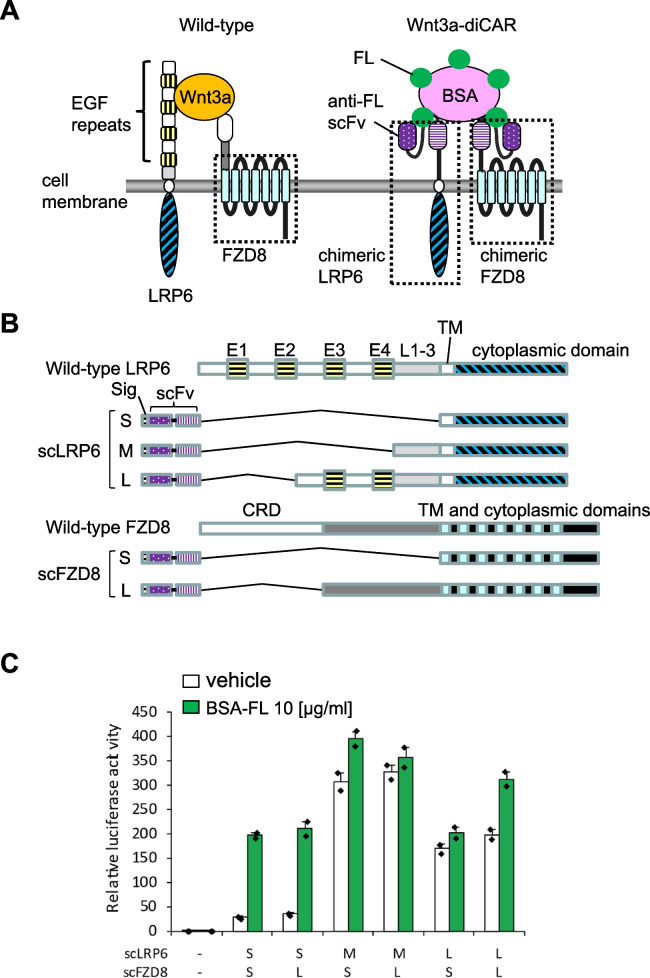
To solve this problem, we generated an inexpensive molecule-responsive differentiation-inducing chimeric antigen receptor (designated as diCAR) that can activate Wnt3a signaling. The extracellular domains of low-density-lipoprotein receptor-related protein 6 (LRP6) and frizzeled-8 (FZD8) were replaced with single-chain Fv of anti-fluorescein (FL) antibody, which can respond to FL-conjugated bovine serum albumin (BSA-FL) as a cognate ligand. We then analyzed the effect of this diCAR on Wnt signal activation and cardiomyocyte differentiation of mouse embryonic stem cells in response to BSA-FL treatment.
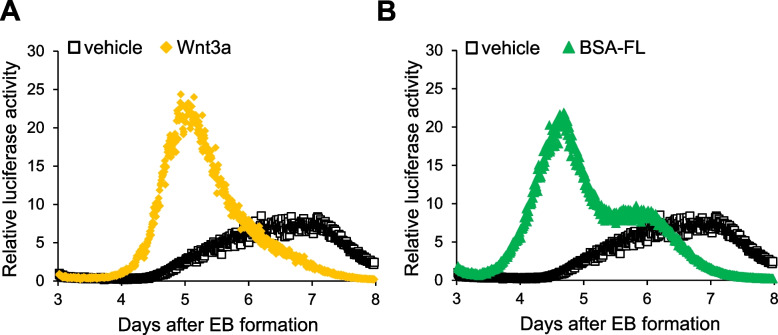
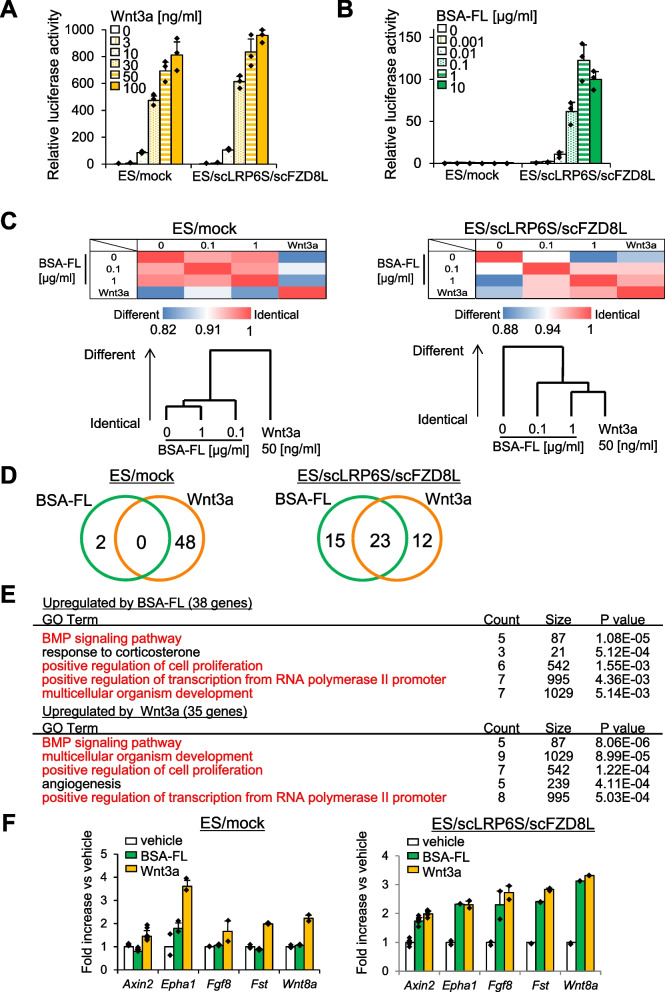
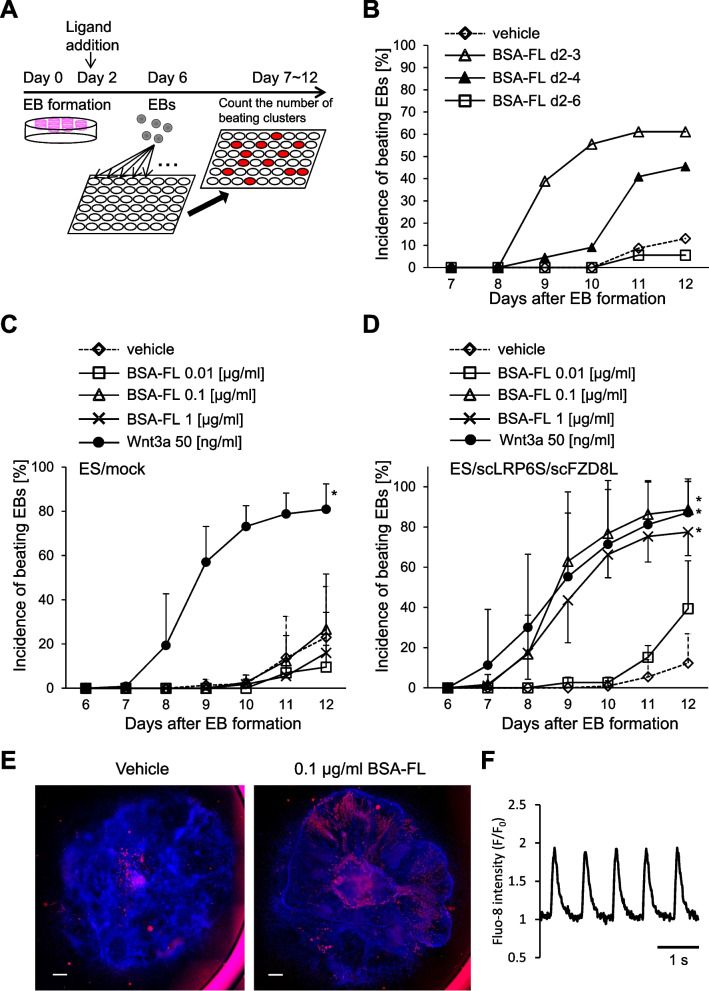
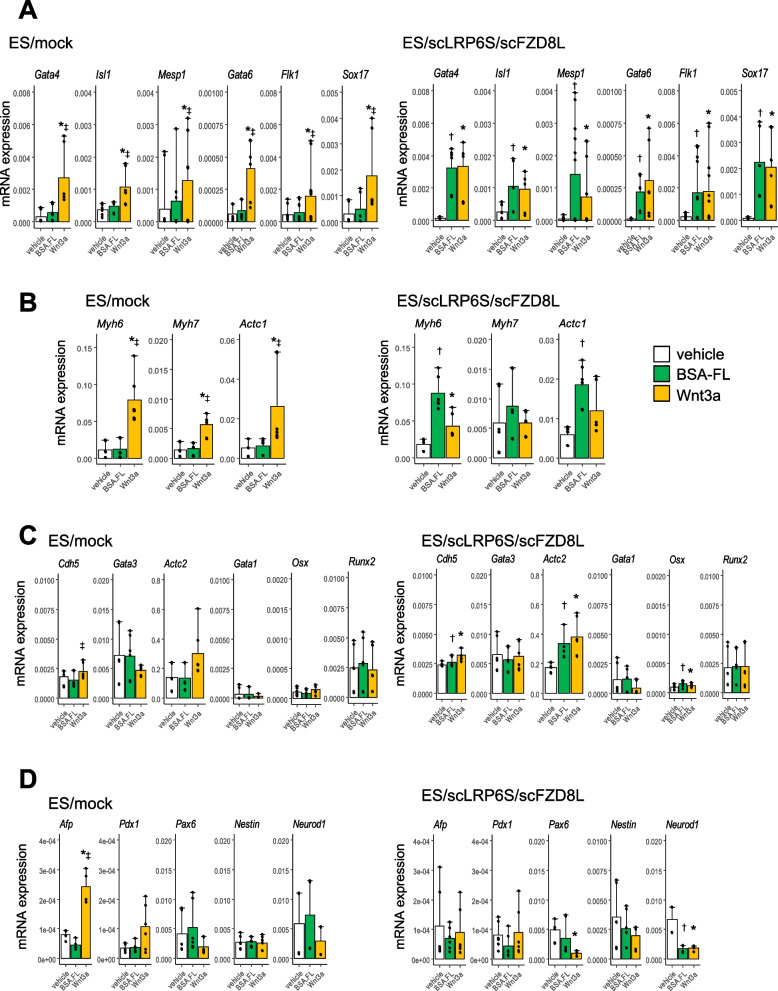
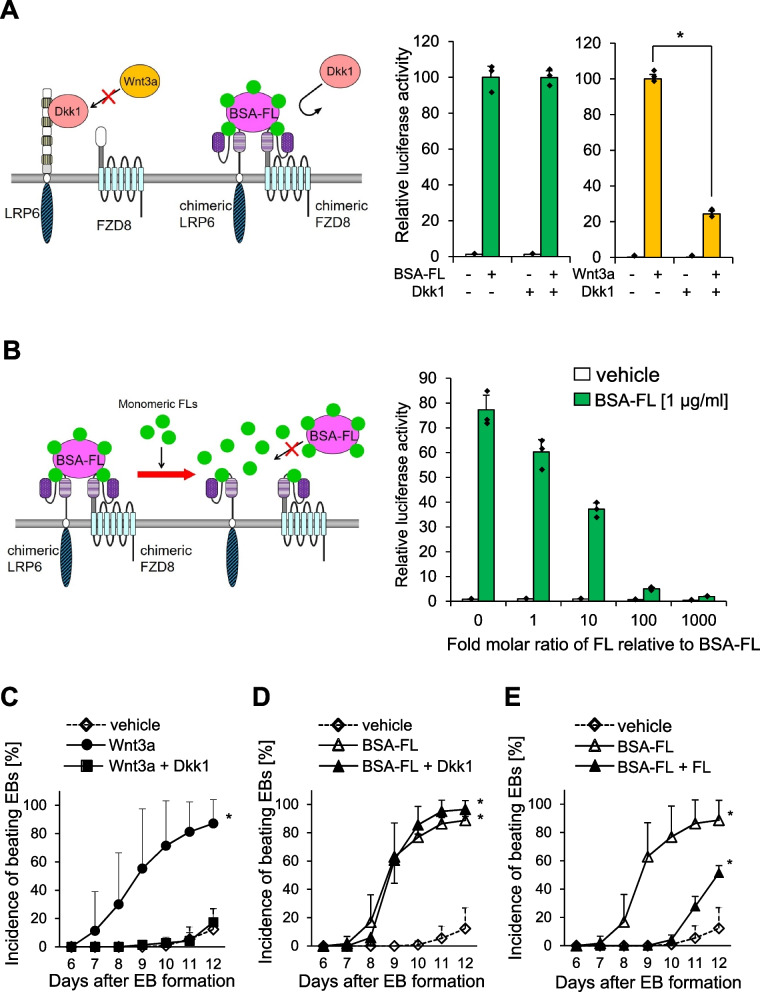
Embryonic stem cell lines stably expressing this paired diCAR, named Wnt3a-diCAR, showed TCF/β-catenin-dependent transactivation by BSA-FL in a dose-dependent manner. Treatment with either Wnt3a recombinant protein or BSA-FL in the early phase of differentiation revealed similar changes of global gene expressions and resulted in efficient myocardial cell differentiation. Furthermore, BSA-FL-mediated signal activation was not affected by a Wnt3a antagonist, Dkk1, suggesting that the signal transduction via Wnt3a-diCAR is independent of endogenous LRP6 or FZD8.
We anticipate that Wnt3a-diCAR enables target-specific signal activation, and could be an economical and powerful tool for stem cell-based regeneration therapy.
经典Wnt信号传导参与多种生物学过程,包括干细胞更新与分化、胚胎发育和组织再生。先前的研究报道了Wnt信号在心脏发育中的阶段特异性作用。在分化早期通过重组Wnt3a激活经典Wnt信号可提高多能干细胞产生心肌细胞的效率。然而,Wnt蛋白的疏水性导致生产重组蛋白成本高昂,并且在其制备以及用于治疗、细胞治疗或Wnt信号传导的分子分析方面构成障碍。
为了解决这个问题,我们构建了一种能够激活Wnt3a信号的廉价分子响应性分化诱导嵌合抗原受体(命名为diCAR)。低密度脂蛋白受体相关蛋白6(LRP6)和卷曲蛋白8(FZD8)的细胞外结构域被抗荧光素(FL)抗体的单链Fv所取代,其可对作为同源配体的FL偶联牛血清白蛋白(BSA-FL)作出反应。然后我们分析了这种diCAR对响应BSA-FL处理的小鼠胚胎干细胞中Wnt信号激活和心肌细胞分化的影响。
稳定表达这种配对diCAR(命名为Wnt3a-diCAR)的胚胎干细胞系显示,BSA-FL以剂量依赖性方式诱导TCF/β-连环蛋白依赖性反式激活。在分化早期用Wnt3a重组蛋白或BSA-FL处理显示全局基因表达有相似变化,并导致高效的心肌细胞分化。此外,BSA-FL介导的信号激活不受Wnt3a拮抗剂Dkk1的影响,这表明通过Wnt3a-diCAR的信号转导独立于内源性LRP6或FZD8。
我们预期Wnt3a-diCAR能够实现靶标特异性信号激活,并且可能成为基于干细胞的再生治疗的一种经济且强大的工具。