Sikaras Christos, Zyga Sofia, Tsironi Maria, Tselebis Athanasios, Pachi Argyro, Ilias Ioannis, Panagiotou Aspasia
Nursing Department, "Sotiria" General Hospital of Thoracic Diseases, 11527 Athens, Greece.
Department of Nursing, University of Peloponnese, 22100 Tripoli, Greece.
Healthcare (Basel). 2023 Jan 28;11(3):367. doi: 10.3390/healthcare11030367.
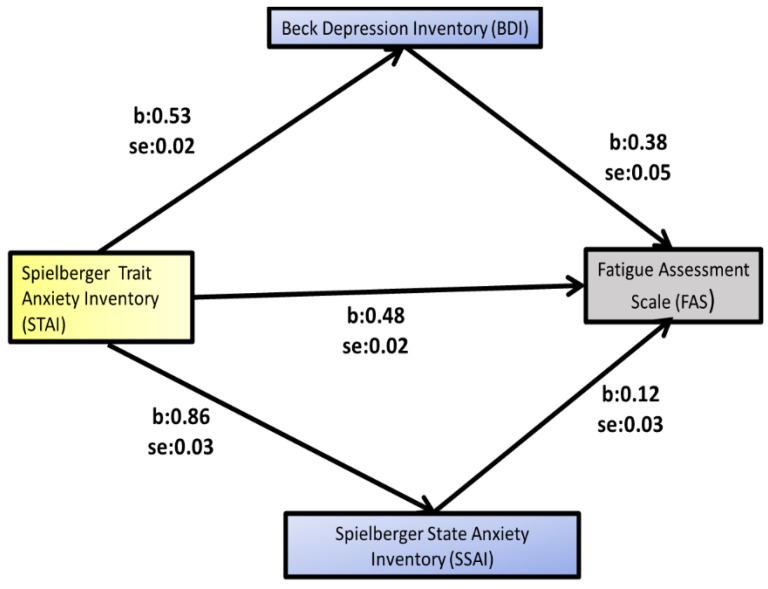
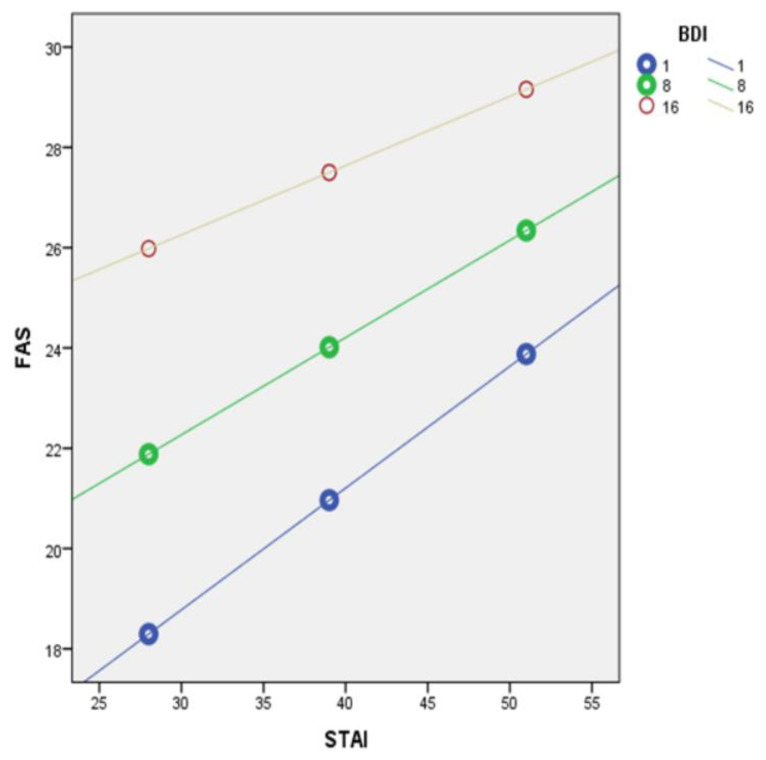
The coronavirus pandemic (COVID-19) is a global health crisis with a particular emotional and physical impact on health professionals, especially nurses. The aim of this study was to investigate the prevalence of anxiety, depression and fatigue and their possible relationships among nurses during the pandemic. The study population consisted of nurses from five tertiary-level public hospitals in Athens who completed the Fatigue Assessment Scale (FAS), Beck Depression Inventory (BDI) and State-Trait Anxiety Inventory (STAI) questionnaires. Gender, age and years of work experience were recorded. The study was conducted from mid-November to mid-December 2021. The sample included 404 nurses (69 males and 335 females) with a mean age of 42.88 years (SD = 10.90) and 17.96 (SD = 12.00) years of work experience. Symptoms of fatigue were noted in 60.4% of participants, while 39.7% had symptoms of depression, 60.1% had abnormal scores on state anxiety and 46.8% on trait anxiety, with females showing higher scores on all scales ( < 0.05). High positive correlations ( < 0.01) were found between the FAS, BDI, State Anxiety and Trait Anxiety scales. Regression analysis showed that 51.7% of the variance in FAS scores can be explained by trait anxiety, an additional 6.2% by the BDI and 1.2% by state anxiety. Mediation analysis showed that state anxiety and BDI mediate the relationship between trait anxiety and FAS. Finally, BDI was found to exert a moderating role in the relationship between trait anxiety and fatigue. In conclusion, our study showed that nurses continue to experience high rates of anxiety, depression and fatigue. The variation in fatigue appears to be significantly dependent on trait anxiety. Depressive symptomatology and state anxiety exert a parallel positive mediation on the relationship between trait anxiety and fatigue, with depression exhibiting a moderating role in this relationship.
冠状病毒大流行(COVID-19)是一场全球健康危机,对医护人员,尤其是护士产生了特殊的情感和身体影响。本研究的目的是调查大流行期间护士中焦虑、抑郁和疲劳的患病率及其可能的关系。研究人群包括来自雅典五家三级公立医院的护士,他们完成了疲劳评估量表(FAS)、贝克抑郁量表(BDI)和状态-特质焦虑量表(STAI)问卷。记录了性别、年龄和工作年限。该研究于2021年11月中旬至12月中旬进行。样本包括404名护士(69名男性和335名女性),平均年龄为42.88岁(标准差=10.90),工作年限为17.96年(标准差=12.00)。60.4%的参与者有疲劳症状,39.7%有抑郁症状,60.1%的状态焦虑得分异常,46.8%的特质焦虑得分异常,女性在所有量表上的得分更高(P<0.05)。FAS、BDI、状态焦虑量表和特质焦虑量表之间存在高度正相关(P<0.01)。回归分析表明,FAS得分方差的51.7%可由特质焦虑解释,另外6.2%可由BDI解释,1.2%可由状态焦虑解释。中介分析表明,状态焦虑和BDI介导了特质焦虑与FAS之间的关系。最后,发现BDI在特质焦虑与疲劳的关系中起调节作用。总之,我们的研究表明,护士仍然经历着高比例的焦虑、抑郁和疲劳。疲劳的变化似乎显著取决于特质焦虑。抑郁症状和状态焦虑在特质焦虑与疲劳的关系中发挥平行的正向中介作用,抑郁在这种关系中表现出调节作用。