Giannetta Noemi, Katigri Meysam Rahmani, Azadboni Tahere Talebi, Caruso Rosario, Liquori Gloria, Dionisi Sara, De Leo Aurora, Di Simone Emanuele, Rocco Gennaro, Stievano Alessandro, Orsi Giovanni Battista, Napoli Christian, Di Muzio Marco
School of Nursing, UniCamillus-Saint Camillus International University of Health and Medical Sciences, 00131 Rome, Italy.
Social Determinants of Health Research Center, Saveh University of Medical Sciences, Saveh, Iran.
Healthcare (Basel). 2023 Feb 3;11(3):436. doi: 10.3390/healthcare11030436.
Literature on the prevention of medication errors is growing, highlighting that knowledge, attitude and behavior with regard to medication errors are strategic to planning of educational activities and evaluating their impact on professional practice. In this context, the present pilot study aims to translate and validate nursing professionals' knowledge, attitudes and behavior (KAB theory) concerning medication administration errors in ICU from English into Persian. Furthermore, two main objectives of the project were: performing a pilot study among Iranian nurses using the translated questionnaire and carrying out a cultural measurement of the KAB theory concerning medication administration errors in an ICU questionnaire across two groups of Italian and Iranian populations.
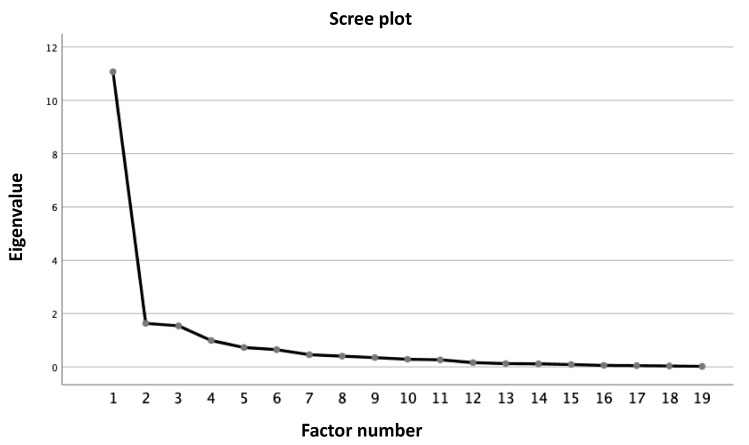
A cross-cultural adaptation of an instrument, according to the Checklist for reporting of survey studies (CROSS), was performed. The convenience sample was made up of 529 Iranian and Italian registered nurses working in ICU. An exploratory factor analysis was performed and reliability was assessed. A multi-group confirmatory factor analysis was conducted to test the measurement invariance. Ethical approval was obtained.
There was an excellent internal consistency for the 19-item scale. Results regarding factorial invariance showed that the nursing population from Italy and Iran used the same cognitive framework to conceptualize the prevention of medication errors.
Findings from this preliminary translation and cross-cultural validation confirm that the questionnaire is a reliable and valid instrument within Persian healthcare settings. Moreover, these findings suggest that Italian and Persian nurses used an identical cognitive framework or mental model when thinking about medication errors prevention. The paper not only provides, for the first time, a validated instrument to evaluate the KAB theory in Iran, but it should promote other researchers in extending this kind of research, supporting those countries where attention to medical error is still increasing.
关于预防用药错误的文献不断增加,这凸显了在用药错误方面的知识、态度和行为对于教育活动规划及其对专业实践影响评估的重要性。在此背景下,本试点研究旨在将重症监护病房(ICU)护士关于用药错误的知识、态度和行为(KAB理论)从英文翻译成波斯文并进行验证。此外,该项目的两个主要目标是:使用翻译后的问卷在伊朗护士中开展试点研究,并对意大利和伊朗两组人群的ICU用药错误KAB理论问卷进行文化测量。
根据调查研究报告清单(CROSS)对一种工具进行跨文化改编。便利样本由529名在ICU工作的伊朗和意大利注册护士组成。进行探索性因素分析并评估信度。进行多组验证性因素分析以检验测量不变性。获得了伦理批准。
19项量表具有出色的内部一致性。关于因素不变性的结果表明,意大利和伊朗的护士群体在概念化预防用药错误时使用相同的认知框架。
这项初步翻译和跨文化验证的结果证实,该问卷在波斯医疗环境中是一种可靠且有效的工具。此外,这些结果表明,意大利和波斯护士在思考预防用药错误时使用相同的认知框架或心理模型。本文不仅首次提供了一种经过验证的工具来评估伊朗的KAB理论,而且应促使其他研究人员扩展此类研究,为那些对医疗错误关注度仍在上升的国家提供支持。