Department of Biomedical Sciences, Shock/Trauma Research Center, School of Medicine, University of Missouri-Kansas City, 2411 Holmes Street, Kansas City, MO 64108, USA.
Department of Pharmacology/Toxicology, School of Pharmacy, University of Missouri-Kansas City, Kansas City, MO 64108, USA.
Int J Mol Sci. 2023 Feb 1;24(3):2732. doi: 10.3390/ijms24032732.
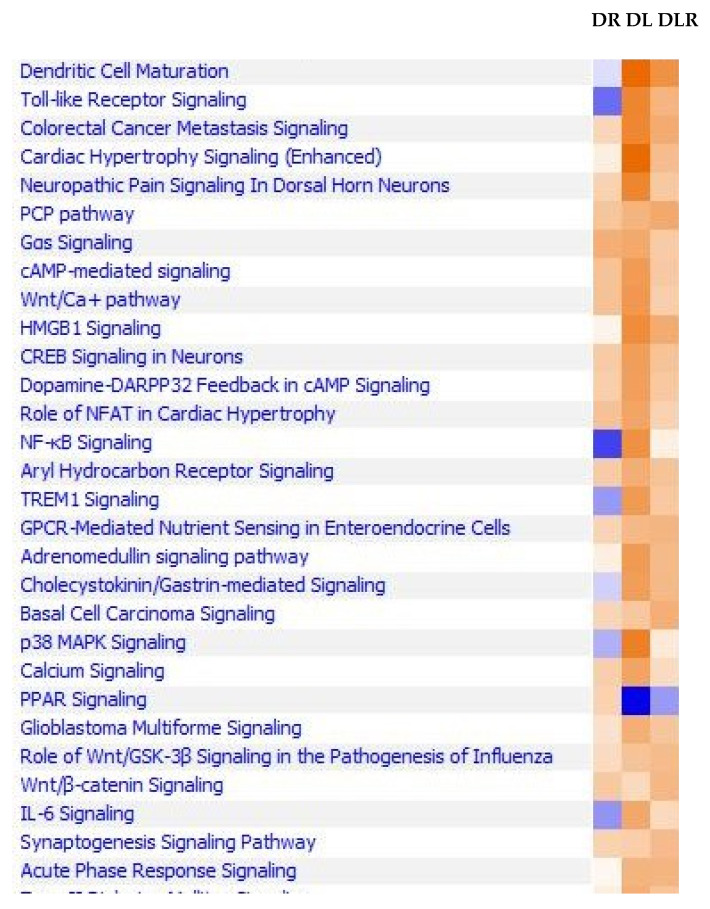
Diabetes is currently the fifth leading cause of death by disease in the USA. The underlying mechanisms for type 2 Diabetes Mellitus (DM2) and the enhanced susceptibility of such patients to inflammatory disorders and infections remain to be fully defined. We have recently shown that peripheral blood mononuclear cells (PBMCs) from non-diabetic people upregulate expression of inflammatory genes in response to proteasome modulators, such as bacterial lipopolysaccharide (LPS) and soybean lectin (LEC); in contrast, resveratrol (RES) downregulates this response. We hypothesized that LPS and LEC will also elicit a similar upregulation of gene expression of key signaling mediators in (PBMCs) from people with type 2 diabetes (PwD2, with chronic inflammation) ex vivo. Unexpectedly, using next generation sequencing (NGS), we show for the first time, that PBMCs from PwD2 failed to elicit a robust LPS- and LEC-induced gene expression of proteasome subunit LMP7 () and mediators of T cell signaling that were observed in non-diabetic controls. These repressed genes included: , , interferon-γ, interferon- signal-transducer-and-activator-of-transcription-1 (), human leukocyte antigen (, ) molecules, interleukin 12A, tumor necrosis factor-α, transporter associated with antigen processing 1 (), and several others, which showed a markedly weak upregulation with toxins in PBMCs from PwD2, as compared to those from non-diabetics. Resveratrol (proteasome inhibitor) further downregulated the gene expression of these inflammatory mediators in PBMCs from PwD2. These results might explain why PwD2 may be susceptible to infectious disease. LPS and toxins may be leading to inflammation, insulin resistance, and thus, metabolic changes in the host cells.
目前,糖尿病是美国导致死亡的第五大疾病病因。2 型糖尿病(DM2)的潜在发病机制以及此类患者对炎症性疾病和感染的易感性仍有待完全确定。我们最近表明,来自非糖尿病患者的外周血单核细胞(PBMC)在受到蛋白酶体调节剂(如细菌脂多糖(LPS)和大豆凝集素(LEC))刺激时会上调炎症基因的表达;相比之下,白藜芦醇(RES)会下调这种反应。我们假设 LPS 和 LEC 也会引起 2 型糖尿病患者(PwD2,慢性炎症)PBMC 中关键信号转导介质的基因表达类似上调。出乎意料的是,我们使用下一代测序(NGS)首次表明,PwD2 的 PBMC 未能引起 LPS 和 LEC 诱导的蛋白酶体亚基 LMP7 的基因表达上调,也未能引起非糖尿病对照中观察到的 T 细胞信号转导介质的基因表达上调。这些受抑制的基因包括:、、干扰素-γ、干扰素信号转导和转录激活因子-1()、人类白细胞抗原(、)分子、白细胞介素 12A、肿瘤坏死因子-α、抗原加工转运体 1()和其他几种基因,与非糖尿病患者相比,这些基因在 PwD2 的 PBMC 中用毒素刺激时表现出明显较弱的上调。白藜芦醇(蛋白酶体抑制剂)进一步下调了 PwD2 的 PBMC 中这些炎症介质的基因表达。这些结果可能解释了为什么 PwD2 可能容易受到传染病的影响。LPS 和毒素可能导致宿主细胞的炎症、胰岛素抵抗,从而导致代谢变化。