Department of Obstetrics and Gynecology, Magee Womens Research Institute, University of Pittsburgh, Pittsburgh, PA 15260, USA.
Department of Physiological Sciences, University of Florida, Gainesville, FL 32611, USA.
Int J Mol Sci. 2023 Feb 1;24(3):2748. doi: 10.3390/ijms24032748.
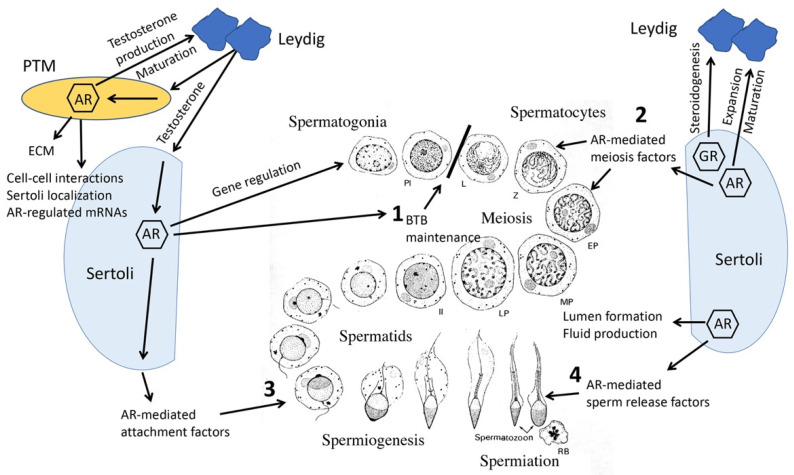
Steroid hormones are capable of diffusing through cell membranes to bind with intracellular receptors to regulate numerous physiological processes. Three classes of steroid hormones, namely androgens, estrogens and glucocorticoids, contribute to the development of the reproductive system and the maintenance of fertility. During the past 30 years, mouse models have been produced in which the expression of genes encoding steroid hormone receptors has been enhanced, partially compromised or eliminated. These mouse models have revealed many of the physiological processes regulated by androgens, estrogens and to a more limited extent glucocorticoids in the testis and male accessory organs. In this review, advances provided by mouse models that have facilitated a better understanding of the molecular regulation of testis and reproductive tract processes by steroid hormones are discussed.
甾体激素能够穿过细胞膜扩散,与细胞内受体结合,从而调节众多生理过程。甾体激素包括雄激素、雌激素和糖皮质激素,它们共同促进生殖系统的发育和生殖能力的维持。在过去的 30 年中,人们构建了多种增强、部分缺失或完全敲除编码甾体激素受体的基因的小鼠模型。这些小鼠模型揭示了雄激素、雌激素以及在一定程度上糖皮质激素在睾丸和雄性附属性器官中调节的多种生理过程。本文综述了这些小鼠模型在阐明甾体激素对睾丸和生殖管道过程的分子调控方面取得的重要进展。