Department of Pharmacy Practice and Science, College of Pharmacy, University of Kentucky, Lexington, KY 40508, USA.
Markey Cancer Center, University of Kentucky, Lexington, KY 40508, USA.
Int J Mol Sci. 2023 Feb 2;24(3):2858. doi: 10.3390/ijms24032858.
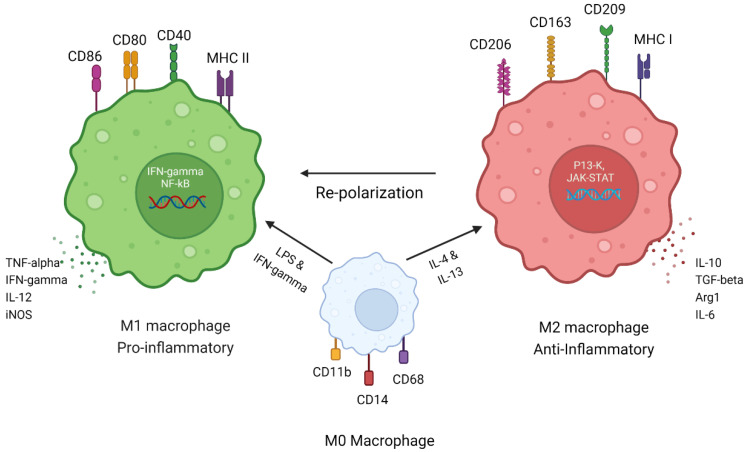
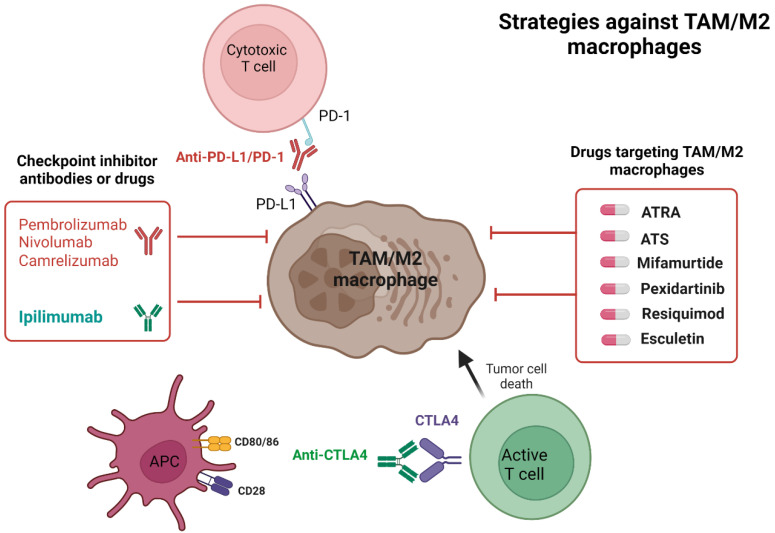
Macrophages are versatile immune cells and can adapt to both external stimuli and their surrounding environment. Macrophages are categorized into two major categories; M1 macrophages release pro-inflammatory cytokines and produce protective responses that lead to antimicrobial or antitumor activity. M2 or tumor-associated macrophages (TAM) release anti-inflammatory cytokines that support tumor growth, invasion capacity, and metastatic potential. Since macrophages can be re-polarized from an M2 to an M1 phenotype with a variety of strategies, this has emerged as an innovative anti-cancer approach. Osteosarcoma (OS) is a kind of bone cancer and consists of a complex niche, and immunotherapy is not very effective. Therefore, immediate attention to new strategies is required. We incorporated the recent studies that have used M2-M1 repolarization strategies in the aspect of treating OS cancer.
巨噬细胞是多功能免疫细胞,可以适应外部刺激和周围环境。巨噬细胞分为两大类;M1 巨噬细胞释放促炎细胞因子并产生保护性反应,从而产生抗微生物或抗肿瘤活性。M2 或肿瘤相关巨噬细胞 (TAM) 释放抗炎细胞因子,支持肿瘤生长、侵袭能力和转移潜力。由于巨噬细胞可以通过多种策略从 M2 表型重新极化到 M1 表型,因此这已成为一种创新的抗癌方法。骨肉瘤 (OS) 是一种骨癌,由复杂的生态位组成,免疫疗法效果不佳。因此,需要立即关注新的策略。我们结合了最近的研究,这些研究在治疗骨肉瘤癌症方面使用了 M2-M1 重极化策略。