Azrieli Centre for Neuro-Radiochemistry, Brain Health Imaging Centre, Centre for Addiction and Mental Health (CAMH), Toronto, ON M5T 1R8, Canada.
Institute of Medical Science, University of Toronto, Toronto, ON M5S 1A8, Canada.
Molecules. 2023 Jan 17;28(3):931. doi: 10.3390/molecules28030931.
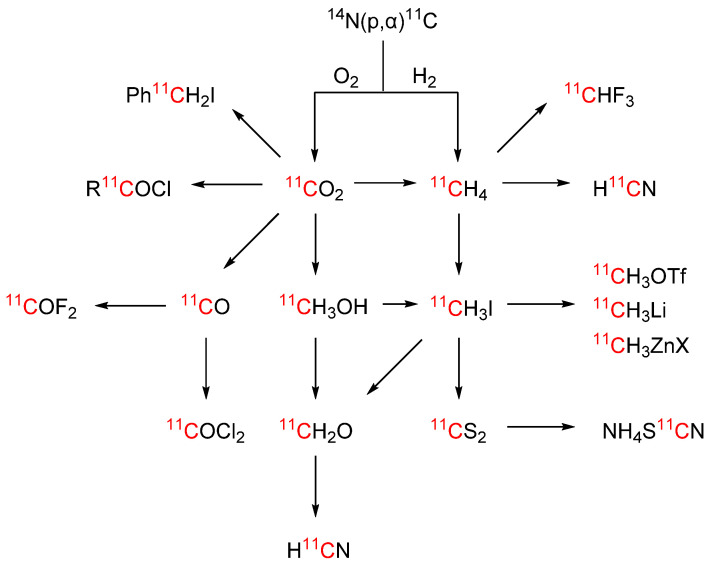
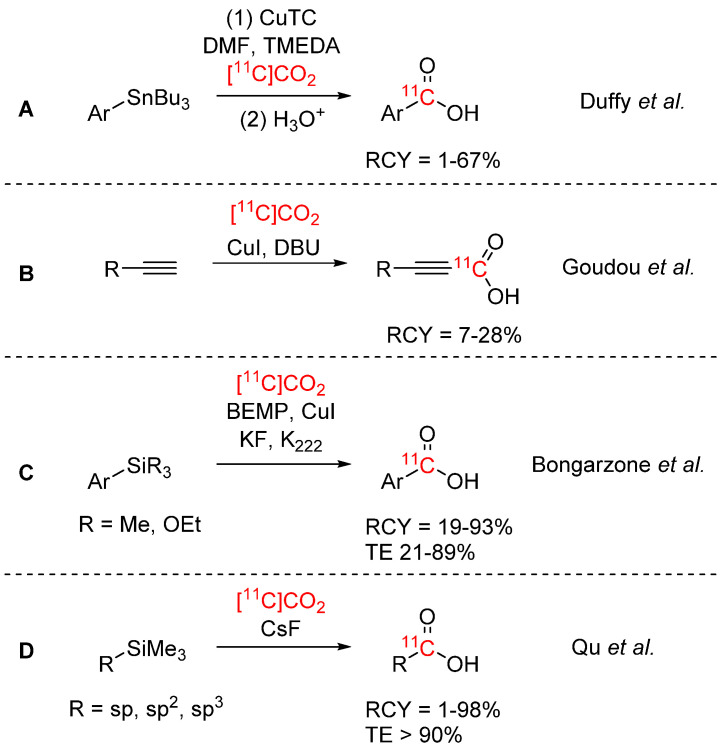
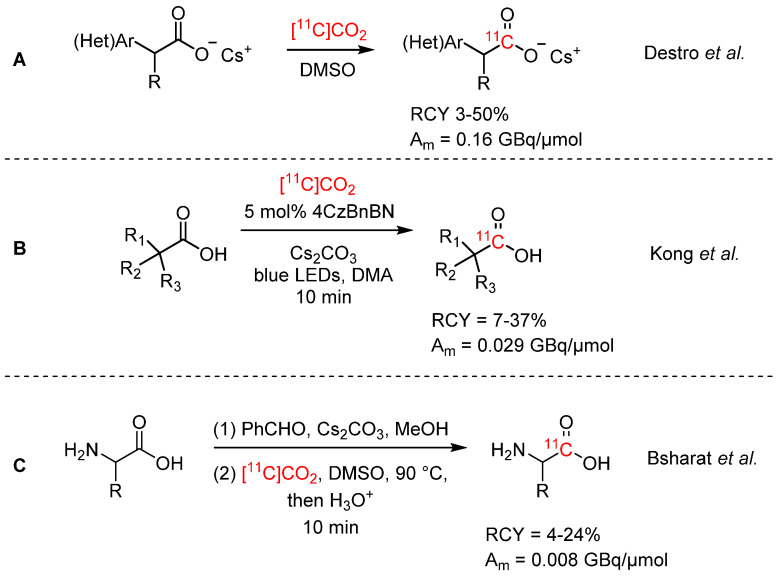
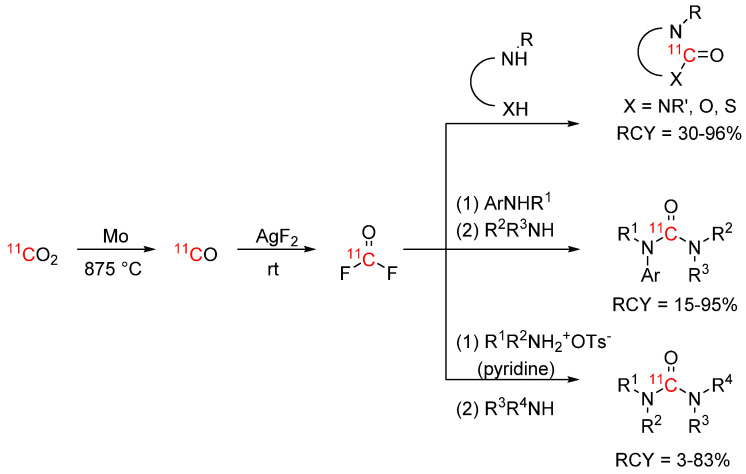
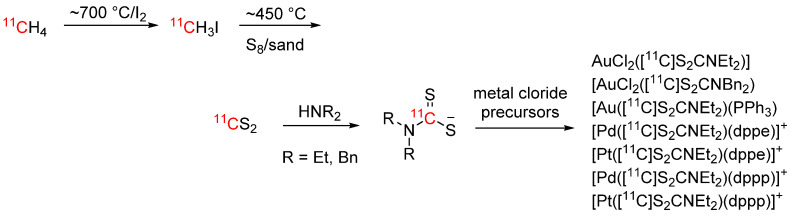
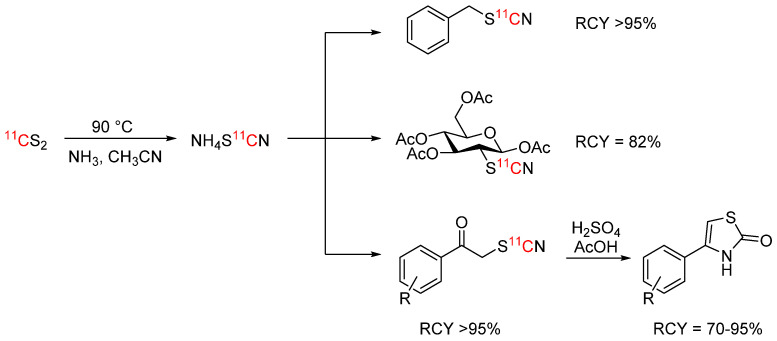
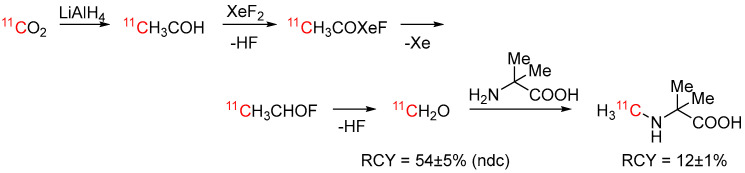
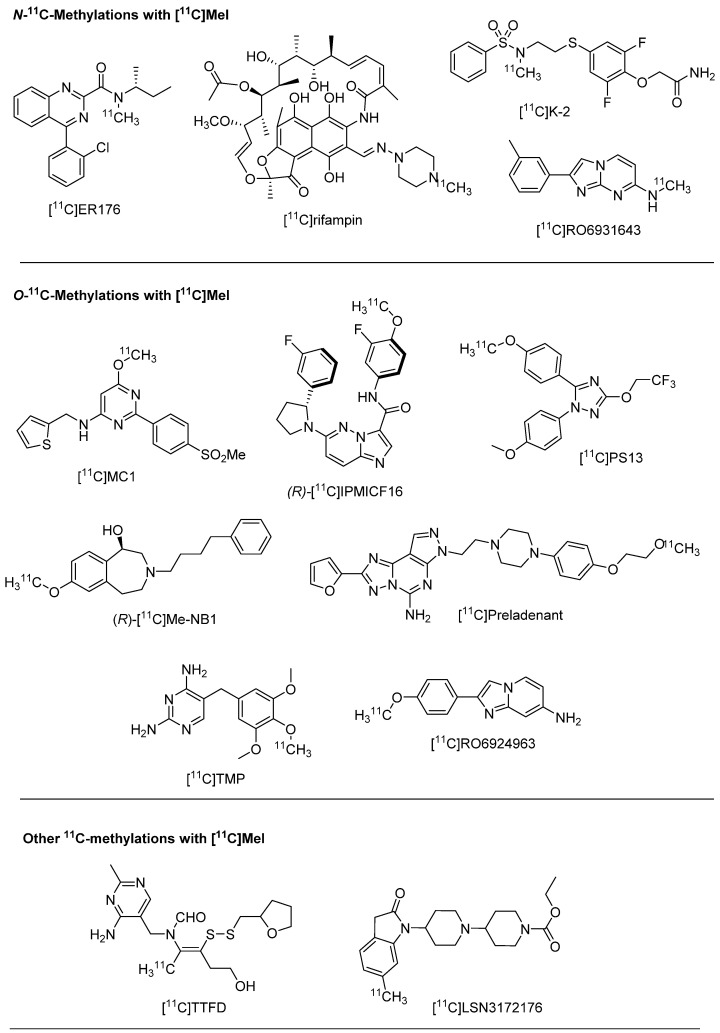
Positron emission tomography (PET) is a molecular imaging technique that makes use of radiolabelled molecules for in vivo evaluation. Carbon-11 is a frequently used radionuclide for the labelling of small molecule PET tracers and can be incorporated into organic molecules without changing their physicochemical properties. While the short half-life of carbon-11 (C; t = 20.4 min) offers other advantages for imaging including multiple PET scans in the same subject on the same day, its use is limited to facilities that have an on-site cyclotron, and the radiochemical transformations are consequently more restrictive. Many researchers have embraced this challenge by discovering novel carbon-11 radiolabelling methodologies to broaden the synthetic versatility of this radionuclide. This review presents new carbon-11 building blocks and radiochemical transformations as well as PET tracers that have advanced to first-in-human studies over the past five years.
正电子发射断层扫描(PET)是一种利用放射性标记分子进行体内评估的分子成像技术。碳-11 是一种常用于标记小分子 PET 示踪剂的放射性核素,可将其掺入有机分子中而不改变其物理化学性质。虽然碳-11(C;t = 20.4 min)的半衰期较短,为成像提供了其他优势,包括在同一天对同一受试者进行多次 PET 扫描,但它的使用仅限于拥有现场回旋加速器的设施,因此放射性化学转化受到更多限制。许多研究人员通过发现新的碳-11 放射性标记方法来应对这一挑战,以拓宽这种放射性核素的合成多功能性。本综述介绍了过去五年中已进展到人体首次研究的新型碳-11 砌块和放射性化学转化以及 PET 示踪剂。