Soares Thiego Ramon, Oliveira Roberto Dias de, Liu Yiran E, Santos Andrea da Silva, Santos Paulo Cesar Pereira Dos, Monte Luma Ravena Soares, Oliveira Lissandra Maia de, Park Chang Min, Hwang Eui Jin, Andrews Jason R, Croda Julio
Faculty of Health Sciences of Federal University of Grande Dourados, Dourados, MS, Brazil.
Nursing School, State University of Mato Grosso do Sul, Dourados, MS, Brazil.
Lancet Reg Health Am. 2022 Nov 4;17:100388. doi: 10.1016/j.lana.2022.100388. eCollection 2023 Jan.
The World Health Organization (WHO) recommends systematic tuberculosis (TB) screening in prisons. Evidence is lacking for accurate and scalable screening approaches in this setting. We aimed to assess the accuracy of artificial intelligence-based chest x-ray interpretation algorithms for TB screening in prisons.
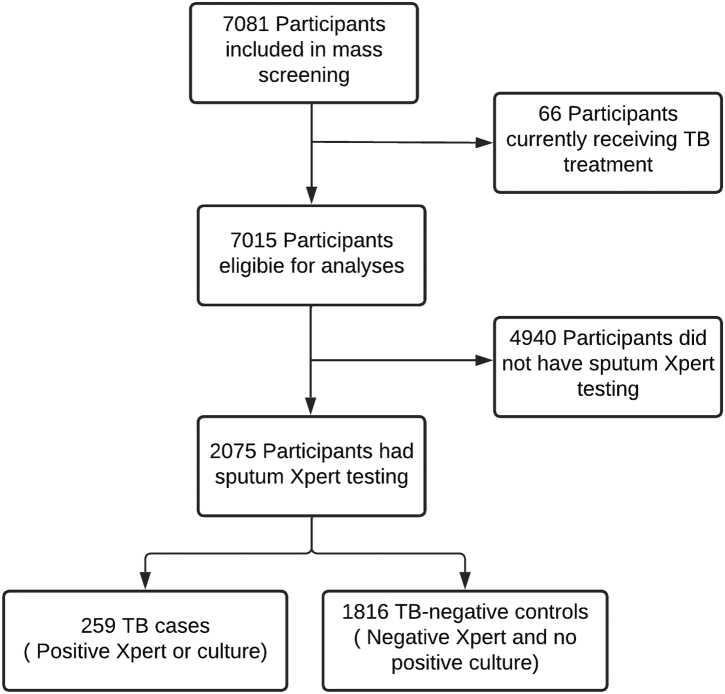
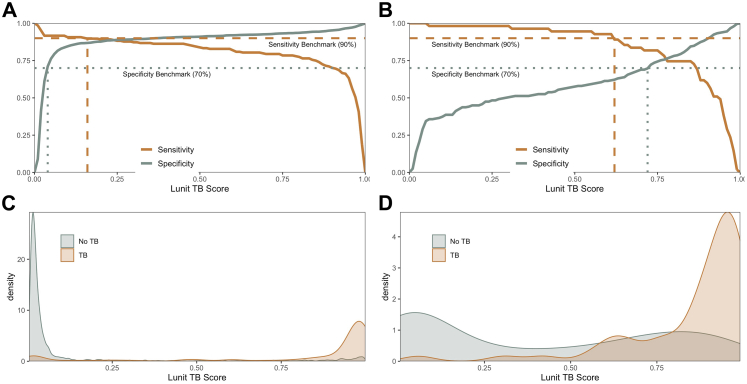
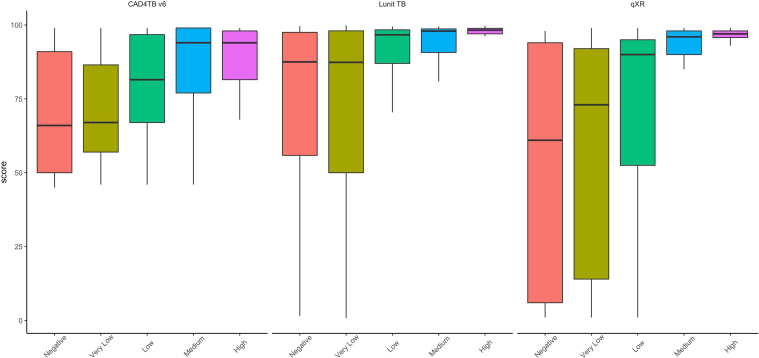
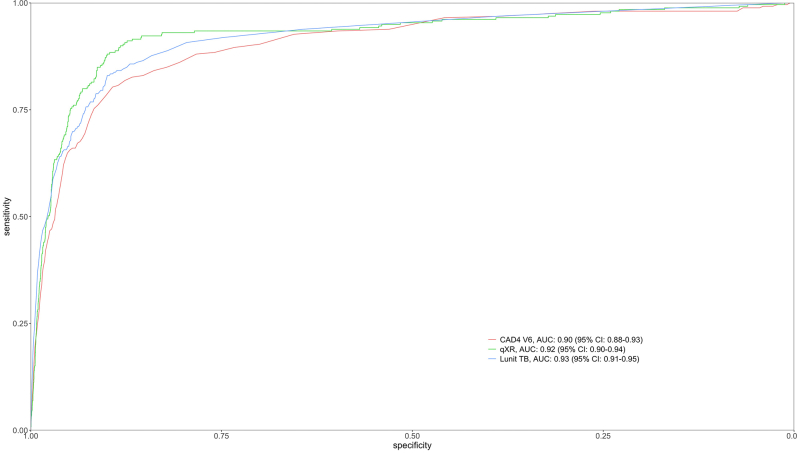
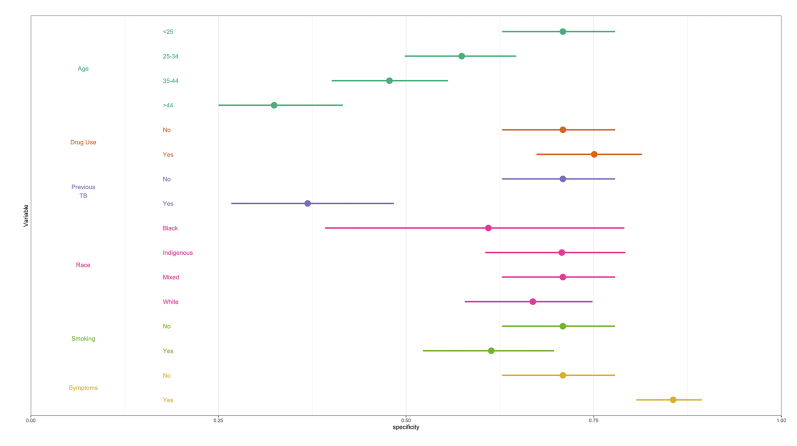
We performed prospective TB screening in three male prisons in Brazil from October 2017 to December 2019. We administered a standardized questionnaire, performed a chest x-ray in a mobile unit, and collected sputum for confirmatory testing using Xpert MTB/RIF and culture. We evaluated x-ray images using three algorithms (CAD4TB version 6, Lunit version 3.1.0.0 and qXR version 3) and compared their accuracy. We utilized multivariable logistic regression to assess the effect of demographic and clinical characteristics on algorithm accuracy. Finally, we investigated the relationship between abnormality scores and Xpert semi-quantitative results.
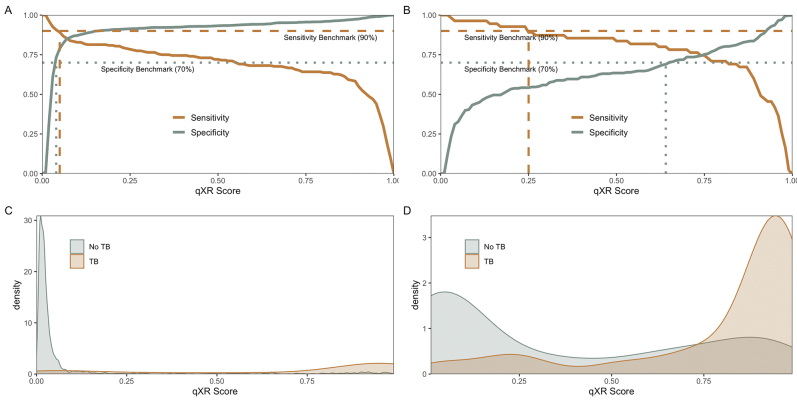
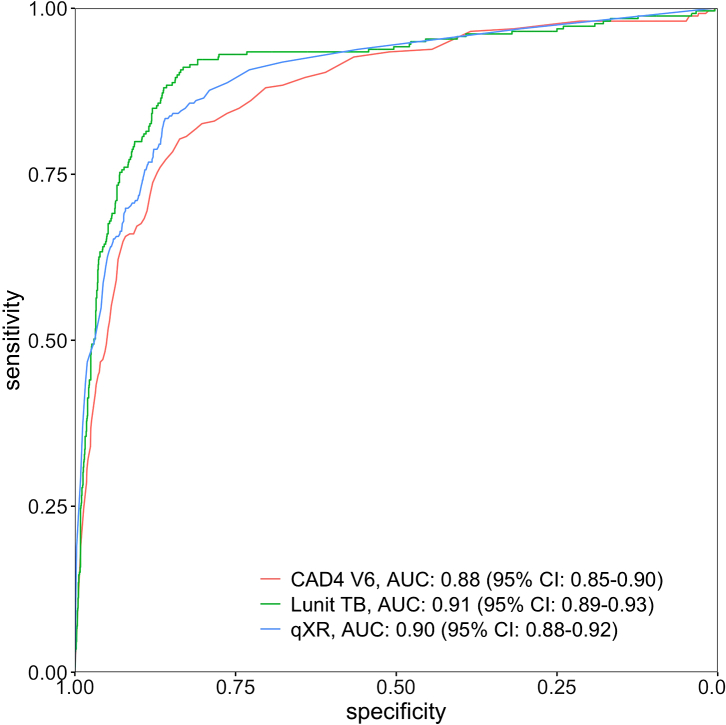
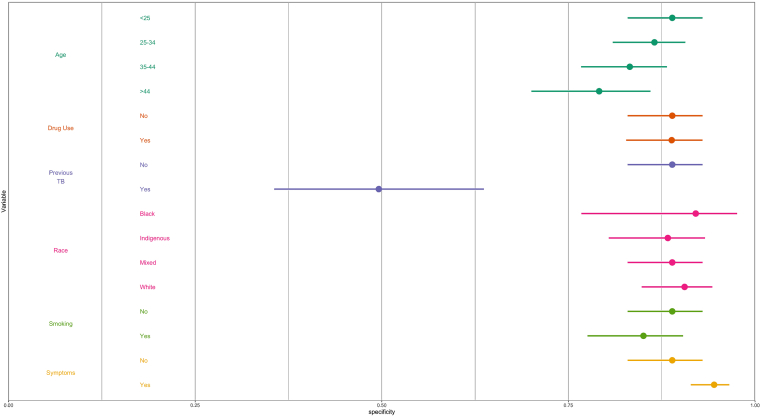
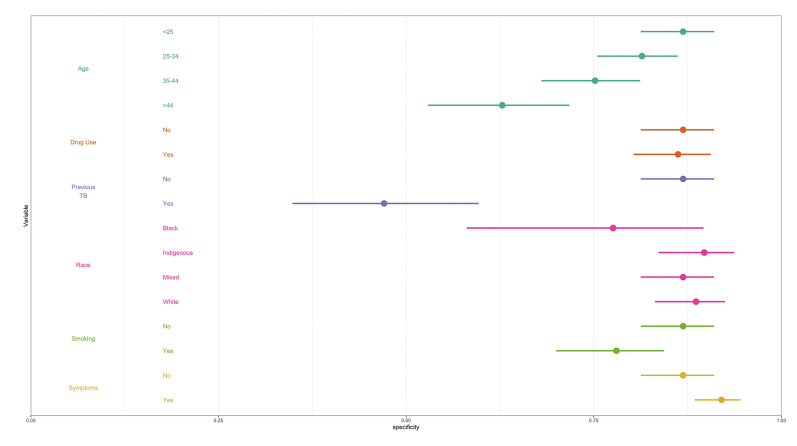
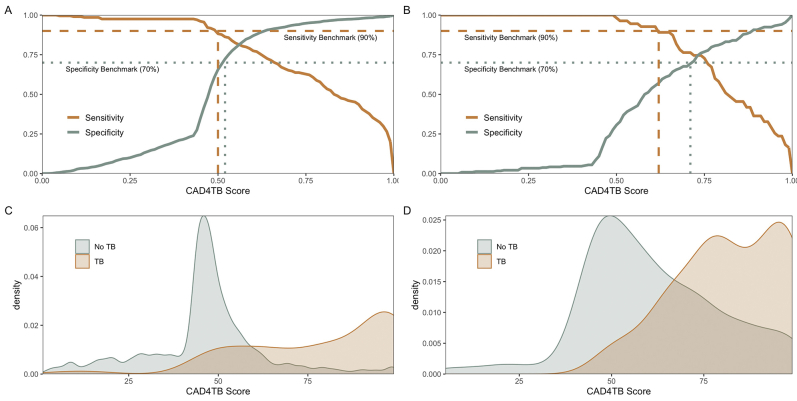
Among 2075 incarcerated individuals, 259 (12.5%) had confirmed TB. All three algorithms performed similarly overall with area under the receiver operating characteristic curve (AUC) of 0.88-0.91. At 90% sensitivity, only LunitTB and qXR met the WHO Target Product Profile requirements for a triage test, with specificity of 84% and 74%, respectively. All algorithms had variable performance by age, prior TB, smoking, and presence of TB symptoms. LunitTB was the most robust to this heterogeneity but nonetheless failed to meet the TPP for individuals with previous TB. Abnormality scores of all three algorithms were significantly correlated with sputum bacillary load.
Automated x-ray interpretation algorithms can be an effective triage tool for TB screening in prisons. However, their specificity is insufficient in individuals with previous TB.
This study was supported by the US National Institutes of Health (grant numbers R01 AI130058 and R01 AI149620) and the State Secretary of Health of Mato Grosso do Sul.
世界卫生组织(WHO)建议在监狱中进行系统性结核病(TB)筛查。在这种情况下,缺乏准确且可扩展的筛查方法的证据。我们旨在评估基于人工智能的胸部X线解读算法在监狱中进行结核病筛查的准确性。
2017年10月至2019年12月,我们在巴西的三所男性监狱中进行了前瞻性结核病筛查。我们发放了标准化问卷,在移动设备上进行了胸部X线检查,并收集痰液使用Xpert MTB/RIF和培养进行确诊检测。我们使用三种算法(CAD4TB版本6、Lunit版本3.1.0.0和qXR版本3)评估X线图像,并比较它们的准确性。我们利用多变量逻辑回归评估人口统计学和临床特征对算法准确性的影响。最后,我们研究了异常评分与Xpert半定量结果之间的关系。
在2075名被监禁者中,259人(12.5%)确诊患有结核病。所有三种算法的总体表现相似,受试者操作特征曲线下面积(AUC)为0.88 - 0.91。在90%的敏感性下,只有LunitTB和qXR符合WHO对分流检测的目标产品简介要求,特异性分别为84%和74%。所有算法在年龄、既往结核病、吸烟和结核病症状方面的表现各不相同。LunitTB对这种异质性最为稳健,但对于既往有结核病的个体仍未达到目标产品简介要求。所有三种算法的异常评分与痰液细菌载量均显著相关。
自动X线解读算法可以成为监狱中结核病筛查的有效分流工具。然而,它们在既往有结核病的个体中的特异性不足。
本研究得到了美国国立卫生研究院(资助编号R01 AI130058和R01 AI149620)以及南马托格罗索州卫生秘书的支持。