Gonzalez Veronica, Li Lin, Buarpung Sirirak, Prahl Mary, Robinson Joshua F, Gaw Stephanie L
Division of Maternal-Fetal Medicine, Department of Obstetrics, Gynecology, and Reproductive Sciences, University of California, San Francisco, California 94158, USA.
These authors contributed equally to this work.
medRxiv. 2023 Feb 2:2023.02.01.23285349. doi: 10.1101/2023.02.01.23285349.
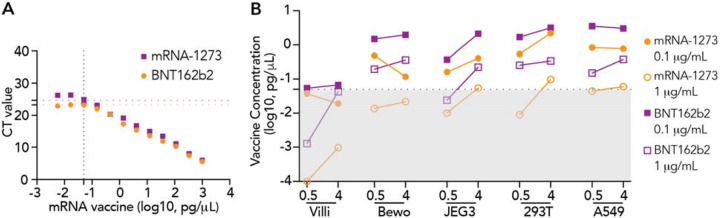
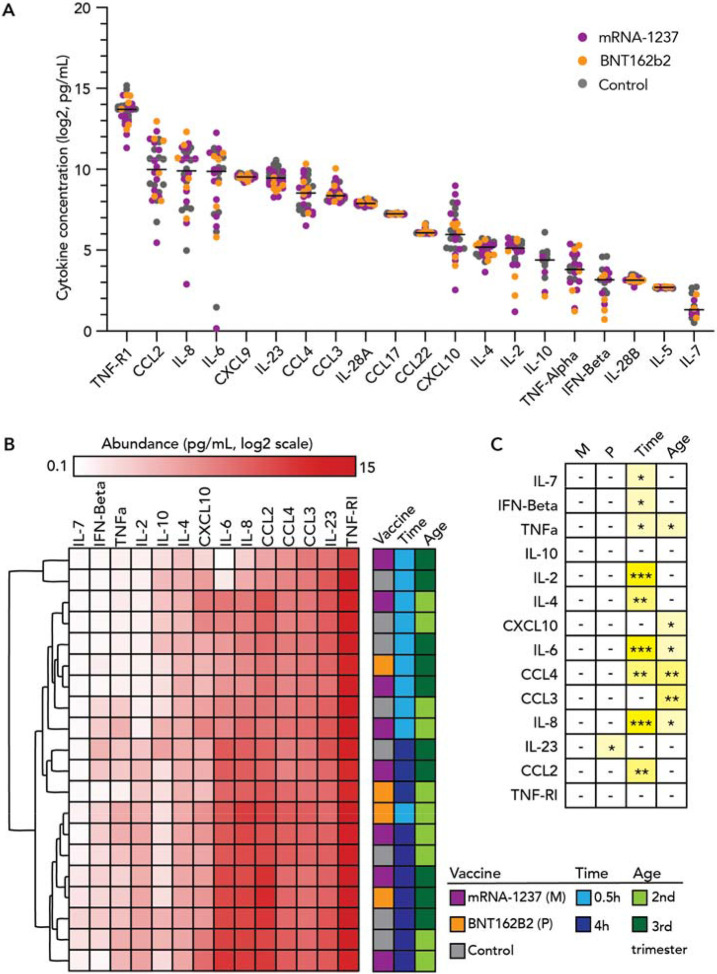
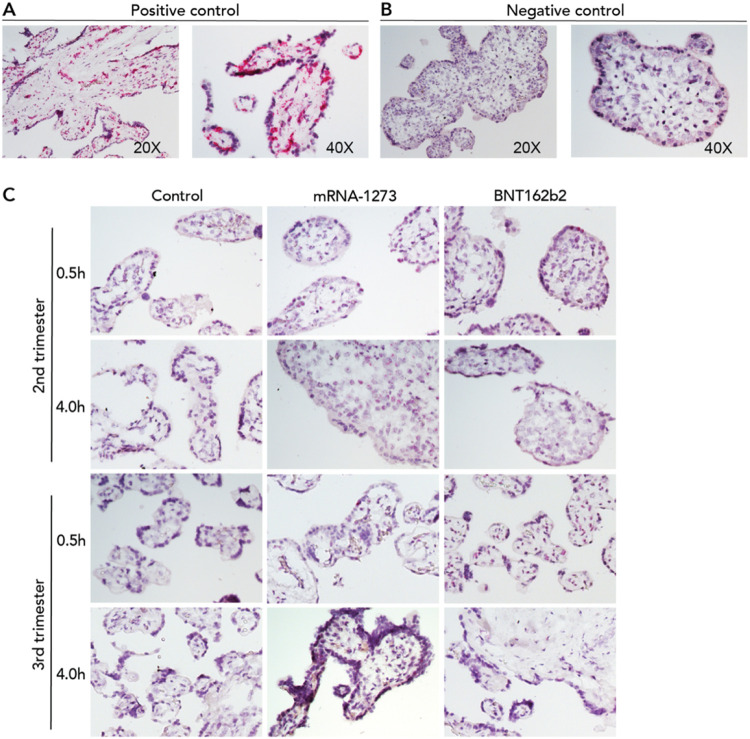
Despite universal recommendations for COVID-19 mRNA vaccination in pregnancy, uptake has been lower than desired. There have been limited studies of the direct impact of COVID-19 mRNA vaccine exposure in human placental tissue. Using a primary human villous explant model, we investigated the uptake of two common mRNA vaccines (BNT162b2 Pfizer-BioNTech or mRNA-1273 Moderna), and whether exposure altered villous cytokine responses. Explants derived from second or third trimester chorionic villi were incubated with vaccines at supraphysiologic concentrations and analyzed at two time points. We observed minimal uptake of mRNA vaccines in placental explants by in situ hybridization and quantitative RT-PCR. No specific or global cytokine response was elicited by either of the mRNA vaccines in multiplexed immunoassays. Our results suggest that the human placenta does not readily absorb the COVID-19 mRNA vaccines nor generate a significant inflammatory response after exposure.
尽管普遍建议在孕期接种新冠病毒mRNA疫苗,但接种率一直低于预期。关于新冠病毒mRNA疫苗暴露对人胎盘组织的直接影响的研究有限。我们使用原代人绒毛外植体模型,研究了两种常见mRNA疫苗(BNT162b2辉瑞-生物科技或mRNA-1273莫德纳)的摄取情况,以及暴露是否会改变绒毛细胞因子反应。将来自妊娠中期或晚期绒毛膜绒毛的外植体与超生理浓度的疫苗一起孵育,并在两个时间点进行分析。通过原位杂交和定量逆转录聚合酶链反应,我们观察到胎盘外植体对mRNA疫苗的摄取极少。在多重免疫测定中,两种mRNA疫苗均未引发特异性或全身性细胞因子反应。我们的结果表明,人胎盘不易吸收新冠病毒mRNA疫苗,暴露后也不会产生显著的炎症反应。