Department of Orthopaedic Surgery, University of Pittsburgh School of Medicine; Department of Bioengineering, University of Pittsburgh Swanson School of Engineering.
Department of Orthopaedic Surgery, University of Pittsburgh School of Medicine; Department of Neurobiology, University of Pittsburgh School of Medicine;
J Vis Exp. 2023 Jan 27(191). doi: 10.3791/64186.
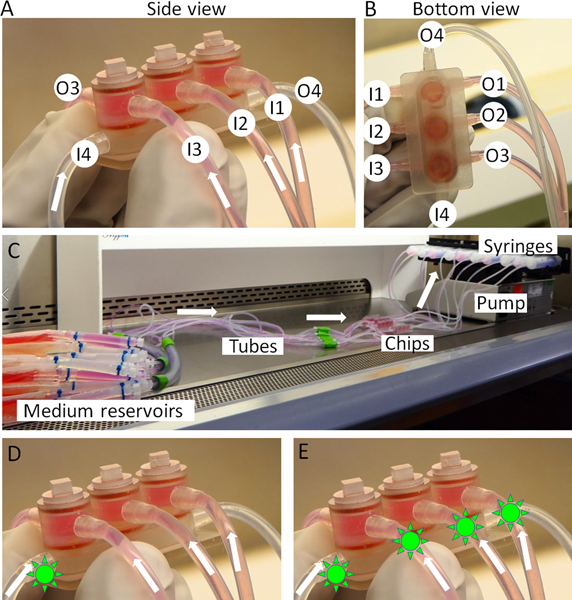
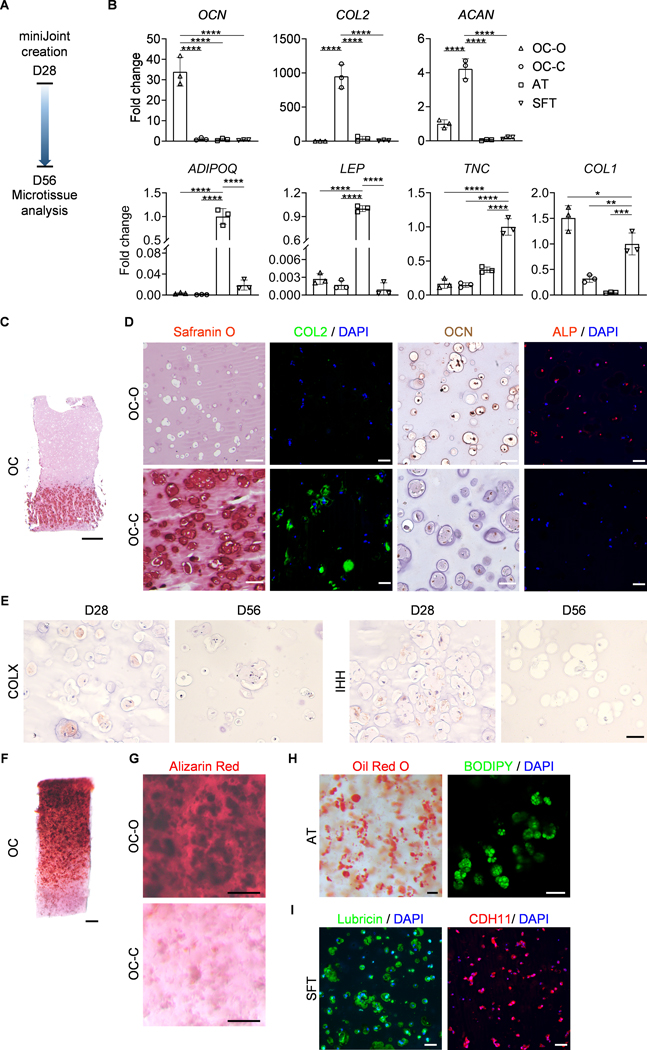
The high prevalence of debilitating joint diseases like osteoarthritis (OA) poses a high socioeconomic burden. Currently, the available drugs that target joint disorders are mostly palliative. The unmet need for effective disease-modifying OA drugs (DMOADs) has been primarily caused by the absence of appropriate models for studying the disease mechanisms and testing potential DMOADs. Herein, we describe the establishment of a miniature synovial joint-mimicking microphysiological system (miniJoint) comprising adipose, fibrous, and osteochondral tissue components derived from human mesenchymal stem cells (MSCs). To obtain the three-dimensional (3D) microtissues, MSCs were encapsulated in photocrosslinkable methacrylated gelatin before or following differentiation. The cell-laden tissue constructs were then integrated into a 3D-printed bioreactor, forming the miniJoint. Separate flows of osteogenic, fibrogenic, and adipogenic media were introduced to maintain the respective tissue phenotypes. A commonly shared stream was perfused through the cartilage, synovial, and adipose tissues to enable tissue crosstalk. This flow pattern allows the induction of perturbations in one or more of the tissue components for mechanistic studies. Furthermore, potential DMOADs can be tested via either "systemic administration" through all the medium streams or "intraarticular administration" by adding the drugs to only the shared "synovial fluid"-simulating flow. Thus, the miniJoint can serve as a versatile in vitro platform for efficiently studying disease mechanisms and testing drugs in personalized medicine.
骨关节炎(OA)等使人衰弱的关节疾病的高发,给社会经济带来了沉重负担。目前,针对关节疾病的可用药物主要是缓解症状的。缺乏有效的疾病修饰 OA 药物(DMOADs)主要是因为缺乏合适的模型来研究疾病机制和测试潜在的 DMOADs。在此,我们描述了一个由源自人骨髓间充质干细胞(MSCs)的脂肪、纤维和骨软骨组织成分组成的微型滑膜关节模拟微生理系统(miniJoint)的建立。为了获得三维(3D)微组织,MSCs 在分化之前或之后被包封在光交联的甲基丙烯酰化明胶中。然后将负载细胞的组织构建体整合到 3D 打印的生物反应器中,形成 miniJoint。分别引入成骨、成纤维和脂肪生成介质流以维持各自的组织表型。共同的共享流通过软骨、滑膜和脂肪组织进行灌注,以实现组织串扰。这种流动模式允许在一个或多个组织成分中诱导扰动,以进行机制研究。此外,潜在的 DMOADs 可以通过所有介质流的“全身给药”或仅向共享的“模拟滑液”流动添加药物进行“关节内给药”来测试。因此,miniJoint 可以作为一种多功能的体外平台,用于有效地研究疾病机制和测试个性化医学中的药物。