Department of Surgery, Hakodate Goryoukaku Hospital, 38-3, goryoukaku-cho, Hakodate, Hokaido, 040-8611, Japan.
Department of Surgery, Surgical Oncology and Science, Sapporo Medical University, S-1, W-16, Chuo-ku, Sapporo, Hokkaido, 060-8543, Japan.
World J Surg Oncol. 2023 Feb 13;21(1):44. doi: 10.1186/s12957-023-02914-0.
Recently, there has been an increase in the number of reports of needle tract seeding (NTS) of tumor cells after a biopsy as one of the adverse events related to endoscopic ultrasonography-guided fine needle aspiration (EUS-FNA). In most of the previously reported cases of NTS in pancreatic cancer, distal pancreatectomy was performed as the initial surgery, following which metachronous metastasis was discovered in the gastric wall, whose localization matched the puncture route of the EUS-FNA. We report a case of early metastasis from pancreatic cancer in the gastric wall, which was postulated to be caused by NTS. Our patient underwent a total pancreatectomy (TP), and the NTS was resected synchronously.
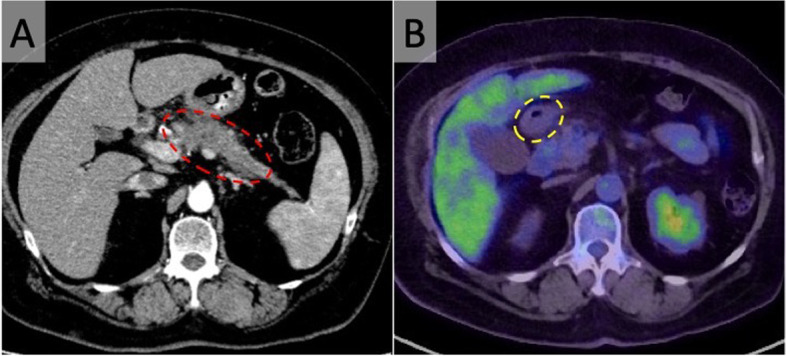
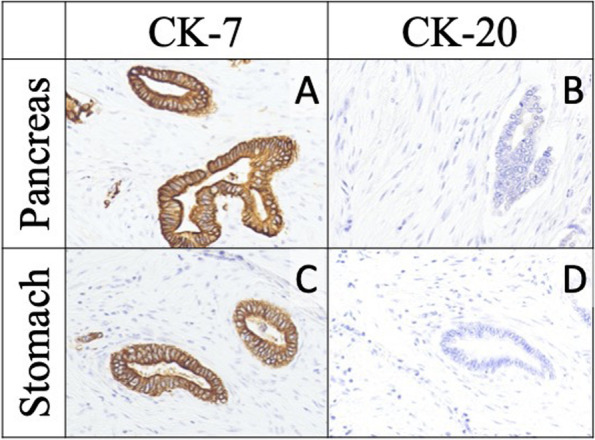
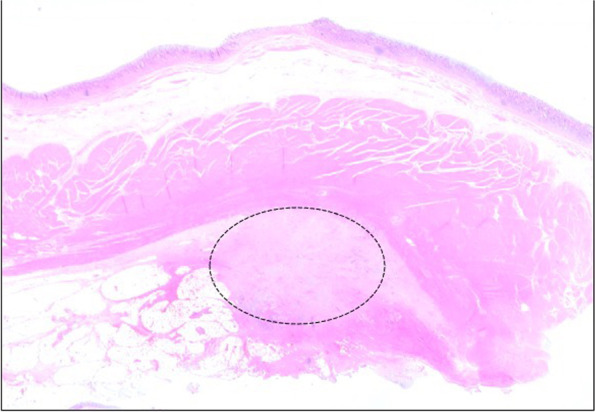
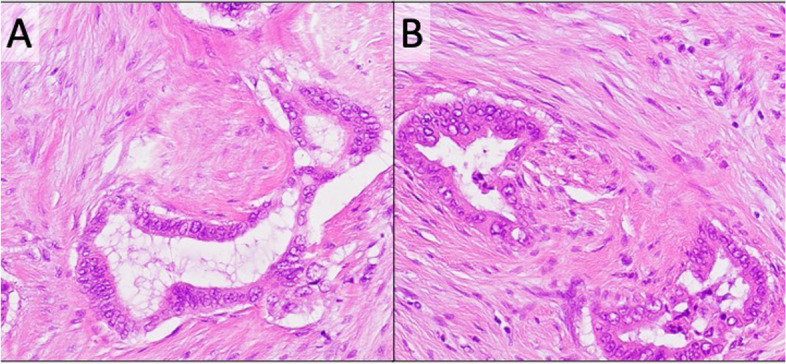
A 70-year-old woman with a diagnosis of pancreatic head-body-tail cancer presented to our department for surgery. Transgastric EUS-FNA and biopsy established the histological diagnosis in her case. We administered neoadjuvant chemotherapy (NAC) to the patient and performed a TP. Histopathological and immunohistochemical examination subsequently confirmed the diagnosis of pT3N1aM1 pancreatic adenocarcinoma and its gastric metastasis, which was caused by NTS. It is postulated that the tumor cells of NTS had progressed to develop the metastatic lesion in the gastric wall during the NAC period. This was also resected during the initial surgery. The patient developed an early postoperative recurrence in the peritoneum 8 months after the surgery.
In pancreatic head cancer cases, the puncture route is often included in the resection area of radical surgery, and NTS is seldom considered as a potential clinical problem. However, NTS can progress rapidly and may be associated with early recurrence of malignancy. Therefore, when transgastrointestinal puncture is performed for the diagnosis of pancreatic cancer, the treatment strategy should be established considering the potential development of NTS.
最近,内镜超声引导下细针穿刺(EUS-FNA)相关的不良事件之一是肿瘤细胞经活检针道种植(NTS)的报道数量有所增加。在以前报道的大多数胰腺癌 NTS 病例中,初始手术是远端胰腺切除术,随后在胃壁发现了异时性转移,其定位与 EUS-FNA 的穿刺路径相匹配。我们报告了一例由 NTS 引起的早期胃癌转移的病例。我们的患者接受了全胰切除术(TP),并同步切除了 NTS。
一位 70 岁女性,诊断为胰头-体-尾癌,因手术就诊于我院。经胃 EUS-FNA 和活检确定了其组织学诊断。我们对患者进行了新辅助化疗(NAC),并进行了 TP。随后的组织病理学和免疫组织化学检查证实了 pT3N1aM1 胰腺腺癌及其胃转移的诊断,这是由 NTS 引起的。推测在 NAC 期间,NTS 的肿瘤细胞进展并在胃壁形成转移病灶。这也在初始手术中被切除。术后 8 个月,患者在腹膜发生早期复发。
在胰头癌病例中,穿刺路径通常包含在根治性手术的切除区域内,很少将 NTS 视为潜在的临床问题。然而,NTS 可能会迅速进展,并可能与恶性肿瘤的早期复发有关。因此,在为诊断胰腺癌而行经胃肠道穿刺时,应考虑到 NTS 的潜在发展,制定治疗策略。