Department of Biological Sciences, Korea Advanced Institute of Science and Technology, Daejeon, Republic of Korea.
Front Immunol. 2023 Jan 30;14:1062365. doi: 10.3389/fimmu.2023.1062365. eCollection 2023.
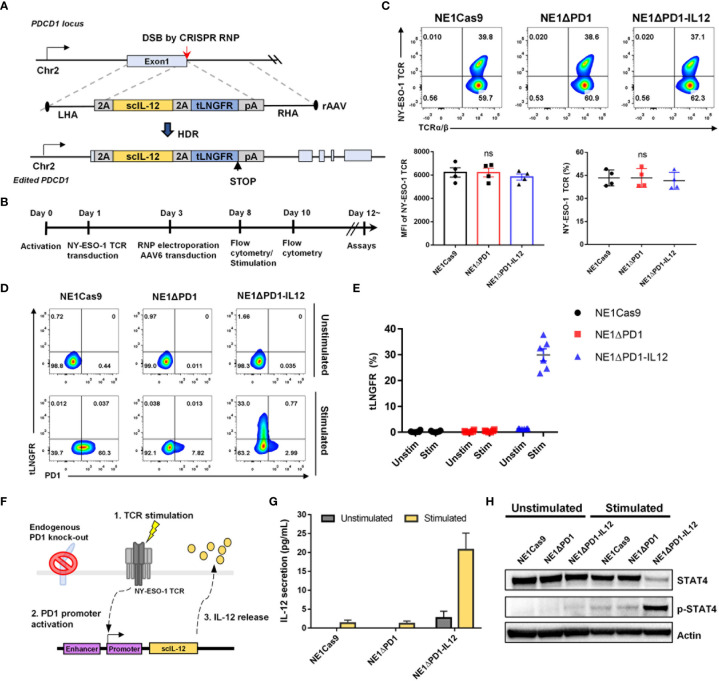
Although the engineering of T cells to co-express immunostimulatory cytokines has been shown to enhance the therapeutic efficacy of adoptive T cell therapy, the uncontrolled systemic release of potent cytokines can lead to severe adverse effects. To address this, we site-specifically inserted the (IL-12) gene into the PDCD1 locus in T cells using clustered regularly interspaced short palindromic repeats (CRISPR)/CRISPR-associated protein 9 (Cas9)-based genome editing to achieve T-cell activation-dependent expression of IL-12 while ablating the expression of inhibitory PD-1.
New York esophageal squamous cell carcinoma 1(NY-ESO-1)-specific TCR-T cells was investigated as a model system. We generated ΔPD-1-IL-12 -edited NY-ESO-1 TCR-T cells by sequential lentiviral transduction and CRISPR knock-in into activated human primary T cells.
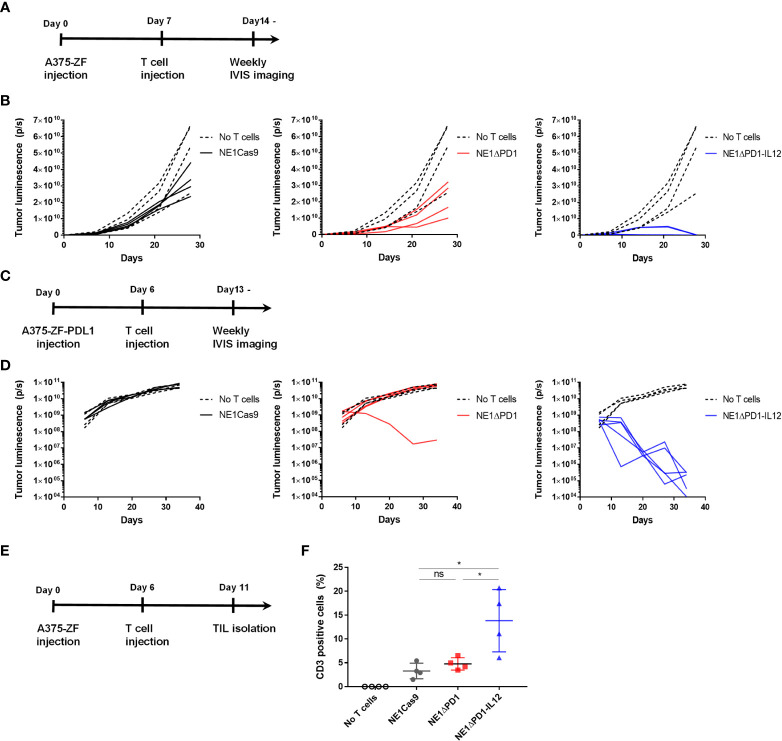
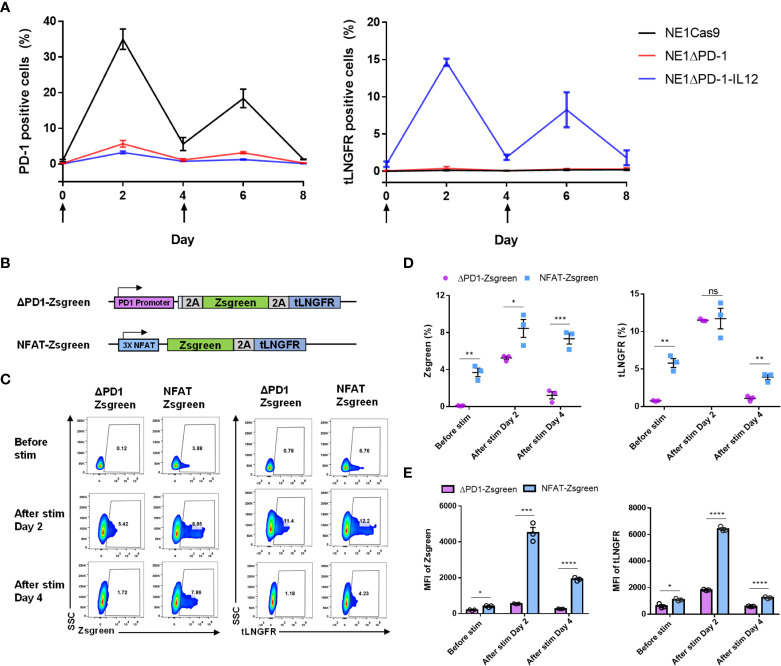
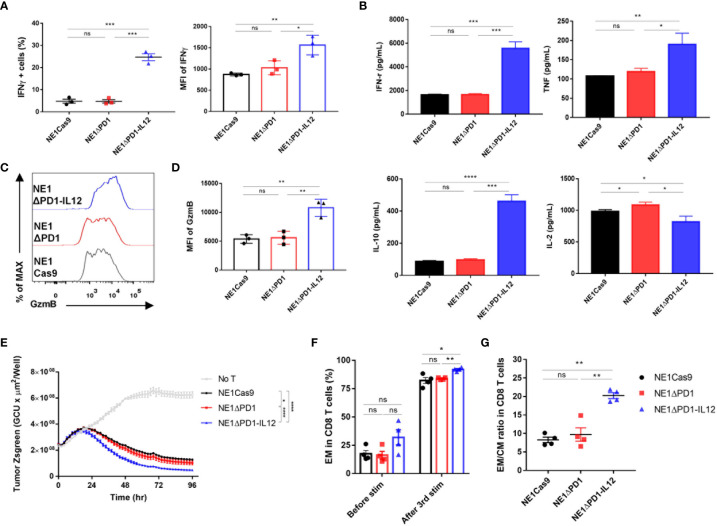
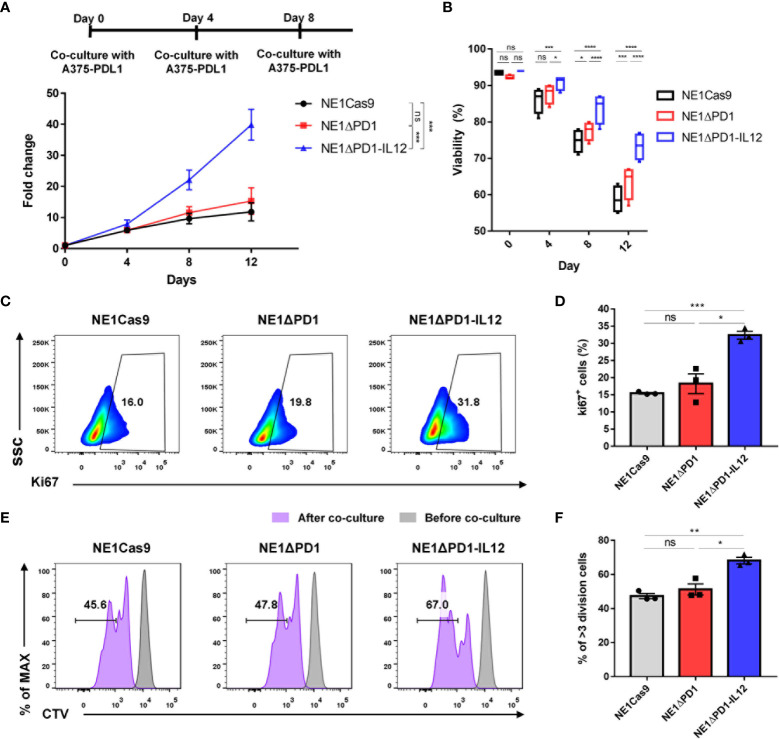
We showed that the endogenous regulatory elements can tightly control the secretion of recombinant IL-12 in a target cell-dependent manner, at an expression level that is more moderate than that obtained using a synthetic NFAT-responsive promoter. The inducible expression of IL-12 from the locus was sufficient to enhance the effector function of NY-ESO-1 TCR-T cells, as determined by upregulation of effector molecules, increased cytotoxic activity, and enhanced expansion upon repeated antigen stimulation in vitro. Mouse xenograft studies also revealed that PD-1-edited IL-12-secreting NY-ESO-1 TCR-T cells could eliminate established tumors and showed significantly greater in vivo expansion capacity than control TCR-T cells.
Our approach may provide a way to safely harness the therapeutic potential of potent immunostimulatory cytokines for the development of effective adoptive T cell therapies against solid tumors.
尽管已证明共表达免疫刺激细胞因子的 T 细胞工程可增强过继性 T 细胞疗法的治疗效果,但强效细胞因子的不受控制的全身释放会导致严重的不良反应。为了解决这个问题,我们使用基于规律成簇间隔短回文重复序列(CRISPR)/CRISPR 相关蛋白 9(Cas9)的基因组编辑技术,将(IL-12)基因定点插入 T 细胞的 PDCD1 基因座,实现 T 细胞激活依赖性 IL-12 的表达,同时消除抑制性 PD-1 的表达。
以 NY-ESO-1 特异性 TCR-T 细胞作为模型系统进行研究。我们通过顺序慢病毒转导和 CRISPR 敲入将 ΔPD-1-IL-12 编辑的 NY-ESO-1 TCR-T 细胞导入激活的人原代 T 细胞中。
我们表明,内源性调控元件可以以靶细胞依赖的方式紧密控制重组 IL-12 的分泌,其表达水平比使用合成 NFAT 反应性启动子获得的表达水平更为适中。从 PD-1 基因座诱导性表达 IL-12 足以增强 NY-ESO-1 TCR-T 细胞的效应功能,表现在效应分子上调、细胞毒性活性增加以及在体外反复抗原刺激时增强扩增。小鼠异种移植研究还表明,PD-1 编辑的 IL-12 分泌 NY-ESO-1 TCR-T 细胞可以消除已建立的肿瘤,并显示出比对照 TCR-T 细胞更强的体内扩增能力。
我们的方法可能为安全利用强效免疫刺激细胞因子的治疗潜力,开发针对实体瘤的有效过继性 T 细胞疗法提供了一种途径。