Department of Medicine, Division of Cardiology, University Hospitals Harrington Heart & Vascular Institute, Case Western Reserve University School of Medicine, 11100 Euclid Avenue, Cleveland, OH 44106, USA.
Department of Medicine, University Hospitals Cleveland Medical Center, Case Western Reserve University School of Medicine, Cleveland, OH, USA.
Europace. 2023 Apr 15;25(4):1441-1450. doi: 10.1093/europace/euad025.
Patients who undergo permanent pacemaker (PPM) implantation after transcatheter aortic valve replacement (TAVR) have a worse outcome. The aim of this study was to identify risk factors of worse outcomes in patients with post-TAVR PPM implantation.
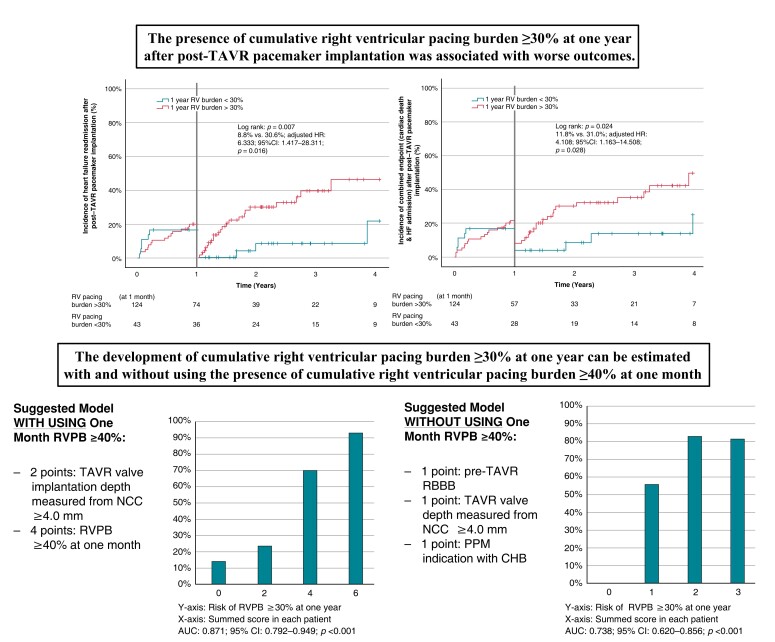
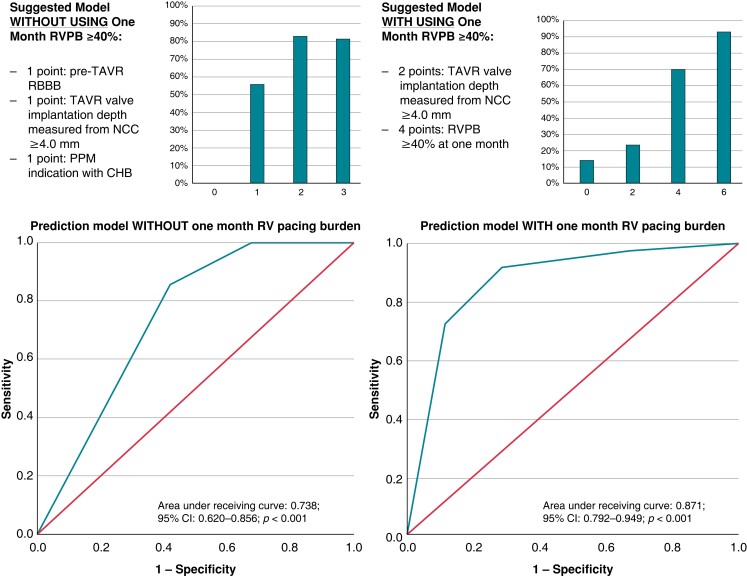
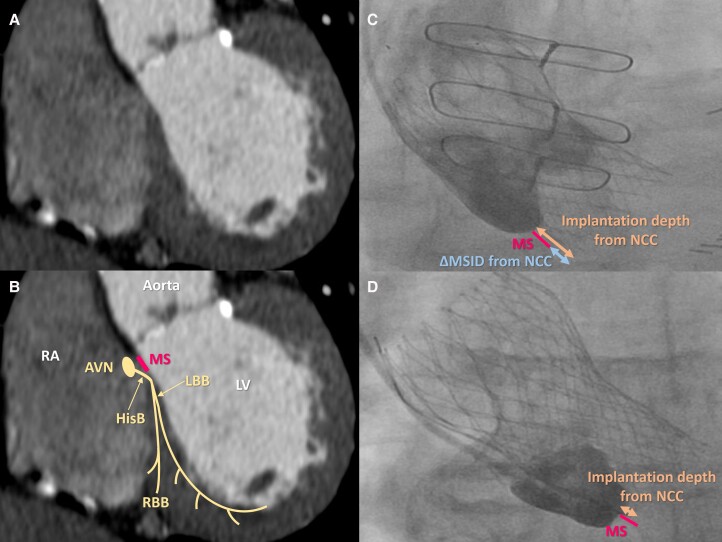
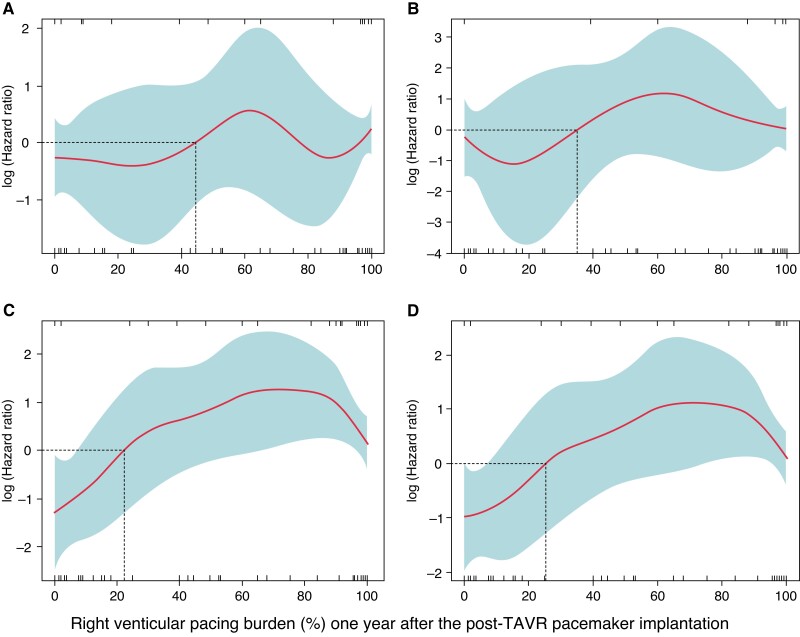
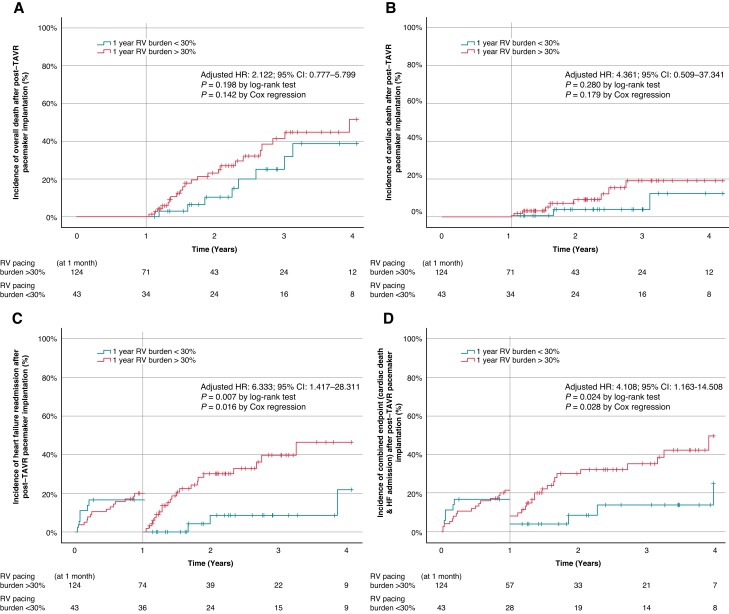
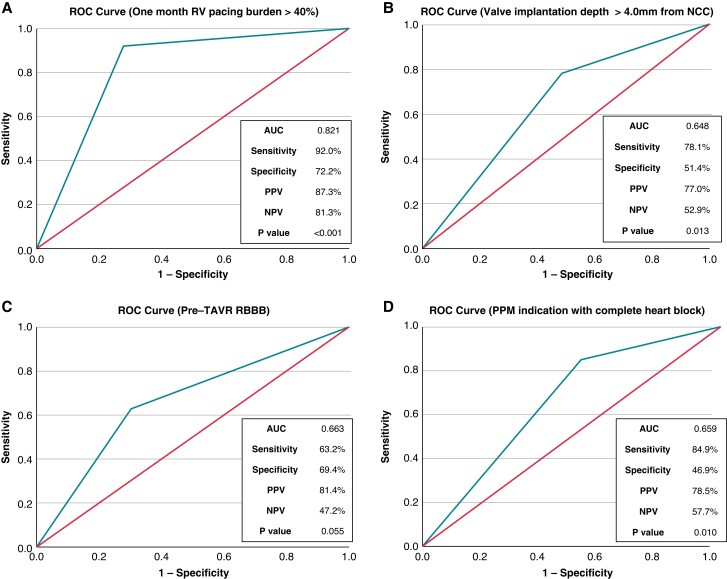
This is a single-centre, retrospective study of consecutive patients who underwent post-TAVR PPM implantation from 11 March 2011 to 9 November 2019. Clinical outcomes were evaluated by landmark analysis with cut-off at 1 year after the PPM implantation. Of the 1389 patients underwent TAVR during the study duration and a total of 110 patients were included in the final analysis. Right ventricular pacing burden (RVPB) ≥ 30% at 1 year was associated with a higher likelihood of heart failure (HF) readmission [adjusted hazard ratio (aHR): 6.333; 95% confidence interval [CI]: 1.417-28.311; P = 0.016] and composite endpoint of overall death and/or HF (aHR: 2.453; 95% CI: 1.040-5.786; P = 0.040). The RVPB ≥30% at 1 year was associated with higher atrial fibrillation burden (24.1 ± 40.6% vs. 1.2 ± 5.3%; P = 0.013) and a decrease in left ventricular ejection fraction (-5.0 ± 9.8% vs. + 1.1 ± 7.9%; P = 0.005). The predicting factors of the RVPB ≥30% at 1 year were the presence of RVPB ≥40% at 1 month and the valve implantation depth measured from non-coronary cusp ≥4.0 mm (aHR: 57.808; 95% CI: 12.489-267.584; P < 0.001 and aHR: 6.817; 95% CI: 1.829-25.402; P = 0.004).
The RVPB ≥30% at 1 year was associated with worse outcomes. Clinical benefit of minimal RV pacing algorithms and biventricular pacing needs to be investigated.
经导管主动脉瓣置换术(TAVR)后植入永久性起搏器(PPM)的患者预后较差。本研究旨在确定 TAVR 后植入 PPM 患者预后不良的危险因素。
这是一项单中心、回顾性研究,连续纳入 2011 年 3 月 11 日至 2019 年 11 月 9 日期间接受 TAVR 后植入 PPM 的患者。通过 1 年时的时间点进行 landmark 分析来评估临床结局。在研究期间,共有 1389 例患者接受了 TAVR,最终有 110 例患者纳入最终分析。1 年后右心室起搏比例(RVPB)≥30%与心力衰竭(HF)再入院的可能性更高相关(校正风险比[aHR]:6.333;95%置信区间[CI]:1.417-28.311;P=0.016)和全因死亡和/或 HF 的复合终点(aHR:2.453;95%CI:1.040-5.786;P=0.040)。1 年后 RVPB≥30%与更高的心房颤动负荷(24.1±40.6%与 1.2±5.3%;P=0.013)和左心室射血分数降低(-5.0±9.8%与+1.1±7.9%;P=0.005)相关。1 年后 RVPB≥30%的预测因素为 1 个月时存在 RVPB≥40%和瓣环植入深度从非冠状动脉瓣≥4.0mm(aHR:57.808;95%CI:12.489-267.584;P<0.001 和 aHR:6.817;95%CI:1.829-25.402;P=0.004)。
1 年后 RVPB≥30%与预后较差相关。需要研究最小右心室起搏算法和双心室起搏的临床获益。