Key Laboratory of Crop Heterosis and Utilization (MOE) and Beijing Key Laboratory of Crop Genetic Improvement, China Agricultural University, Beijing, China.
CIMMYT-China Wheat and Maize Joint Research Center/National Key Laboratory of Wheat and Maize Crop Science/College of Agronomy, Henan Agricultural University, Zhengzhou, China.
Plant Biotechnol J. 2023 Jun;21(6):1229-1239. doi: 10.1111/pbi.14032. Epub 2023 Mar 2.
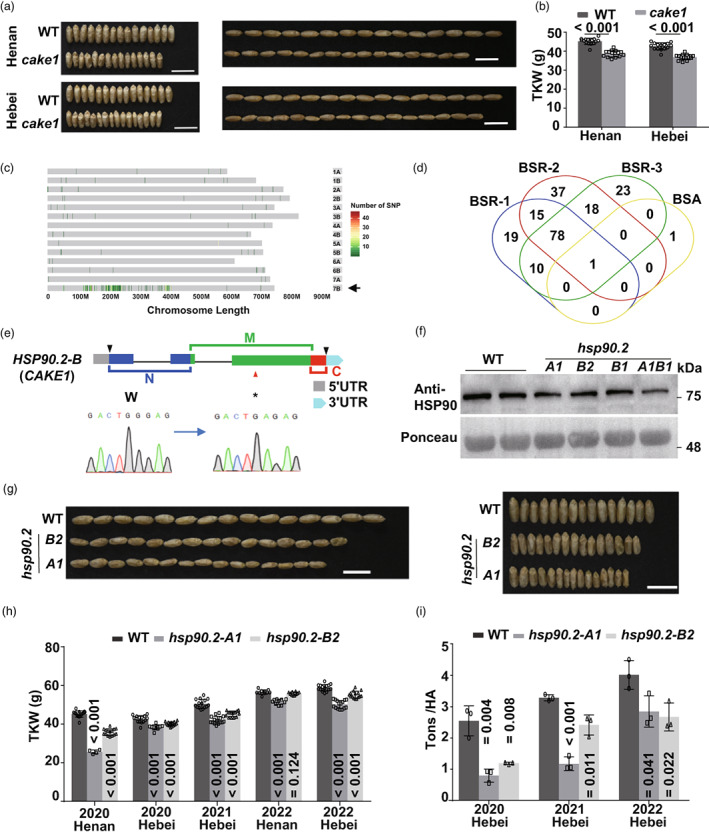
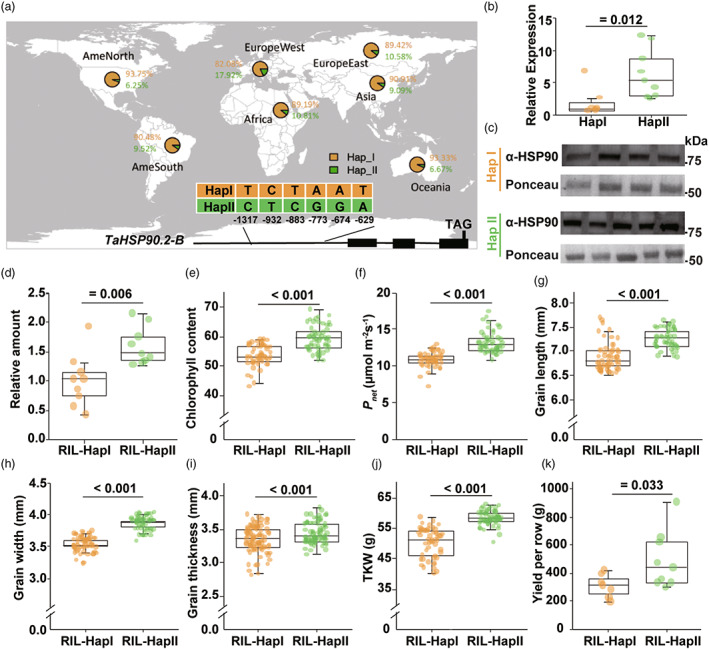
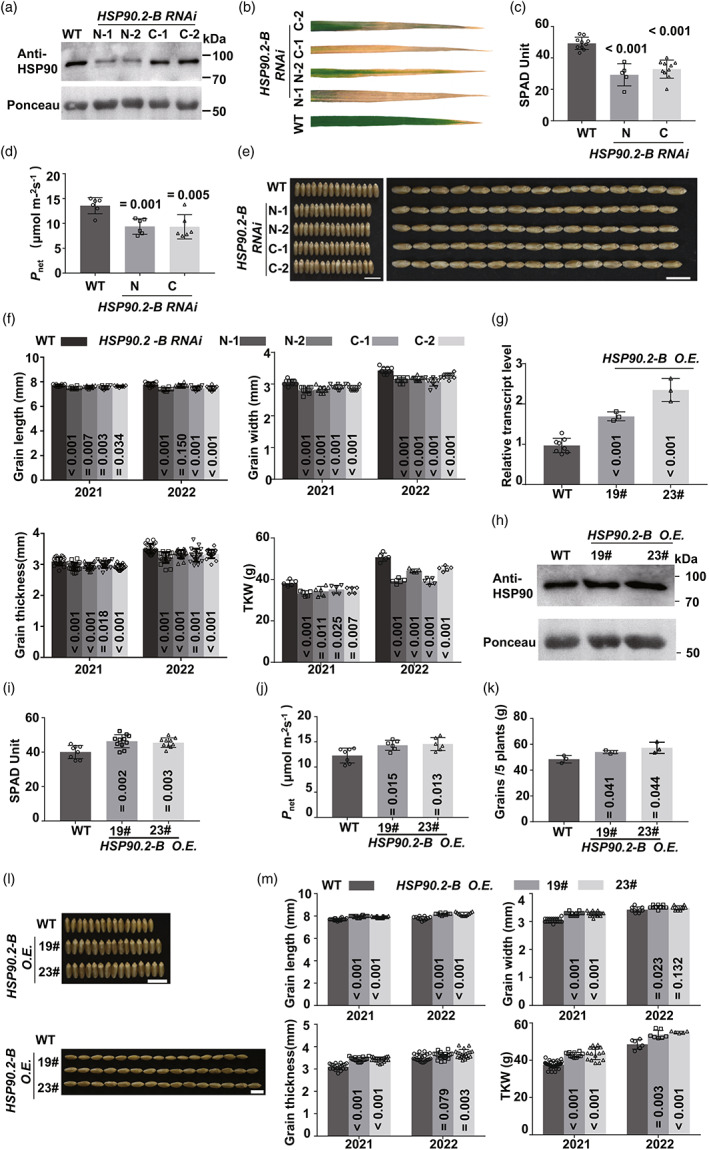
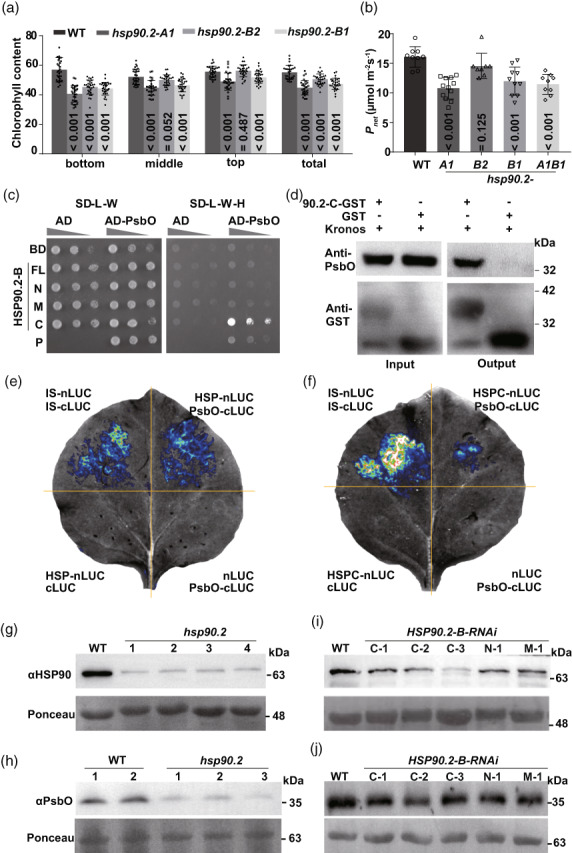
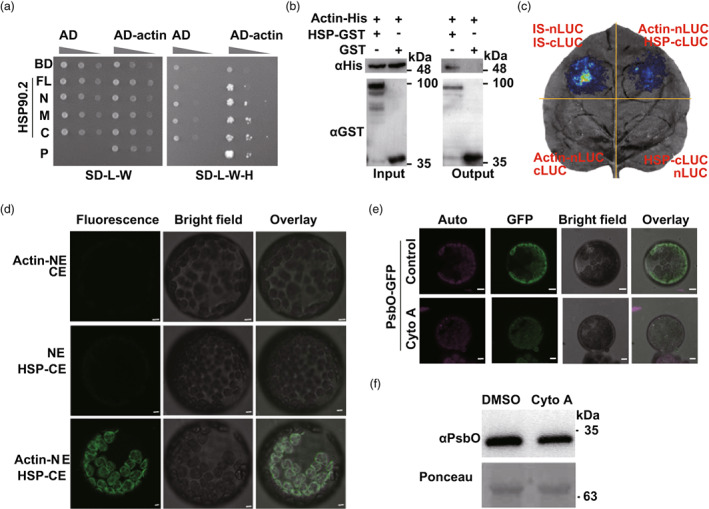
Wheat fixes CO by photosynthesis into kernels to nourish humankind. Improving the photosynthesis rate is a major driving force in assimilating atmospheric CO and guaranteeing food supply for human beings. Strategies for achieving the above goal need to be improved. Here, we report the cloning and mechanism of CO ASSIMILATION RATE AND KERNEL-ENHANCED 1 (CAKE1) from durum wheat (Triticum turgidum L. var. durum). The cake1 mutant displayed a lower photosynthesis rate with smaller grains. Genetic studies identified CAKE1 as HSP90.2-B, encoding cytosolic molecular chaperone folding nascent preproteins. The disturbance of HSP90.2 decreased leaf photosynthesis rate, kernel weight (KW) and yield. Nevertheless, HSP90.2 over-expression increased KW. HSP90.2 recruited and was essential for the chloroplast localization of nuclear-encoded photosynthesis units, for example PsbO. Actin microfilaments docked on the chloroplast surface interacted with HSP90.2 as a subcellular track towards chloroplasts. A natural variation in the hexaploid wheat HSP90.2-B promoter increased its transcription activity, enhanced photosynthesis rate and improved KW and yield. Our study illustrated an HSP90.2-Actin complex sorting client preproteins towards chloroplasts to promote CO assimilation and crop production. The beneficial haplotype of Hsp90.2 is rare in modern varieties and could be an excellent molecular switch promoting photosynthesis rate to increase yield in future elite wheat varieties.
小麦通过光合作用将 CO 固定到籽粒中,为人类提供营养。提高光合作用速率是同化大气 CO 并保证人类粮食供应的主要驱动力。实现上述目标的策略需要改进。在这里,我们报道了从小麦(Triticum turgidum L. var. durum)中克隆和解析 CO 同化率和籽粒增强 1(CAKE1)的机制。cake1 突变体表现出较低的光合作用速率和较小的籽粒。遗传研究将 CAKE1 鉴定为 HSP90.2-B,编码细胞质分子伴侣折叠新生前体蛋白。HSP90.2 的干扰降低了叶片光合作用速率、籽粒重量(KW)和产量。然而,HSP90.2 的过表达增加了 KW。HSP90.2 募集并对核编码光合作用单位(例如 PsbO)的叶绿体定位是必需的。肌动蛋白微丝与 HSP90.2 对接在叶绿体表面作为亚细胞轨道朝向叶绿体。六倍体小麦 HSP90.2-B 启动子的自然变异增加了其转录活性,提高了光合作用速率,增加了 KW 和产量。我们的研究说明了 HSP90.2-肌动蛋白复合物将客户前体蛋白分拣到叶绿体中,以促进 CO 同化和作物生产。Hsp90.2 的有益单倍型在现代品种中很少见,可能是一个极好的分子开关,可以提高未来优良小麦品种的光合作用速率,增加产量。