Department of Medicine, Kwame Nkrumah University of Science and Technology, Kumasi, Ghana; Renal Unit, Department of Medicine, Komfo Anokye Teaching Hospital, Kumasi, Ghana.
Department of Nephrology, Seth Gordhandas Sunderdas Medical College and the King Edward Memorial Hospital, Mumbai, India.
Semin Nephrol. 2022 Sep;42(5):151318. doi: 10.1016/j.semnephrol.2023.151318. Epub 2023 Jan 16.
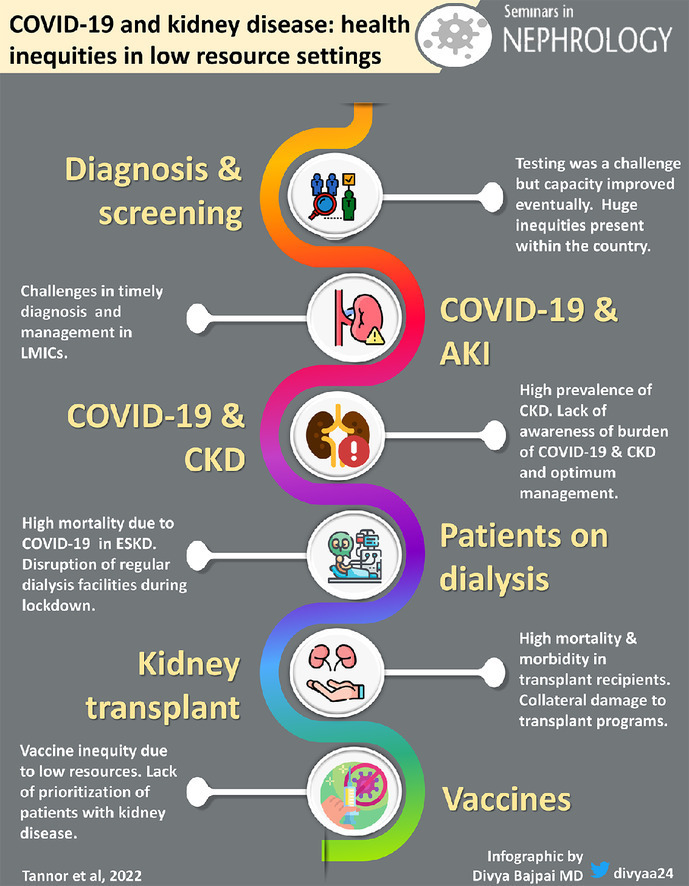
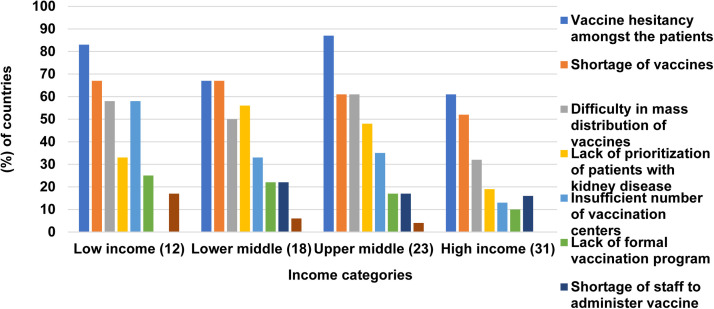
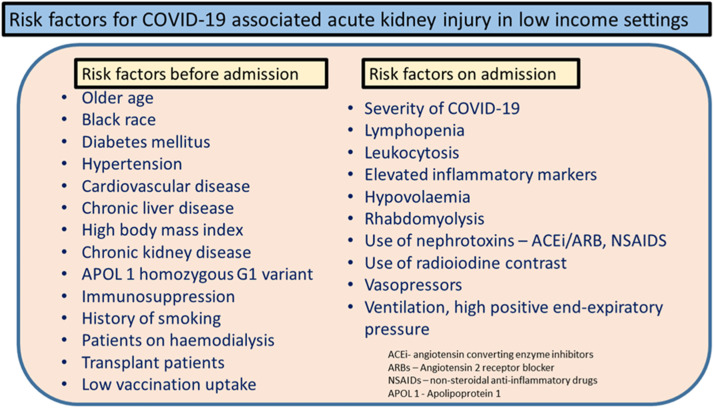
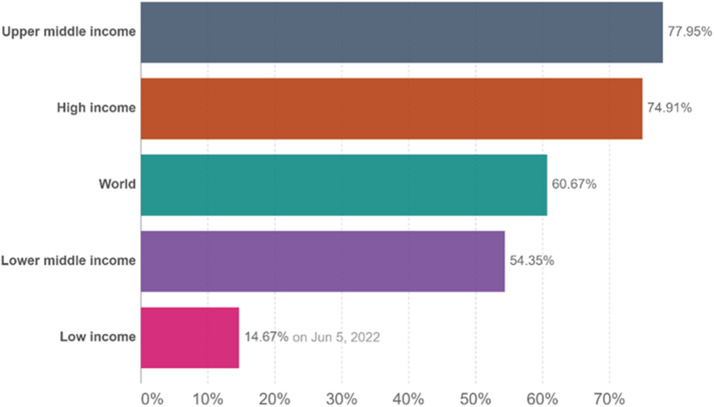
The acute coronavirus disease-2019 (COVID-19) pandemic has had a significant impact on the incidence and prevalence of acute kidney injury and chronic kidney disease globally and in low-income settings. Chronic kidney disease increases the risk of developing COVID-19 and COVID-19 causes acute kidney injury directly or indirectly and is associated with high mortality in severe cases. Outcomes of COVID-19-associated kidney disease were not equitable globally owing to a lack of health infrastructure, challenges in diagnostic testing, and management of COVID-19 in low-income settings. COVID-19 also significantly impacted kidney transplant rates and mortality among kidney transplant recipients. Vaccine availability and uptake remains a significant challenge in low- and lower-middle-income countries compared with high-income countries. In this review, we explore the inequities in low- and lower-middle-income countries and highlight the progress made in the prevention, diagnosis, and management of patients with COVID-19 and kidney disease. We recommend further studies into the challenges, lessons learned, and progress made in the diagnosis, management, and treatment of patients with COVID-19-related kidney diseases and suggest ways to improve the care and management of patients with COVID-19 and kidney disease.
急性冠状病毒病 2019(COVID-19)大流行对全球和低收入环境中急性肾损伤和慢性肾脏病的发病率和患病率产生了重大影响。慢性肾脏病增加了患 COVID-19 的风险,COVID-19 直接或间接导致急性肾损伤,并与严重病例的高死亡率相关。由于缺乏卫生基础设施、诊断检测方面的挑战以及低收入环境中 COVID-19 的管理,全球 COVID-19 相关肾脏疾病的结局并不公平。COVID-19 还严重影响了肾移植受者的肾移植率和死亡率。与高收入国家相比,疫苗的可及性和接种率仍然是低收入和中低收入国家的重大挑战。在这篇综述中,我们探讨了低收入和中低收入国家的不平等现象,并强调了在 COVID-19 患者的预防、诊断和管理方面取得的进展。我们建议进一步研究 COVID-19 相关肾脏疾病患者的诊断、管理和治疗方面的挑战、经验教训和进展,并提出改善 COVID-19 患者和肾脏疾病患者护理和管理的方法。