Department of Neuroscience, Monash University, Melbourne, Victoria, 3004, Australia.
Department of Biochemistry and Pharmacology, University of Melbourne, Parkville, Victoria, 3010, Australia.
F1000Res. 2022 Dec 2;11:1417. doi: 10.12688/f1000research.128074.2. eCollection 2022.
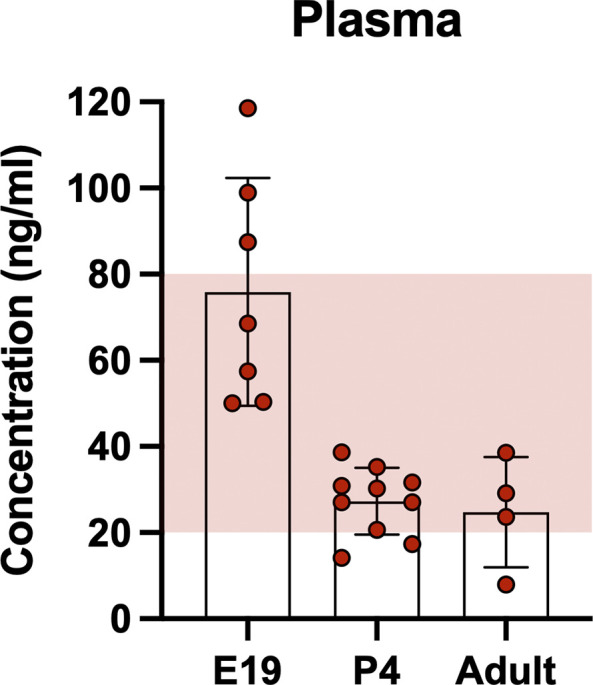
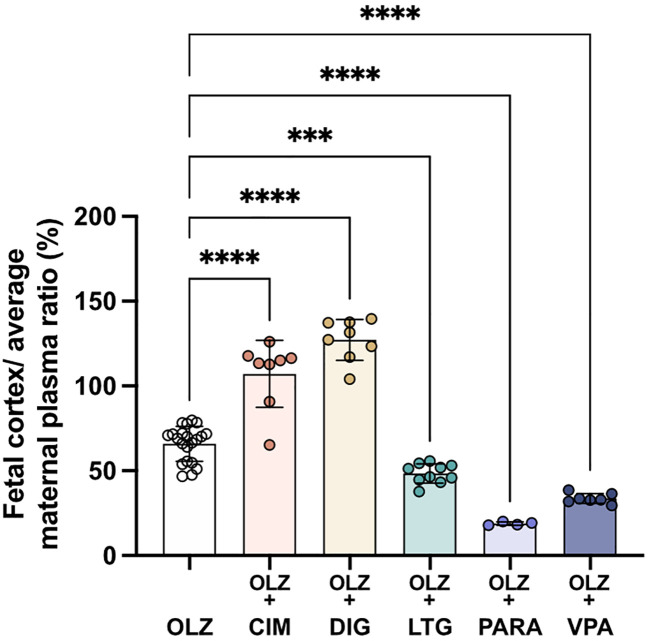
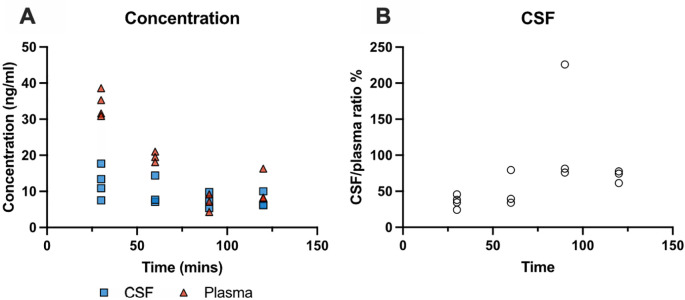
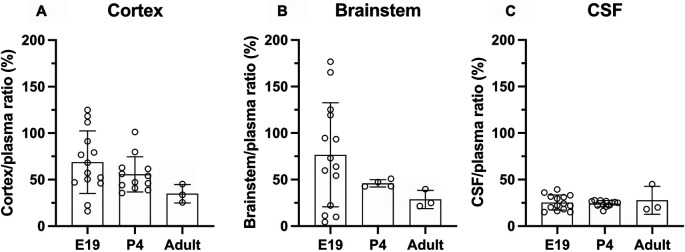
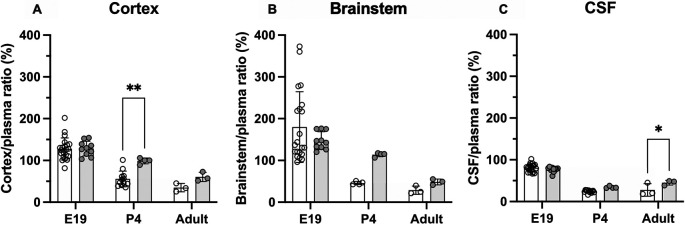
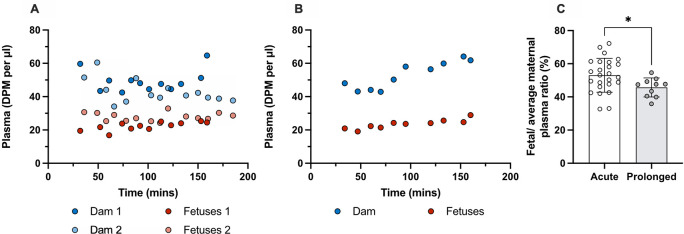
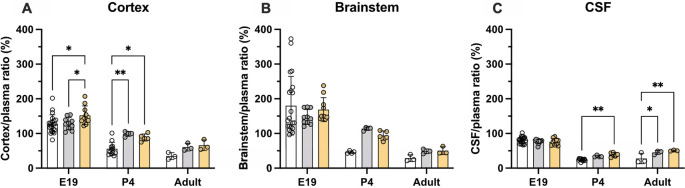
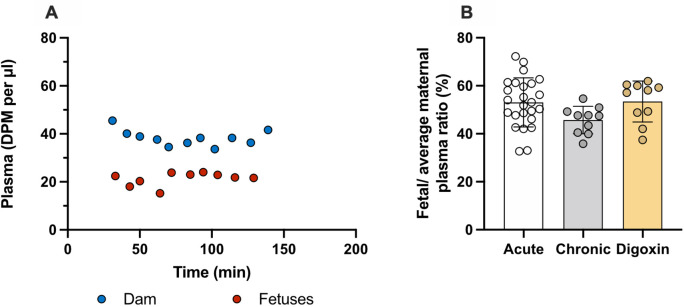
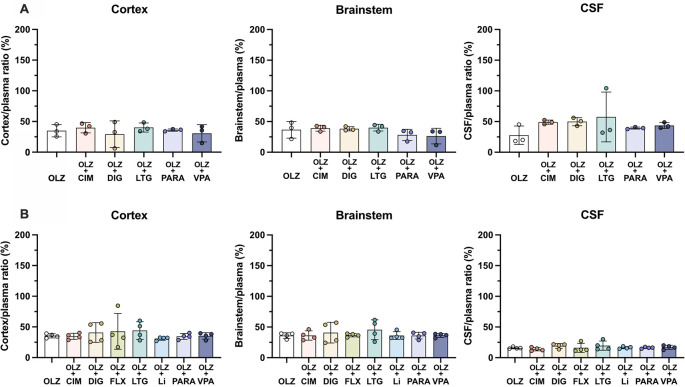
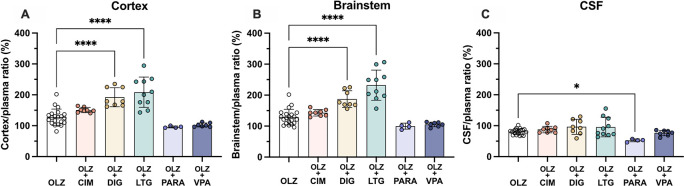
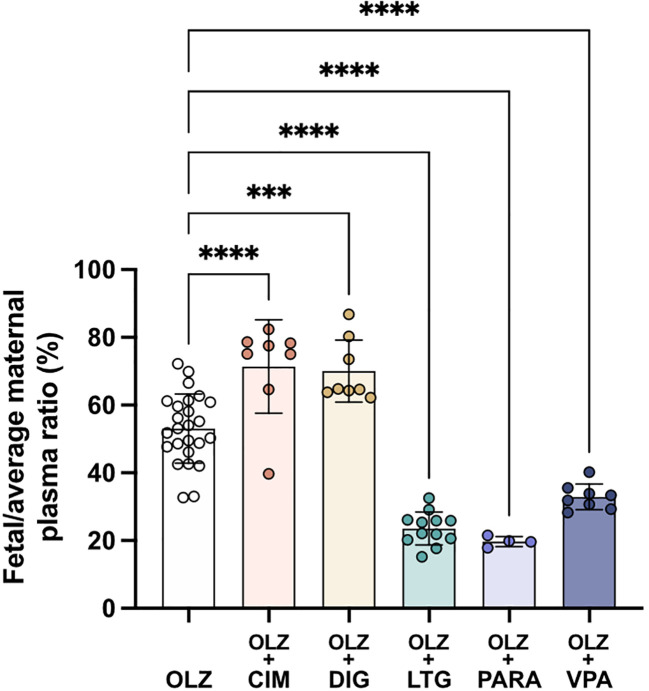
Olanzapine is used to treat schizophrenia and bipolar disorder in women of childbearing age. Continuation of psychotropic medications throughout pregnancy and lactation is often required as cessation could be dangerous for both mother and child. However, there is a lack of information on the transfer of these drugs into the developing brain. Sprague Dawley rats at three developmental ages: embryonic day E19, postnatal day P4 and non-pregnant adult females were administered unlabelled or radiolabelled ( H) olanzapine (0.15 mg/kg) either as monotherapy or in combination with each of seven other common medications. Similar injections were administered to pregnant E19 females to investigate placental transfer. Olanzapine in plasma, cerebrospinal fluid (CSF) and brain was measured by liquid scintillation counting after a single dose (acute) or following 5 days of treatment (prolonged). Olanzapine entry into brain and CSF was not age-dependent. Prolonged olanzapine treatment reduced placental transfer from 53% to 46% (p<0.05). Co-administration of digoxin or lamotrigine with olanzapine increased its entry into the fetal brain, whereas paracetamol decreased its entry into the CSF. Placental transfer of olanzapine was increased by co-treatment with cimetidine and digoxin, whereas co-treatment with lamotrigine, paracetamol or valproate led to a substantial decrease. Repeated co-treatment of digoxin and olanzapine increased olanzapine transfer into the brain and CSF, but not across the placenta. Overall entry of olanzapine from maternally administered drugs into the fetal brain was higher after combination therapy with cimetidine and digoxin. Co-administration of olanzapine with some commonly used drugs affected its entry into the fetus and its developing brain to a greater extent than in adults. It appears that protection of the fetal brain for these drugs primarily comes from the placenta rather than from the fetal brain barriers. Results suggest that drug combinations should be used with caution particularly during pregnancy.
奥氮平用于治疗育龄期女性的精神分裂症和双相情感障碍。由于停止使用这些药物对母亲和孩子都可能是危险的,因此在妊娠和哺乳期经常需要继续使用精神药物。然而,目前缺乏这些药物进入发育中大脑的信息。在三个发育阶段(胚胎第 19 天、出生后第 4 天和未怀孕的成年雌性)的 Sprague Dawley 大鼠中,给予未标记或放射性标记( H)奥氮平(0.15mg/kg)单药治疗或与其他七种常见药物中的每一种联合治疗。对妊娠第 19 天的雌性大鼠进行类似的注射以研究胎盘转移。单次剂量(急性)或 5 天治疗(延长)后,通过液体闪烁计数测量血浆、脑脊液(CSF)和大脑中的奥氮平。奥氮平进入大脑和 CSF 与年龄无关。延长奥氮平治疗将胎盘转移从 53%降低至 46%(p<0.05)。地高辛或拉莫三嗪与奥氮平联合给药增加了其进入胎儿大脑的量,而对乙酰氨基酚降低了其进入 CSF 的量。奥氮平与西咪替丁和地高辛联合治疗增加了胎盘转移,而与拉莫三嗪、对乙酰氨基酚或丙戊酸钠联合治疗则导致显著减少。地高辛和奥氮平的重复联合治疗增加了奥氮平进入大脑和 CSF 的转移,但不穿过胎盘。总体而言,与西咪替丁和地高辛联合治疗后,母体给予的药物进入胎儿大脑的奥氮平量更高。奥氮平与一些常用药物联合给药会比在成人中更显著地影响其进入胎儿及其发育中的大脑。这表明,这些药物的胎儿脑保护主要来自胎盘而不是胎儿脑屏障。结果表明,特别是在怀孕期间,应谨慎使用药物组合。