Department of Biochemistry & Pharmacology, University of Melbourne, Parkville, VIC, 3010, Australia.
Department of Neuroscience, Monash University, 99 Commercial Road, Melbourne, VIC, 3004, Australia.
Fluids Barriers CNS. 2021 Dec 7;18(1):57. doi: 10.1186/s12987-021-00285-w.
Little is known about the extent of drug entry into developing brain, when administered to pregnant and lactating women. Lithium is commonly prescribed for bipolar disorder. Here we studied transfer of lithium given to dams, into blood, brain and cerebrospinal fluid (CSF) in embryonic and postnatal animals as well as adults.
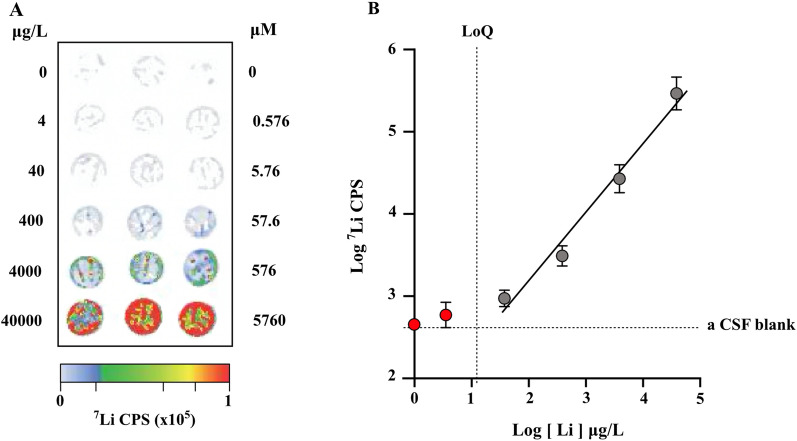
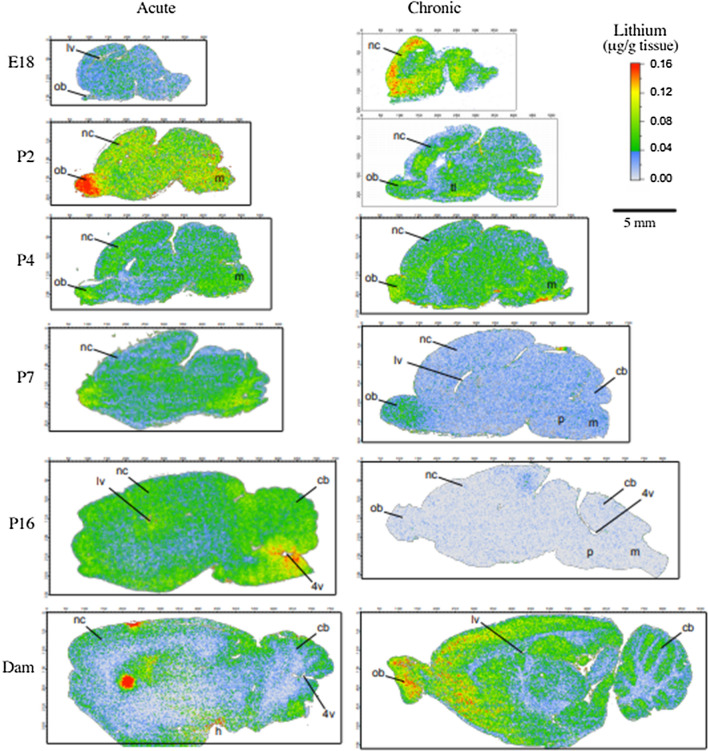
Lithium chloride in a clinically relevant dose (3.2 mg/kg body weight) was injected intraperitoneally into pregnant (E15-18) and lactating dams (birth-P16/17) or directly into postnatal pups (P0-P16/17). Acute treatment involved a single injection; long-term treatment involved twice daily injections for the duration of the experiment. Following terminal anaesthesia blood plasma, CSF and brains were collected. Lithium levels and brain distribution were measured using Laser Ablation Inductively Coupled Plasma-Mass Spectrometry and total lithium levels were confirmed by Inductively Coupled Plasma-Mass Spectrometry.
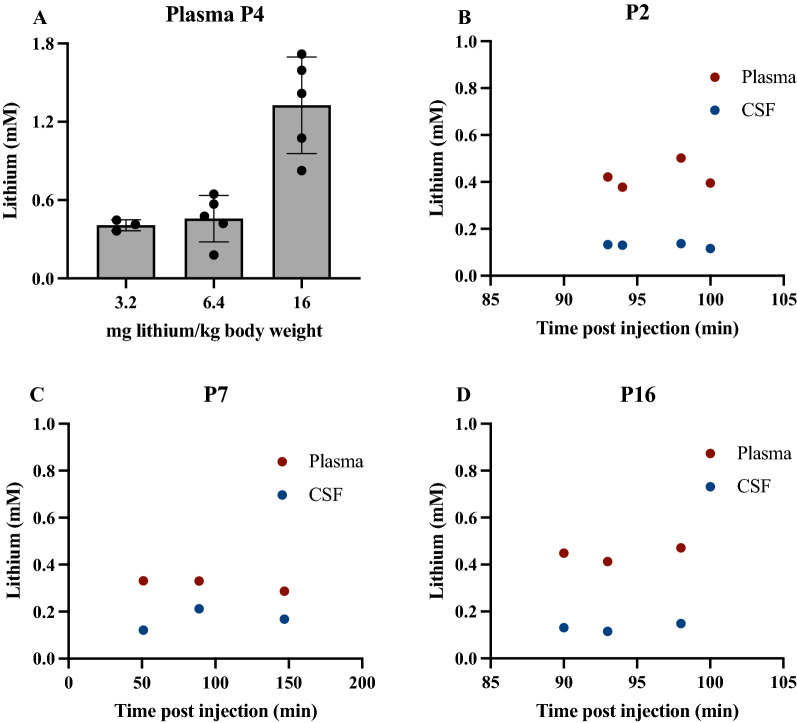
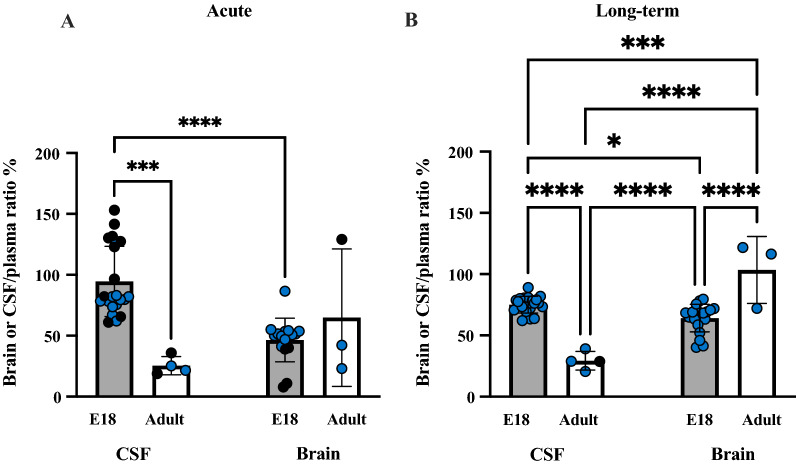
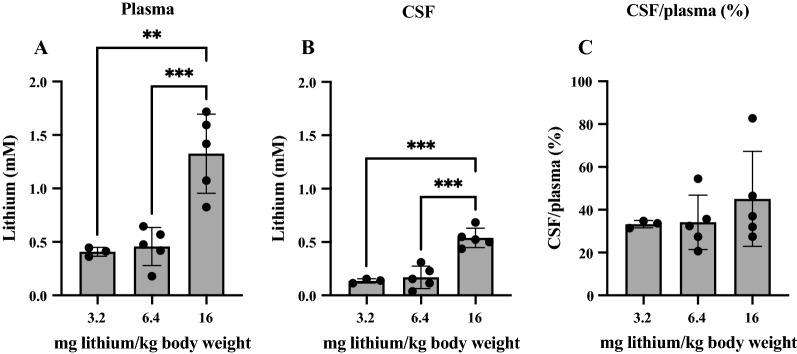
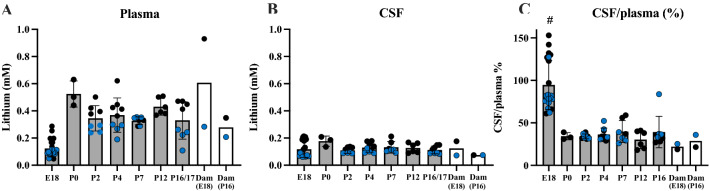
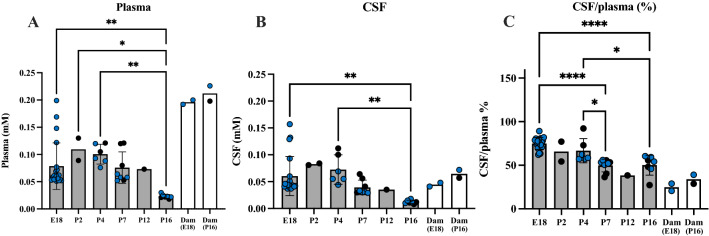
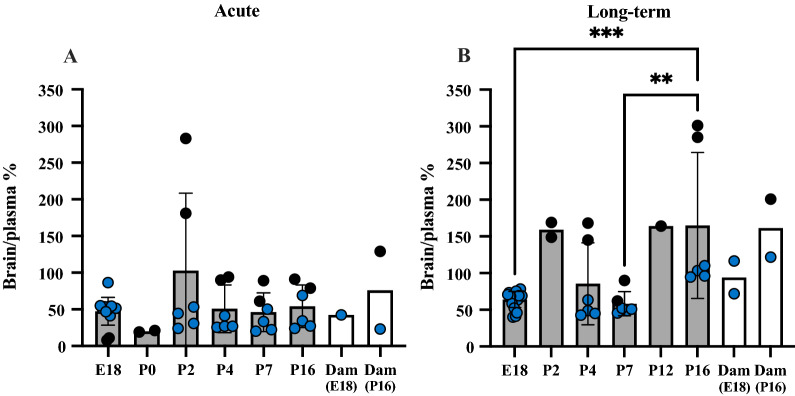
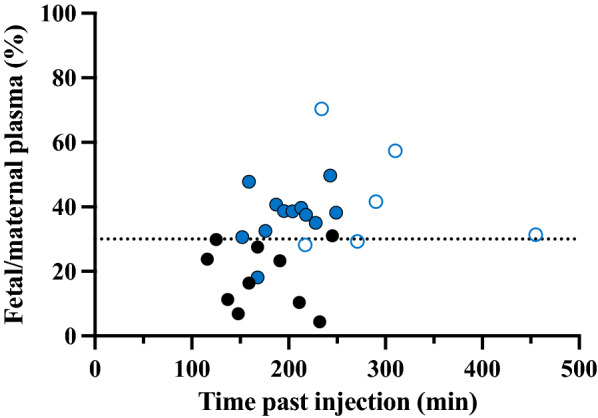
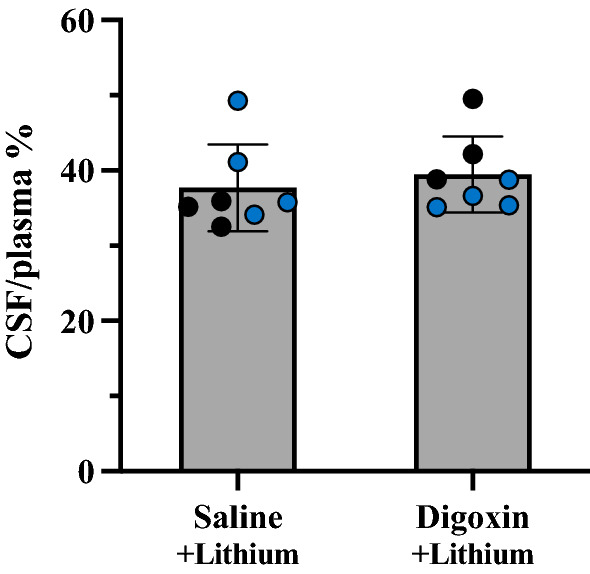
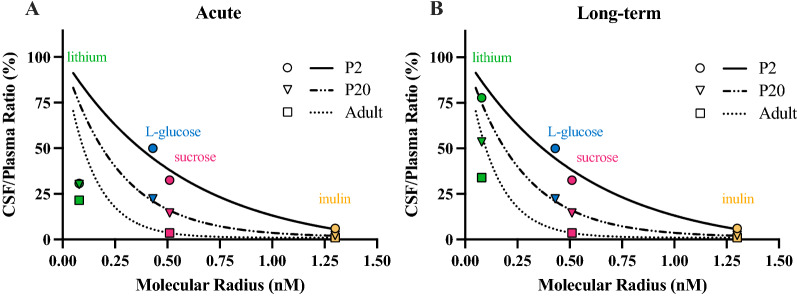
Lithium was detected in blood, CSF and brain of all fetal and postnatal pups following lithium treatment of dams. Its concentration in pups' blood was consistently below that in maternal blood (30-35%) indicating significant protection by the placenta and breast tissue. However, much of the lithium that reached the fetus entered its brain. Levels of lithium in plasma fluctuated in different treatment groups but its concentration in CSF was stable at all ages, in agreement with known stable levels of endogenous ions in CSF. There was no significant increase of lithium transfer into CSF following application of Na/K ATPase inhibitor (digoxin) in vivo, indicating that lithium transfer across choroid plexus epithelium is not likely to be via the Na/K ATPase mechanism, at least early in development. Comparison with passive permeability markers suggested that in acute experiments lithium permeability was less than expected for diffusion but similar in long-term experiments at P2.
Information obtained on the distribution of lithium in developing brain provides a basis for studying possible deleterious effects on brain development and behaviour in offspring of mothers undergoing lithium therapy.
向孕妇和哺乳期妇女给药时,进入发育中大脑的药物程度知之甚少。锂通常用于治疗双相情感障碍。在这里,我们研究了给予母体的锂进入胚胎和产后动物以及成年动物的血液、大脑和脑脊液(CSF)中的转移。
将临床相关剂量(3.2mg/kg 体重)的氯化锂经腹腔内注射到怀孕(E15-18)和哺乳期(出生-P16/17)的母鼠或直接注射到产后幼崽(P0-P16/17)中。急性治疗包括单次注射;长期治疗包括在整个实验期间每天两次注射。在终末麻醉后收集血浆、CSF 和大脑。使用激光烧蚀电感耦合等离子体质谱法测量锂水平和脑内分布,并通过电感耦合等离子体质谱法确认总锂水平。
在母体给予锂治疗后,所有胎儿和产后幼崽的血液、CSF 和大脑中均检测到锂。其在幼崽血液中的浓度始终低于母体血液(30-35%),表明胎盘和乳腺组织有明显的保护作用。然而,进入胎儿的大部分锂都进入了其大脑。血浆中的锂水平在不同的治疗组中波动,但 CSF 中的浓度在所有年龄段都稳定,与 CSF 中已知的内源性离子稳定水平一致。在体内应用 Na/K ATPase 抑制剂(地高辛)后,锂向 CSF 的转移没有明显增加,这表明至少在早期发育过程中,锂穿过脉络丛上皮的转移不是通过 Na/K ATPase 机制。与被动通透性标志物的比较表明,在急性实验中,锂的通透性小于扩散的预期值,但在 P2 的长期实验中相似。
关于锂在发育中大脑中的分布信息为研究母亲接受锂治疗对后代大脑发育和行为的可能有害影响提供了依据。