Jain Naveen, Goyal Yogesh, Dunagin Margaret C, Cote Christopher J, Mellis Ian A, Emert Benjamin, Jiang Connie L, Dardani Ian P, Reffsin Sam, Raj Arjun
Genetics and Epigenetics Program, Cell and Molecular Biology Graduate Group, Perelman School of Medicine, University of Pennsylvania, Philadelphia, PA, USA.
Department of Cell and Developmental Biology, Feinberg School of Medicine, Northwestern University, Chicago, IL, USA.
bioRxiv. 2023 Feb 10:2023.02.10.527870. doi: 10.1101/2023.02.10.527870.
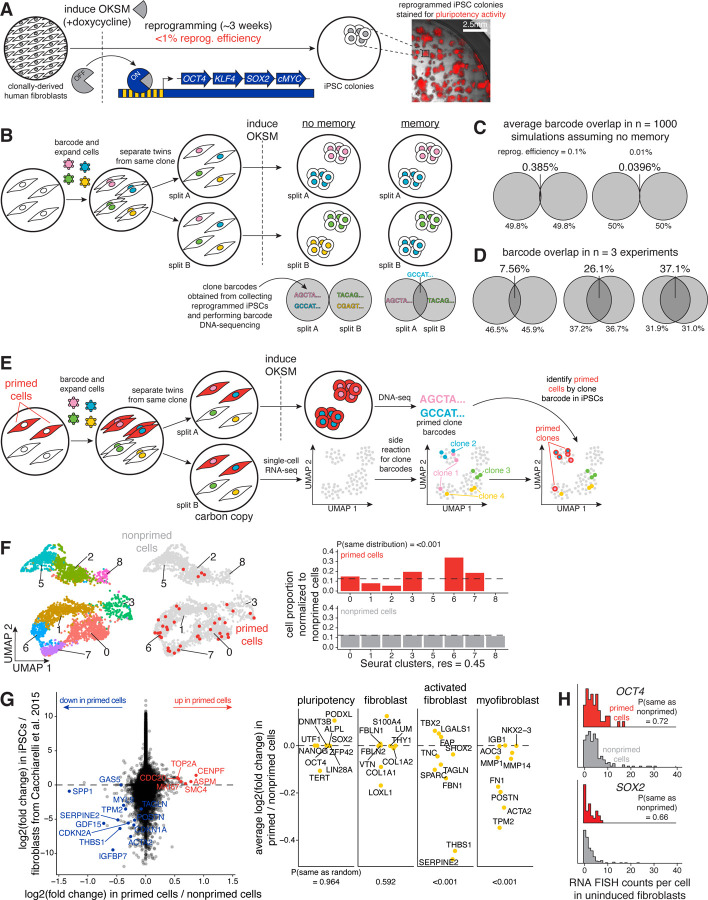
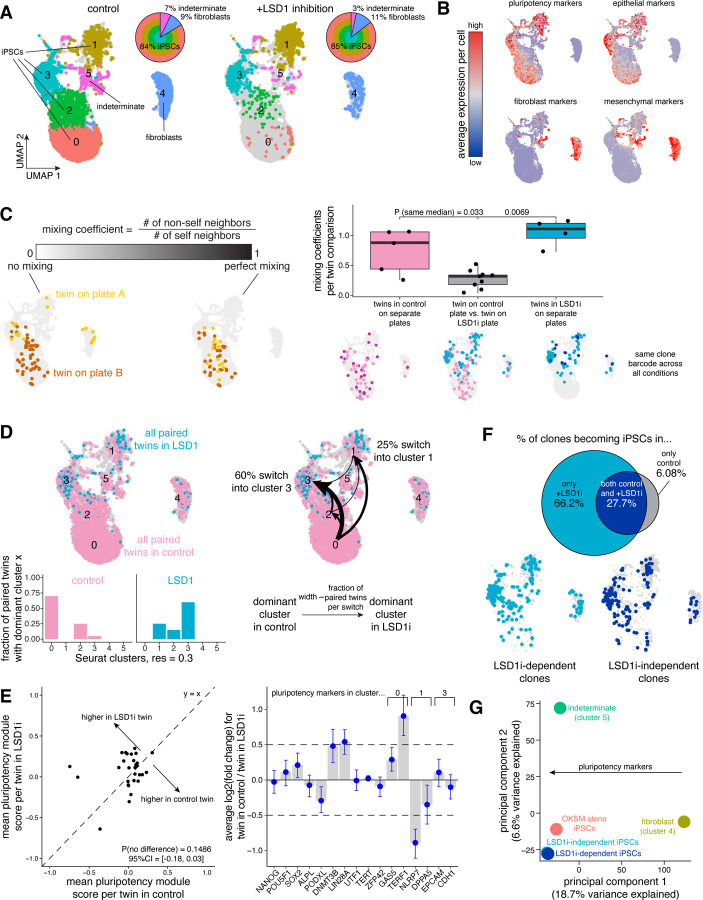
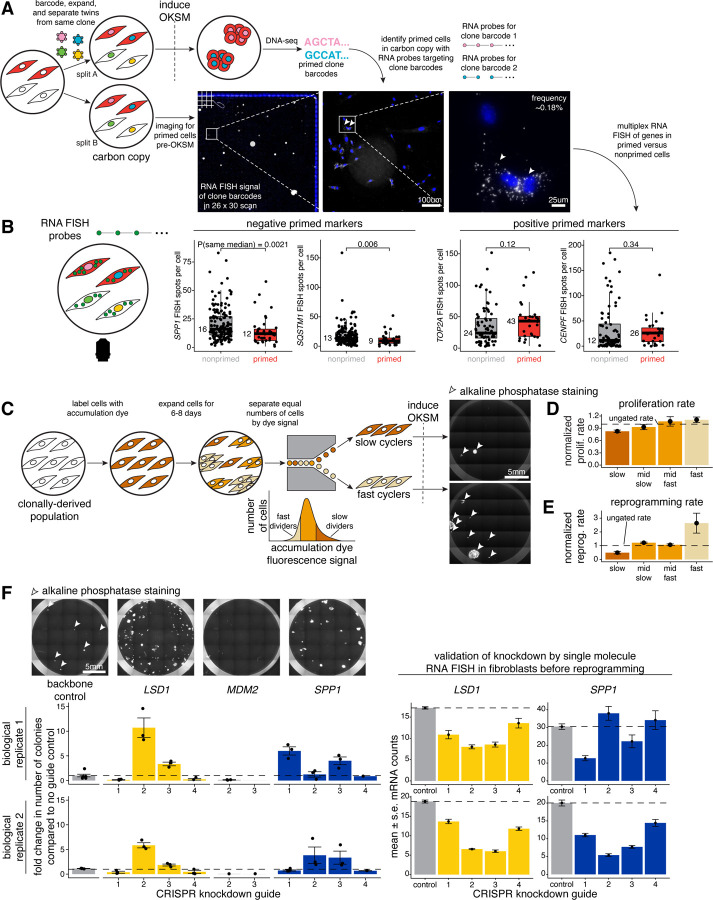
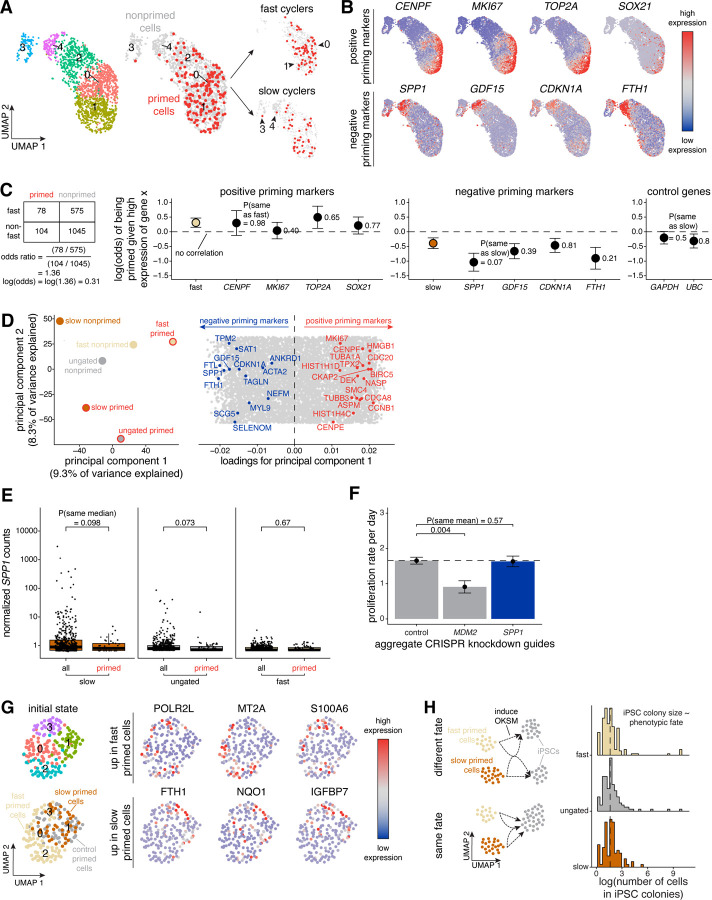
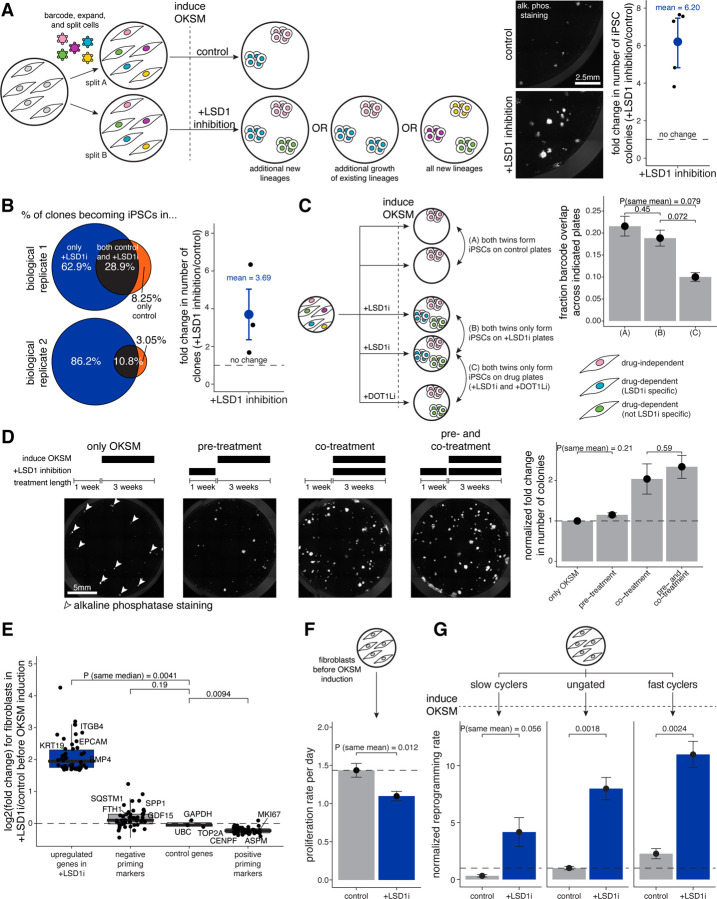
Pluripotency can be induced in somatic cells by the expression of the four "Yamanaka" factors OCT4, KLF4, SOX2, and MYC. However, even in homogeneous conditions, usually only a rare subset of cells admit reprogramming, and the molecular characteristics of this subset remain unknown. Here, we apply retrospective clone tracing to identify and characterize the individual human fibroblast cells that are primed for reprogramming. These fibroblasts showed markers of increased cell cycle speed and decreased fibroblast activation. Knockdown of a fibroblast activation factor identified by our analysis led to increased reprogramming efficiency, identifying it as a barrier to reprogramming. Changing the frequency of reprogramming by inhibiting the activity of LSD1 led to an enlarging of the pool of cells that were primed for reprogramming. Our results show that even homogeneous cell populations can exhibit heritable molecular variability that can dictate whether individual rare cells will reprogram or not.
通过表达四种“山中”因子OCT4、KLF4、SOX2和MYC,可在体细胞中诱导多能性。然而,即使在同质条件下,通常也只有极少数细胞亚群能够接受重编程,且该亚群的分子特征仍不清楚。在此,我们应用回顾性克隆追踪来识别和表征那些为重编程做好准备的单个人类成纤维细胞。这些成纤维细胞表现出细胞周期速度加快和成纤维细胞活化降低的标志物。对我们分析鉴定出的一种成纤维细胞活化因子进行敲低导致重编程效率提高,将其确定为重编程的一个障碍。通过抑制LSD1的活性来改变重编程频率,导致为重编程做好准备的细胞池扩大。我们的结果表明,即使是同质细胞群体也可表现出可遗传的分子变异性,这种变异性能够决定单个稀有细胞是否会进行重编程。