Medina-Morales J Esli, Panayotova Guergana G, Nguyen Duc T, Graviss Edward A, Prakash Gagan S, Marsh Jeffery A, Simonishvili Sopio, Shah Yash, Ayorinde Tumininu, Qin Yong, Jin Lianhua, Zoumpou Theofano, Minze Laurie J, Paterno Flavio, Amin Arpit, Riddle Grace Lee, Ghobrial R Mark, Guarrera James V, Lunsford Keri E
Rutgers New Jersey Medical School.
Houston Methodist Research Institute.
Res Sq. 2023 Feb 21:rs.3.rs-2548184. doi: 10.21203/rs.3.rs-2548184/v2.
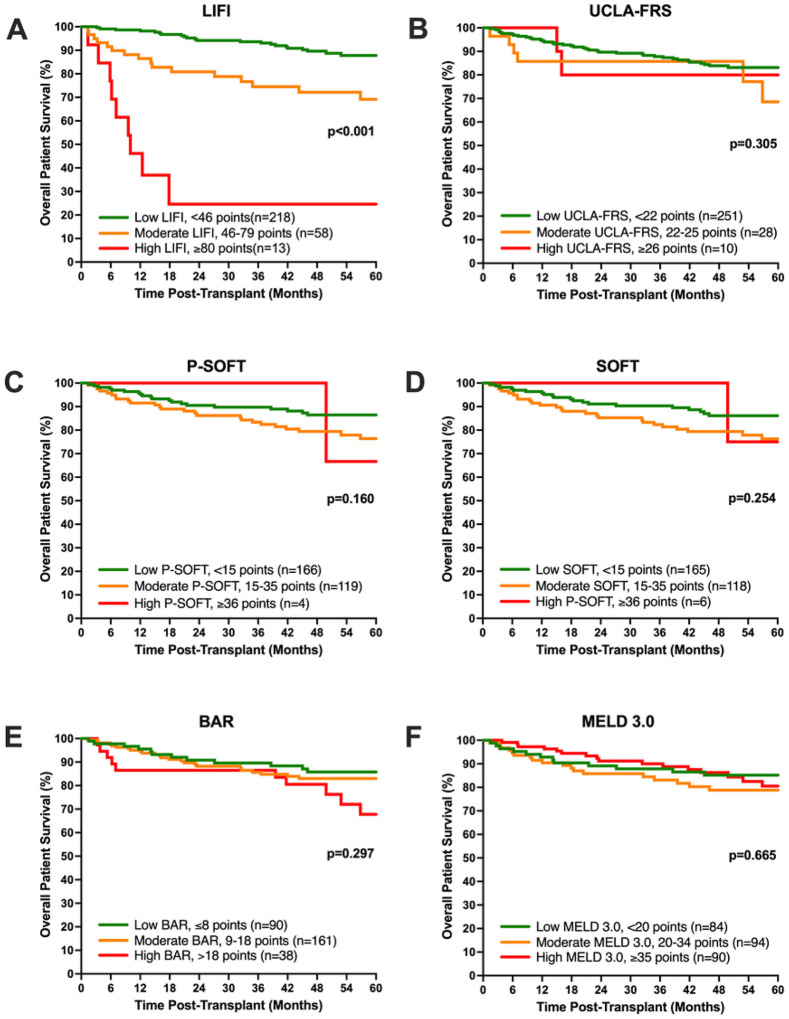
There is a critical need to accurately stratify liver transplant (LT) candidates' risk of post-LT mortality prior to LT to optimize patient selection and avoid futility. Here, we compare previously described -LT clinical risk scores with the recently developed Liver Immune Frailty Index (LIFI) for prediction of -LT mortality. LIFI measures immune dysregulation based on pre-LT plasma HCV IgG, MMP3 and Fractalkine. LIFI accurately predicts post-LT mortality, with LIFI-low corresponding to 1.4% 1-year post-LT mortality compared with 58.3% for LIFI-high (C-statistic=0.85).
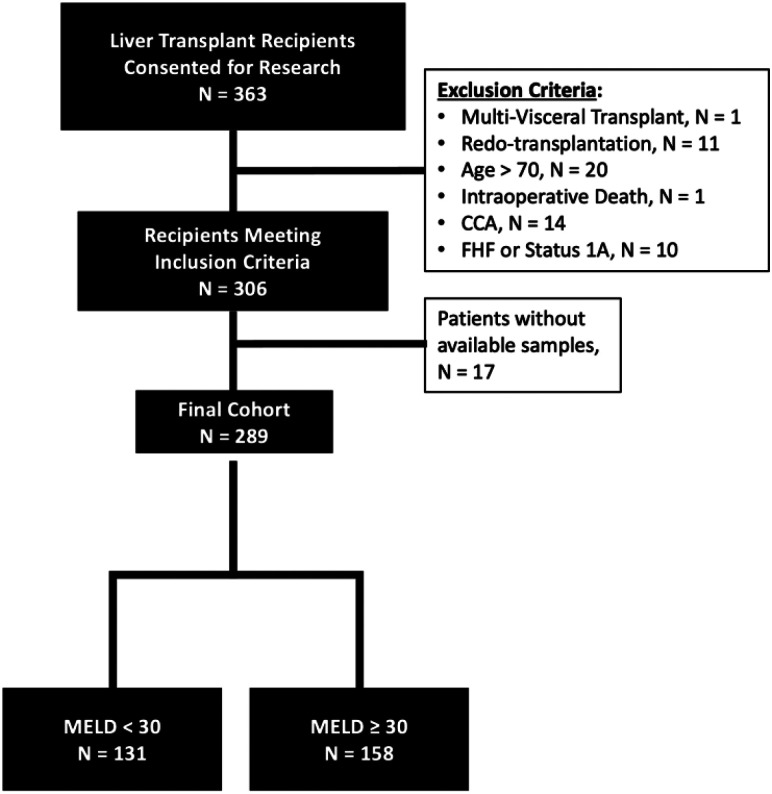
LIFI was compared to MELD, MELD-Na, MELD 3.0, D-MELD, MELD-GRAIL, MELD-GRAIL-Na, UCLA-FRS, BAR, SOFT, P-SOFT, and LDRI scores on 289 LT recipients based on waitlist data at the time of LT. Survival, hazard of early post-LT death, and discrimination power (C-statistic) were assessed.
LIFI showed superior discrimination (highest C-statistic) for post-LT mortality when compared to all other risk scores, irrespective of biologic MELD. On univariate analysis, the LIFI showed a significant correlation with mortality 6-months, as well as 1-, 3-, and 5-years. . On bivariate adjusted analysis, African American race (p<0.05) and pre-LT cardiovascular disease (p=0.053) were associated with early- and long-term post-LT mortality. Patients who died within 1-yr following LT had a significantly higher incidence of infections, including 30-day and 90-day incidence of any infection, pneumonia, abdominal infections, and UTI (p<0.05).
LIFI, which measures pre-LT biomarkers of immune dysfunction, more accurately predicts risk of post-LT futility compared with current clinical predictive models. Pre-LT assessment of immune dysregulation may be critical in predicting mortality after LT and may optimize selection of candidates with lowest risk of futile outcomes.
在肝移植(LT)之前,迫切需要准确分层肝移植受者肝移植后死亡的风险,以优化患者选择并避免徒劳无功。在此,我们将先前描述的肝移植临床风险评分与最近开发的肝脏免疫衰弱指数(LIFI)进行比较,以预测肝移植死亡率。LIFI基于肝移植前血浆丙型肝炎病毒IgG、基质金属蛋白酶3(MMP3)和趋化因子来衡量免疫失调。LIFI能准确预测肝移植后死亡率,LIFI低者肝移植后1年死亡率为1.4%,而LIFI高者为58.3%(C统计量=0.85)。
根据肝移植时的等待名单数据,将LIFI与289例肝移植受者的终末期肝病模型(MELD)、MELD-Na、MELD 3.0、动态MELD(D-MELD)、MELD-圣杯(MELD-GRAIL)、MELD-GRAIL-Na、加州大学洛杉矶分校衰弱风险评分(UCLA-FRS)、巴尔(BAR)、柔软度(SOFT)、改良柔软度(P-SOFT)和肝脏疾病研究机构(LDRI)评分进行比较。评估生存率、肝移植后早期死亡风险和区分能力(C统计量)。
与所有其他风险评分相比,无论生物学MELD如何,LIFI在预测肝移植后死亡率方面显示出更高的区分度(最高C统计量)。单因素分析显示,LIFI与6个月以及1年、3年和5年的死亡率显著相关。在双变量调整分析中,非裔美国人种族(p<0.05)和肝移植前心血管疾病(p=0.053)与肝移植后早期和长期死亡率相关。肝移植后1年内死亡的患者感染发生率显著更高,包括任何感染、肺炎、腹部感染和尿路感染的30天和90天发生率(p<0.05)。
LIFI通过测量肝移植前免疫功能障碍的生物标志物,与当前临床预测模型相比,能更准确地预测肝移植后徒劳无功的风险。肝移植前对免疫失调的评估对于预测肝移植后的死亡率可能至关重要,并且可能优化选择徒劳结局风险最低的候选者。