Sohail B, Blowey P J, Rochford L A, Ryan P T P, Duncan D A, Lee T-L, Starrs P, Costantini G, Woodruff D P, Maurer R J
Department of Chemistry, University of Warwick, CoventryCV4 7AL, U.K.
Department of Physics, University of Warwick, CoventryCV4 7AL, U.K.
J Phys Chem C Nanomater Interfaces. 2023 Jan 26;127(5):2716-2727. doi: 10.1021/acs.jpcc.2c08688. eCollection 2023 Feb 9.
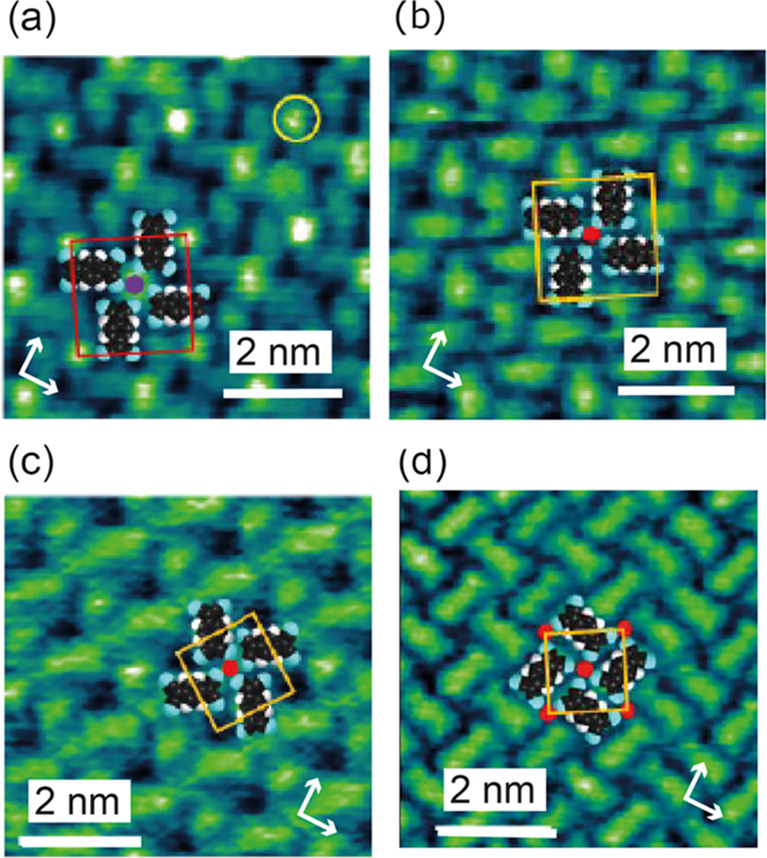
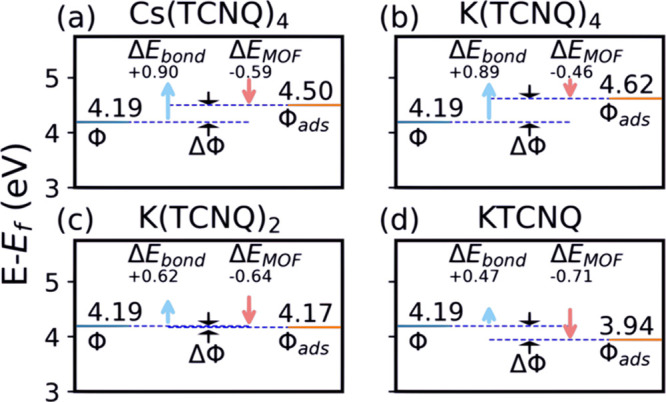
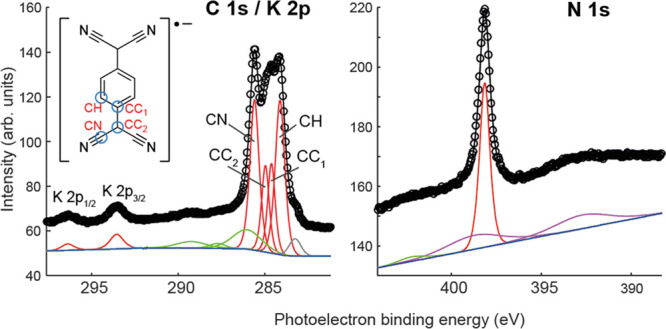
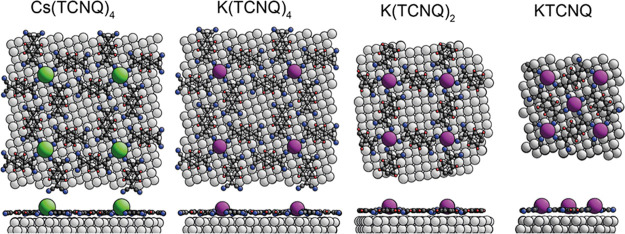
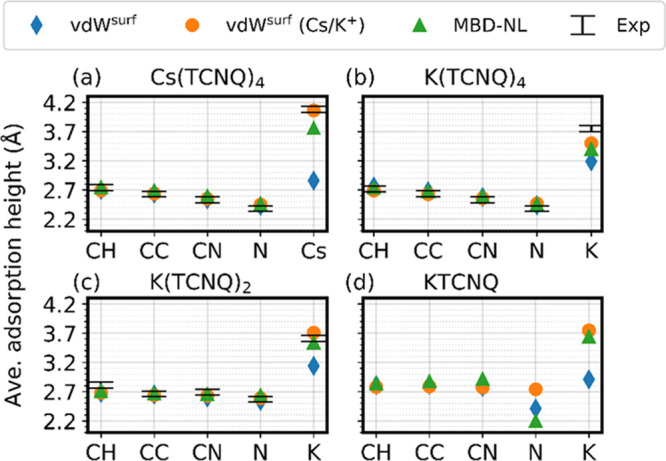
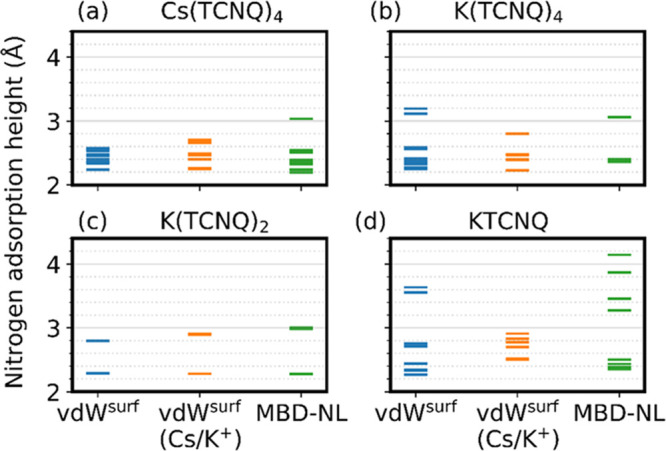
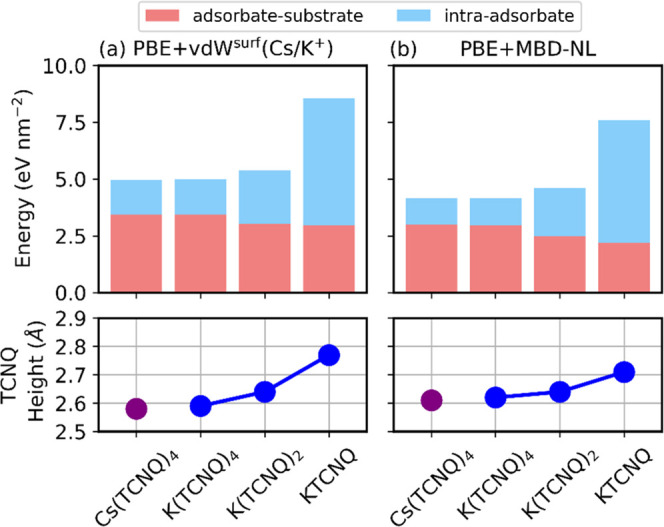
The results are presented of a detailed combined experimental and theoretical investigation of the influence of coadsorbed electron-donating alkali atoms and the prototypical electron acceptor molecule 7,7,8,8-tetracyanoquinodimethane (TCNQ) on the Ag(100) surface. Several coadsorption phases were characterized by scanning tunneling microscopy, low-energy electron diffraction, and soft X-ray photoelectron spectroscopy. Quantitative structural data were obtained using normal-incidence X-ray standing wave (NIXSW) measurements and compared with the results of density functional theory (DFT) calculations using several different methods of dispersion correction. Generally, good agreement between theory and experiment was achieved for the quantitative structures, albeit with the prediction of the alkali atom heights being challenging for some methods. The adsorption structures depend sensitively on the interplay of molecule-metal charge transfer and long-range dispersion forces, which are controlled by the composition ratio between alkali atoms and TCNQ. The large difference in atomic size between K and Cs has negligible effects on stability, whereas increasing the ratio of K/TCNQ from 1:4 to 1:1 leads to a weakening of molecule-metal interaction strength in favor of stronger ionic bonds within the two-dimensional alkali-organic network. A strong dependence of the work function on the alkali donor-TCNQ acceptor coadsorption ratio is predicted.
本文展示了一项详细的实验与理论相结合的研究结果,该研究探讨了共吸附的给电子碱金属原子和典型的电子受体分子7,7,8,8 - 四氰基对苯二醌二甲烷(TCNQ)对Ag(100)表面的影响。通过扫描隧道显微镜、低能电子衍射和软X射线光电子能谱对几种共吸附相进行了表征。利用正入射X射线驻波(NIXSW)测量获得了定量结构数据,并与使用几种不同色散校正方法的密度泛函理论(DFT)计算结果进行了比较。总体而言,对于定量结构,理论与实验取得了良好的一致性,尽管对于某些方法而言,预测碱金属原子高度具有挑战性。吸附结构敏感地取决于分子 - 金属电荷转移和长程色散力的相互作用,这由碱金属原子与TCNQ之间的组成比控制。K和Cs原子尺寸的巨大差异对稳定性的影响可忽略不计,而将K/TCNQ的比例从1:4增加到1:1会导致分子 - 金属相互作用强度减弱,有利于二维碱 - 有机网络中更强的离子键。预测了功函数对碱供体 - TCNQ受体共吸附比的强烈依赖性。