Univ. Lille, CNRS, Inserm, CHU Lille, Institut Pasteur de Lille, UMR9020 - UMR1277 - Canther - Cancer Heterogeneity, Plasticity and Resistance to Therapies, France.
Barts Cancer Institute, Queen Mary University of London, UK.
Mol Oncol. 2023 Nov;17(11):2257-2274. doi: 10.1002/1878-0261.13397. Epub 2023 Jul 14.
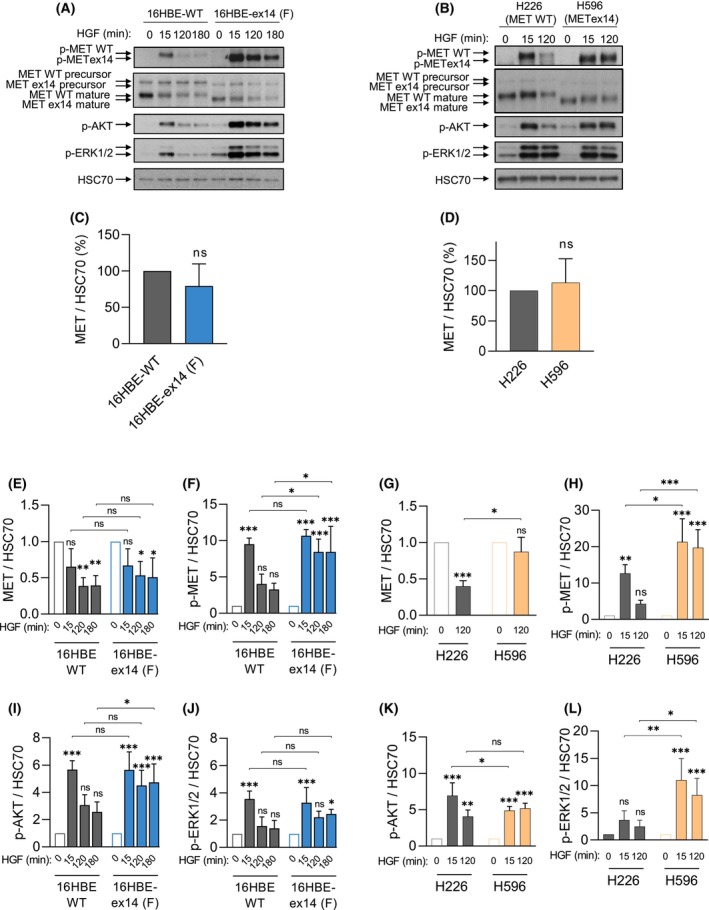
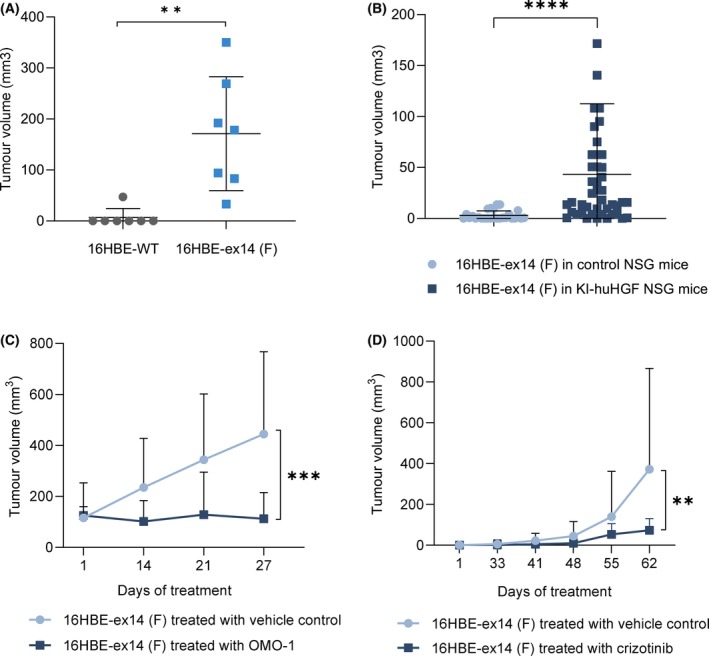
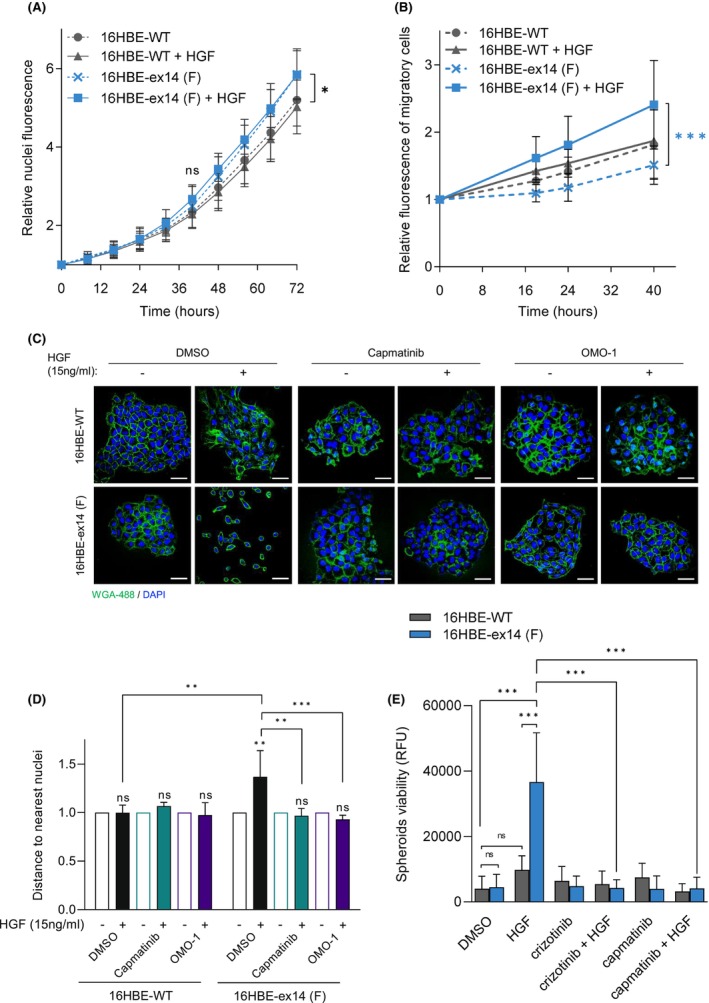
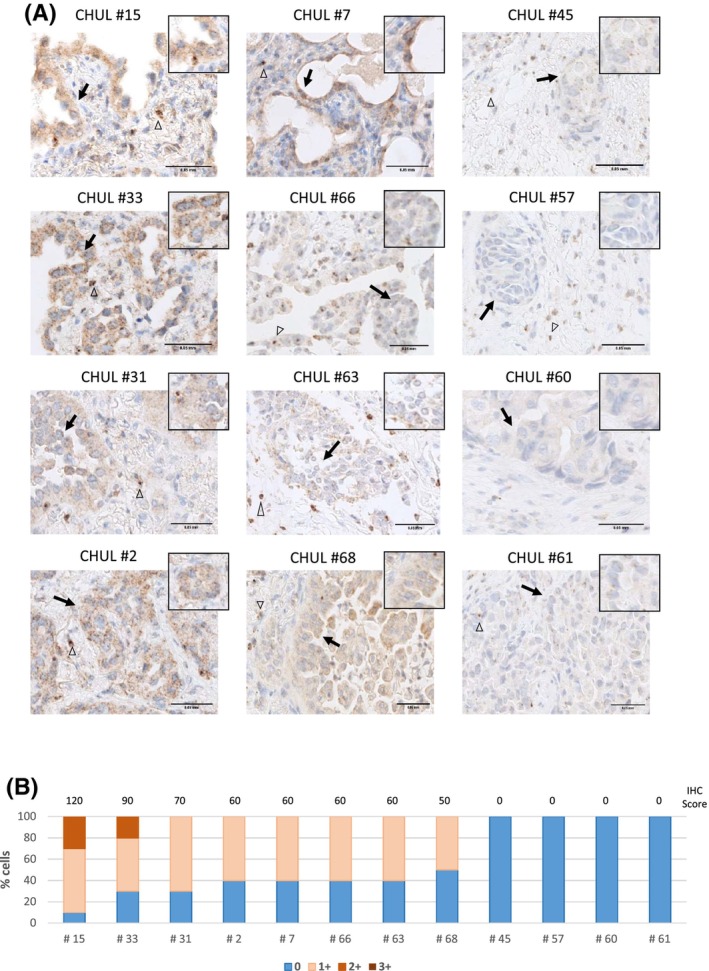
Exon skipping mutations of the MET receptor tyrosine kinase (METex14), increasingly reported in cancers, occur in 3-4% of non-small-cell lung cancer (NSCLC). Only 50% of patients have a beneficial response to treatment with MET-tyrosine kinase inhibitors (TKIs), underlying the need to understand the mechanism of METex14 oncogenicity and sensitivity to TKIs. Whether METex14 is a driver mutation and whether it requires hepatocyte growth factor (HGF) for its oncogenicity in a range of in vitro functions and in vivo has not been fully elucidated from previous preclinical models. Using CRISPR/Cas9, we developed a METex14/WT isogenic model in nontransformed human lung cells and report that the METex14 single alteration was sufficient to drive MET-dependent in vitro anchorage-independent survival and motility and in vivo tumorigenesis, sensitising tumours to MET-TKIs. However, we also show that human HGF (hHGF) is required, as demonstrated in vivo using a humanised HGF knock-in strain of mice and further detected in tumour cells of METex14 NSCLC patient samples. Our results also suggest that METex14 oncogenicity is not a consequence of an escape from degradation in our cell model. Thus, we developed a valuable model for preclinical studies and present results that have potential clinical implication.
MET 受体酪氨酸激酶(METex14)外显子跳跃突变在癌症中越来越常见,在 3-4%的非小细胞肺癌(NSCLC)中发生。只有 50%的患者对 MET 酪氨酸激酶抑制剂(TKI)的治疗有有益的反应,这表明需要了解 METex14 致癌性和对 TKI 敏感性的机制。METex14 是否是驱动突变,以及它是否需要肝细胞生长因子(HGF)来发挥其致癌性,在一系列体外功能和体内尚未从以前的临床前模型中完全阐明。我们使用 CRISPR/Cas9 在非转化的人肺细胞中开发了 METex14/WT 同基因模型,并报告说 METex14 的单一改变足以驱动 MET 依赖性体外无锚定生存和运动以及体内肿瘤发生,使肿瘤对 MET-TKIs 敏感。然而,我们还表明,需要人 HGF(hHGF),这是通过在携带人源化 HGF 的 knock-in 小鼠中进行体内实验证明的,并进一步在 METex14 NSCLC 患者样本的肿瘤细胞中检测到。我们的结果还表明,METex14 的致癌性不是我们细胞模型中逃避降解的结果。因此,我们开发了一种用于临床前研究的有价值的模型,并提出了具有潜在临床意义的结果。