Neurology Department, CHU de Rouen, Rouen, France.
Neurology Department, Charité - Universitätsmedizin Berlin, Berlin, Germany.
J Headache Pain. 2023 Feb 20;24(1):12. doi: 10.1186/s10194-023-01547-8.
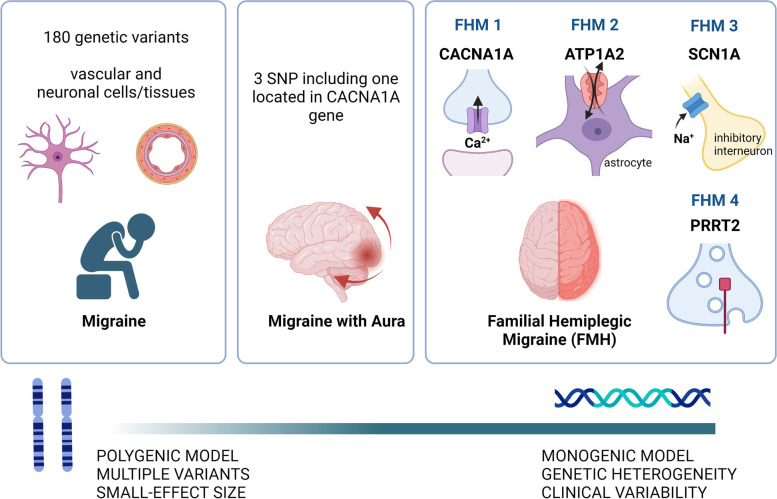
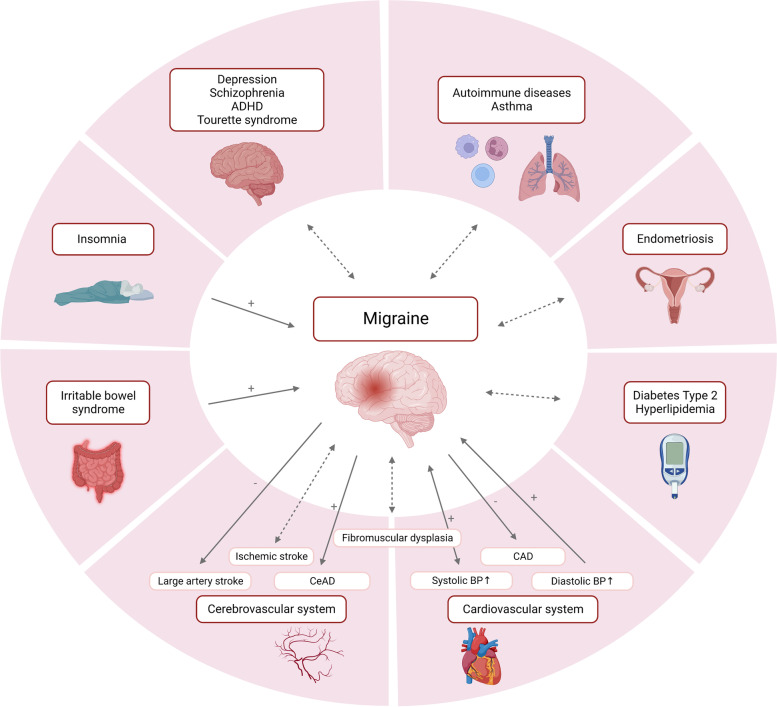
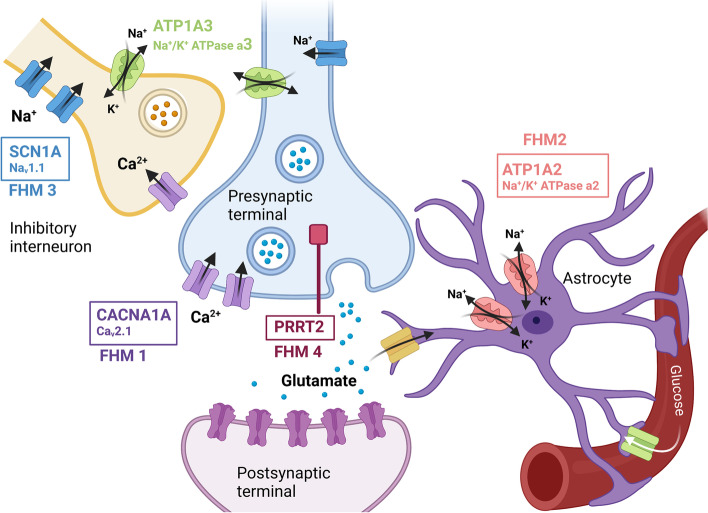
Migraine is a complex brain disorder explained by the interaction of genetic and environmental factors. In monogenic migraines, including familial hemiplegic migraine and migraine with aura associated with hereditary small-vessel disorders, the identified genes code for proteins expressed in neurons, glial cells, or vessels, all of which increase susceptibility to cortical spreading depression. The study of monogenic migraines has shown that the neurovascular unit plays a prominent role in migraine. Genome-wide association studies have identified numerous susceptibility variants that each result in only a small increase in overall migraine risk. The more than 180 known variants belong to several complex networks of "pro-migraine" molecular abnormalities, which are mainly neuronal or vascular. Genetics has also highlighted the importance of shared genetic factors between migraine and its major co-morbidities, including depression and high blood pressure. Further studies are still needed to map all of the susceptibility loci for migraine and then to understand how these genomic variants lead to migraine cell phenotypes.
偏头痛是一种由遗传和环境因素相互作用引起的复杂脑部疾病。在单基因偏头痛中,包括家族性偏瘫性偏头痛和伴有遗传性小血管疾病的先兆性偏头痛,已鉴定出的基因编码在神经元、神经胶质细胞或血管中表达的蛋白质,所有这些都会增加皮质扩散抑制的易感性。单基因偏头痛的研究表明,神经血管单元在偏头痛中起着重要作用。全基因组关联研究已经确定了许多易感变异,每个变异仅导致偏头痛总体风险略有增加。已知的 180 多个变异属于几个“致偏头痛”分子异常的复杂网络,这些网络主要是神经元或血管。遗传学还强调了偏头痛与其主要合并症(包括抑郁症和高血压)之间共享遗传因素的重要性。仍需要进一步研究来绘制偏头痛的所有易感位点,然后了解这些基因组变异如何导致偏头痛细胞表型。