Department of Cardiology, University Heart and Vascular Centre Hamburg-Eppendorf, Hamburg, Germany
German Centre for Cardiovascular Research (DZHK), Partner Site Hamburg/Kiel/Lübeck, Hamburg, Germany.
Heart. 2023 Jun 14;109(13):1000-1006. doi: 10.1136/heartjnl-2022-321959.
Atrial fibrillation (AF) has emerged as a common condition in older adults. Cardiovascular risk factors only explain about 50% of AF cases. Inflammatory biomarkers may help close this gap as inflammation can alter atrial electrophysiology and structure. This study aimed to determine a cytokine biomarker profile for this condition in the community using a proteomics approach.
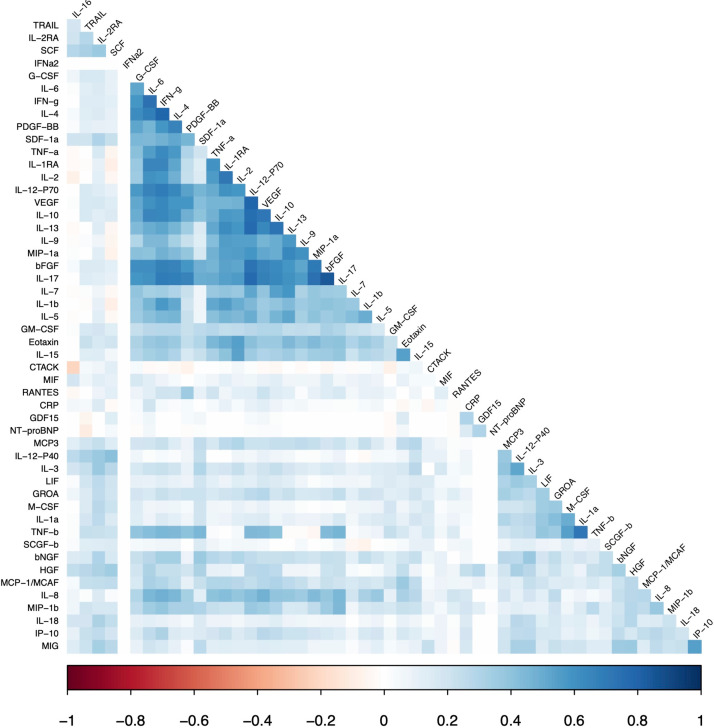
This study uses cytokine proteomics in participants of the Finnish population-based FINRISK cohort studies 1997/2002. Risk models for 46 cytokines were developed to predict incident AF using Cox regressions. Furthermore, the association of participants' C reactive protein (CRP) and N-terminal pro B-type natriuretic peptide (NT-proBNP) concentrations with incident AF was examined.
In 10 744 participants (mean age of 50.9 years, 51.3% women), 1246 cases of incident AF were observed (40.5% women). The main analyses, adjusted for participants' sex and age, suggested that higher concentrations of macrophage inflammatory protein-1β (HR=1.11; 95% CI 1.04, 1.17), hepatocyte growth factor (HR=1.12; 95% CI 1.05, 1.19), CRP (HR=1.17; 95% CI 1.10, 1.24) and NT-proBNP (HR=1.58; 95% CI 1.45, 1.71) were associated with increased risk of incident AF. In further clinical variable-adjusted models, only NT-proBNP remained statistically significant.
Our study confirmed NT-proBNP as a strong predictor for AF. Observed associations of circulating inflammatory cytokines were primarily explained by clinical risk factors and did not improve risk prediction. The potential mechanistic role of inflammatory cytokines measured in a proteomics approach remains to be further elucidated.
心房颤动(AF)已成为老年人的常见病症。心血管危险因素仅能解释约 50%的 AF 病例。炎症生物标志物可能有助于缩小这一差距,因为炎症可以改变心房的电生理和结构。本研究旨在使用蛋白质组学方法确定社区中这种疾病的细胞因子生物标志物谱。
本研究使用芬兰人群为基础的 FINRISK 队列研究 1997/2002 中的细胞因子蛋白质组学。使用 Cox 回归为 46 种细胞因子建立风险模型,以预测 AF 的发生。此外,还检查了参与者的 C 反应蛋白(CRP)和 N 末端 pro B 型利钠肽(NT-proBNP)浓度与 AF 发生的关联。
在 10744 名参与者(平均年龄为 50.9 岁,51.3%为女性)中,观察到 1246 例新发 AF 病例(40.5%为女性)。主要分析结果,调整了参与者的性别和年龄,表明较高浓度的巨噬细胞炎症蛋白-1β(HR=1.11;95%CI 1.04,1.17)、肝细胞生长因子(HR=1.12;95%CI 1.05,1.19)、CRP(HR=1.17;95%CI 1.10,1.24)和 NT-proBNP(HR=1.58;95%CI 1.45,1.71)与新发 AF 风险增加相关。在进一步的临床变量调整模型中,只有 NT-proBNP 仍然具有统计学意义。
我们的研究证实 NT-proBNP 是 AF 的一个强有力的预测因子。循环炎症细胞因子的观察到的相关性主要由临床危险因素解释,并且不能改善风险预测。在蛋白质组学方法中测量的炎症细胞因子的潜在机制作用仍有待进一步阐明。