Department of Medical Oncology, University Hospital of Navarra, Pamplona. IdiSNA, Navarra's Health Research Institute, Irunlarrea 3, 31190, Pamplona, Spain.
Department of Medical Oncology, University Hospital La Fe, Valencia, Spain.
Clin Transl Oncol. 2023 Jul;25(7):2069-2076. doi: 10.1007/s12094-023-03112-w. Epub 2023 Feb 18.
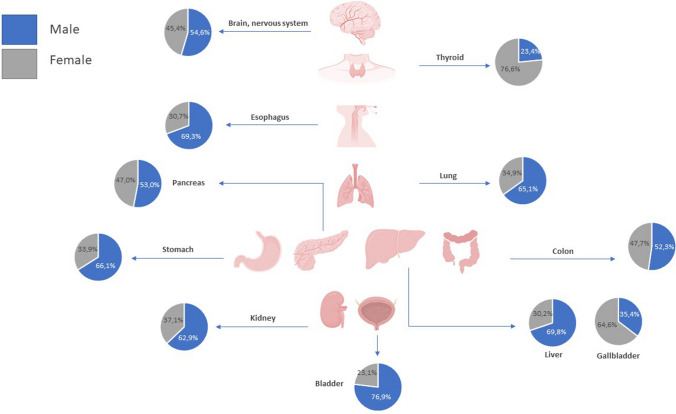
Precision medicine in oncology aims to identify the most beneficial interventions based on a patient's individual features and disease. However, disparities exist when providing cancer care to patients based on an individual's sex.
To discuss how sex differences impact the epidemiology, pathophysiology, clinical manifestations, disease progression, and response to treatment, with a focus on data from Spain.
Genetic and environmental factors (social or economic inequalities, power imbalances, and discrimination) that contribute to these differences adversely affect cancer patient health outcomes. Increased health professional awareness of sex differences is essential to the success of translational research and clinical oncological care.
The Sociedad Española de Oncología Médica created a Task Force group to raise oncologists' awareness and to implement measures to address sex differences in cancer patient management in Spain. This is a necessary and fundamental step towards optimizing precision medicine that will benefit all individuals equally and equitably.
肿瘤精准医学旨在根据患者的个体特征和疾病来确定最有益的干预措施。然而,在基于个体性别为患者提供癌症护理时,存在差异。
讨论性别差异如何影响流行病学、病理生理学、临床表现、疾病进展以及对治疗的反应,重点介绍来自西班牙的数据。
导致这些差异的遗传和环境因素(社会或经济不平等、权力失衡和歧视)对癌症患者的健康结果产生不利影响。提高卫生专业人员对性别差异的认识,对于转化研究和临床肿瘤学护理的成功至关重要。
西班牙肿瘤内科学会成立了一个工作组,旨在提高肿瘤学家的认识,并采取措施解决西班牙癌症患者管理中的性别差异。这是朝着优化精准医学迈出的必要且重要的一步,这将使所有个体平等且公平地受益。