Yang Guang, Chen Haiyan, Chen Qun, Qiu Jiayi, Qahar Mulan, Fan Zhimeng, Chu Weiwei, Tredget Edward E, Wu Yaojiong
State Key Laboratory of Chemical Oncogenomics, and the Institute of Biopharmaceutical and Health Engineering (iBHE), Shenzhen International Graduate School, Tsinghua University, Shenzhen, 518055, China.
Department of Burn and Plastic Surgery, Shenzhen Institute of Translational Medicine, Shenzhen Second People's Hospital, The First Affiliated Hospital of Shenzhen University, Shenzhen, 518035, China.
Inflamm Regen. 2023 Feb 20;43(1):14. doi: 10.1186/s41232-023-00265-7.
The hair follicles (HFs) are barely regenerated after loss in injuries in mammals as well as in human beings. Recent studies have shown that the regenerative ability of HFs is age-related; however, the relationship between this phenomenon and the stem cell niche remains unclear. This study aimed to find a key secretory protein that promotes the HFs regeneration in the regenerative microenvironment.
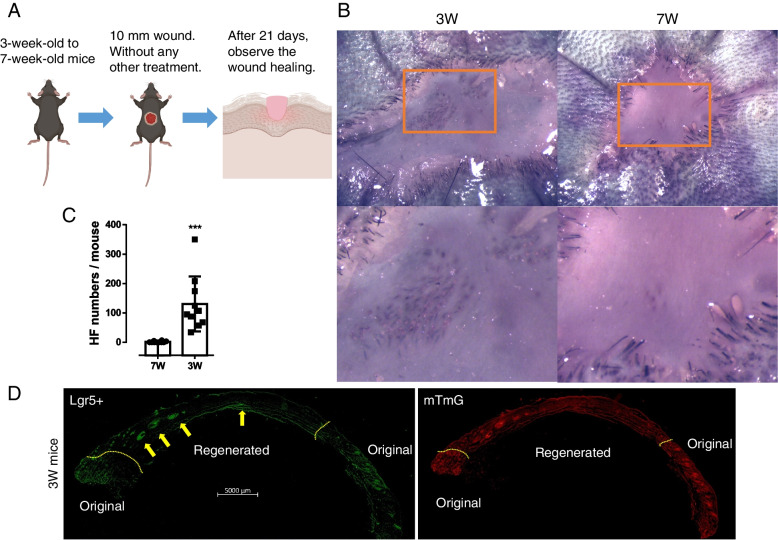
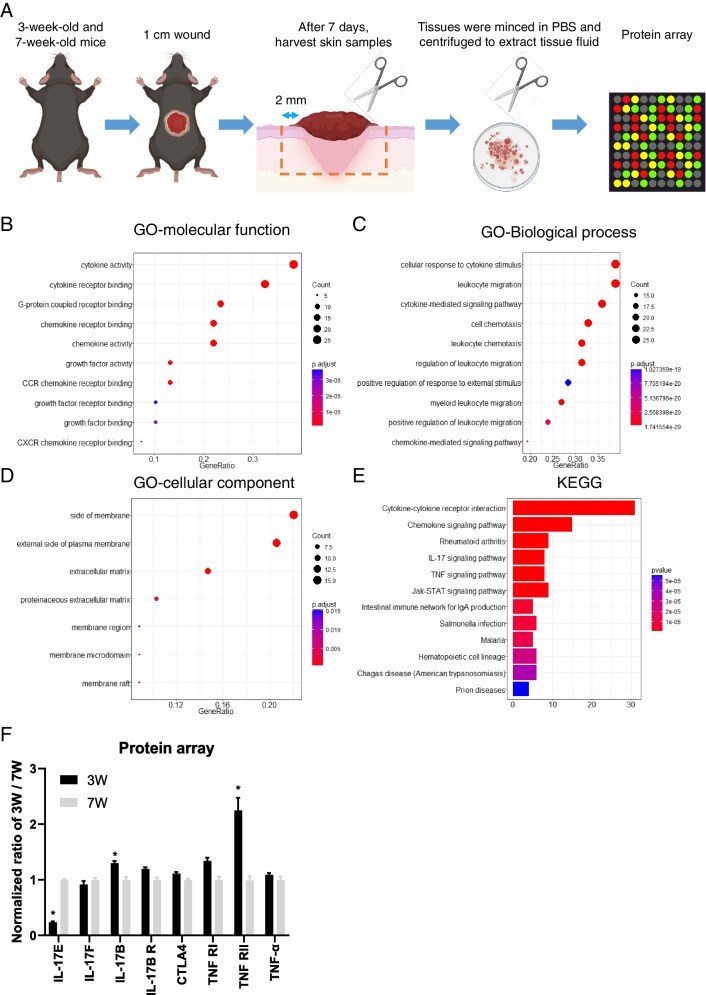
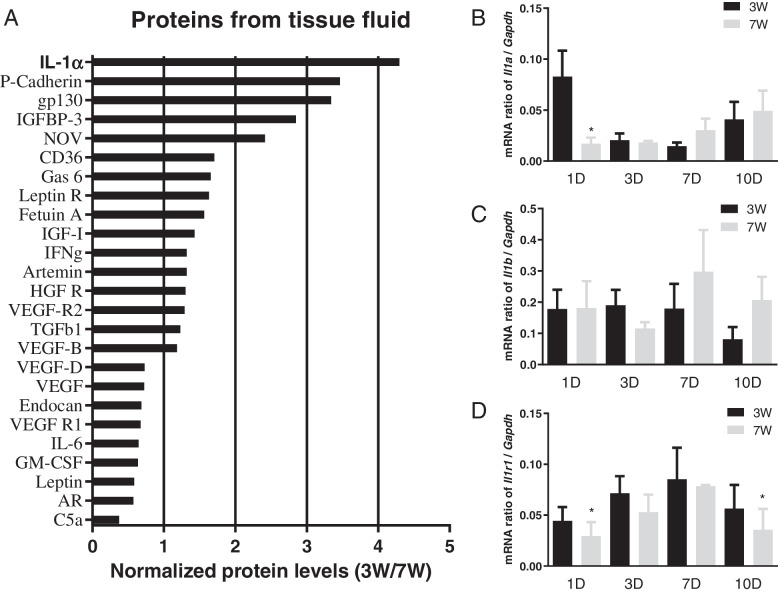
To explore why age affects HFs de novo regeneration, we established an age-dependent HFs regeneration model in leucine-rich repeat G protein-coupled receptor 5 (Lgr5) + /mTmG mice. Proteins in tissue fluids were analyzed by high-throughput sequencing. The role and mechanism of candidate proteins in HFs de novo regeneration and hair follicle stem cells (HFSCs) activation were investigated through in vivo experiments. The effects of candidate proteins on skin cell populations were investigated by cellular experiments.
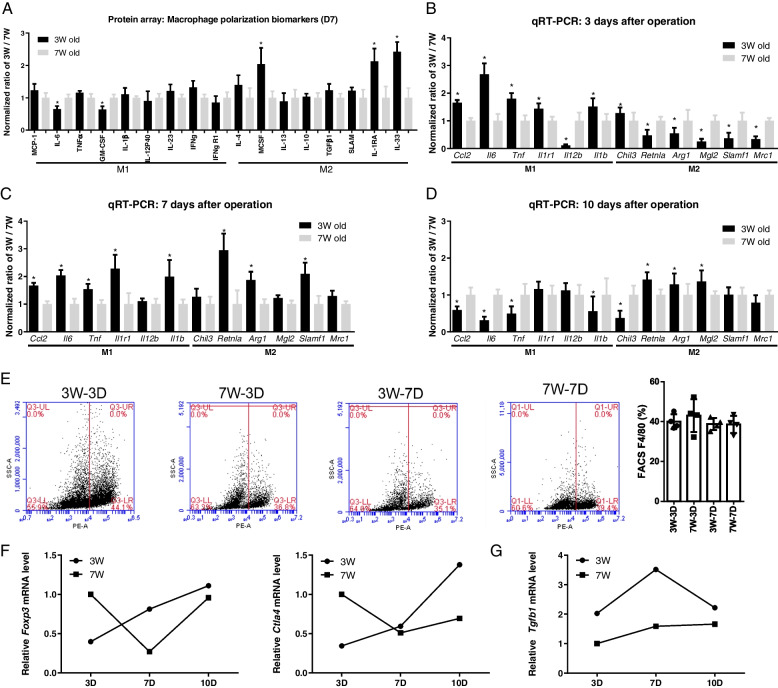
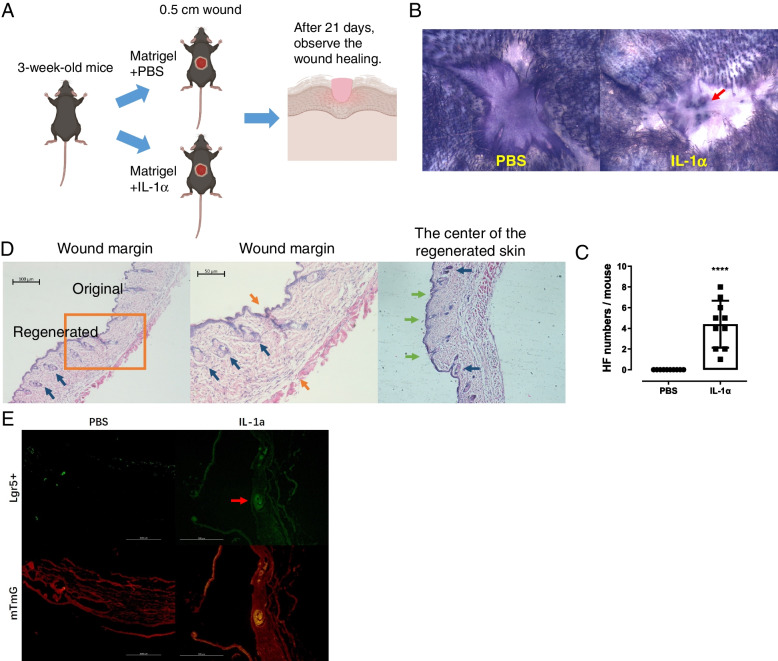
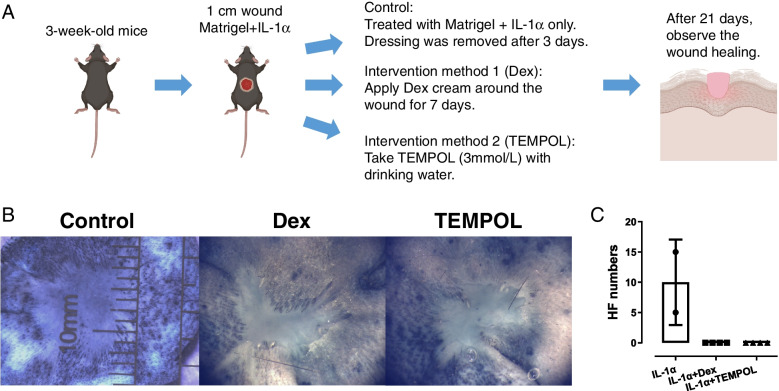
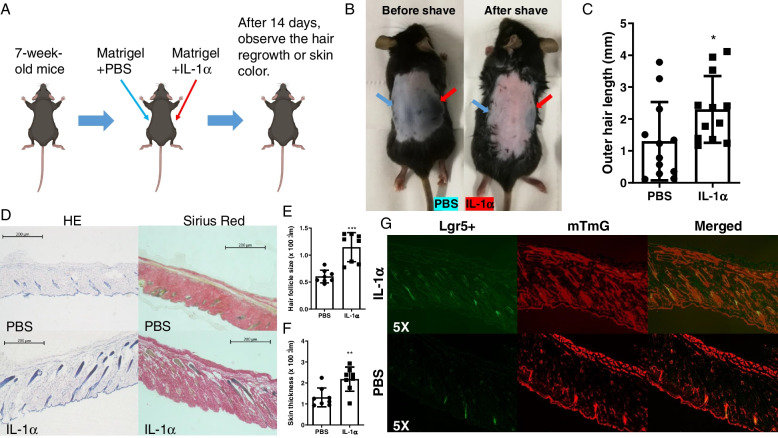
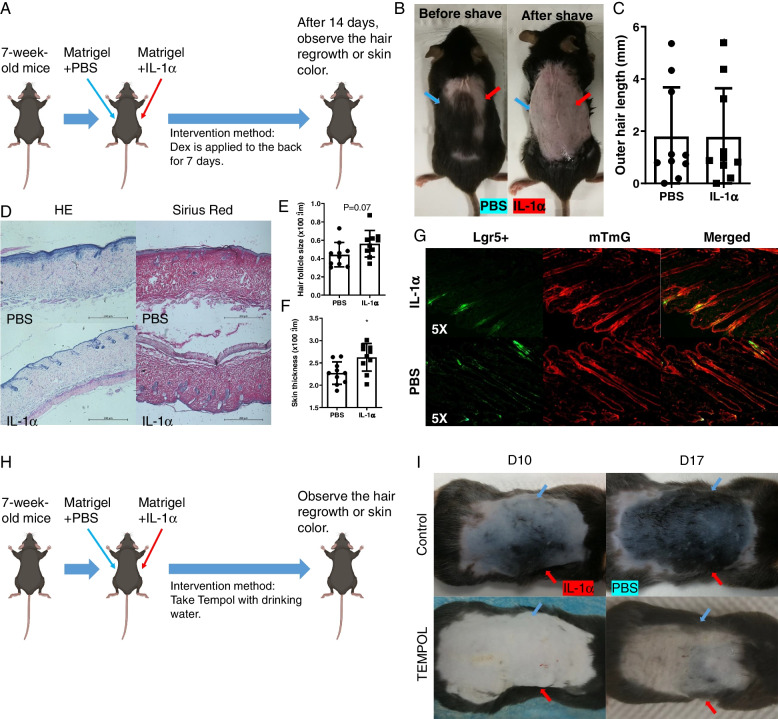
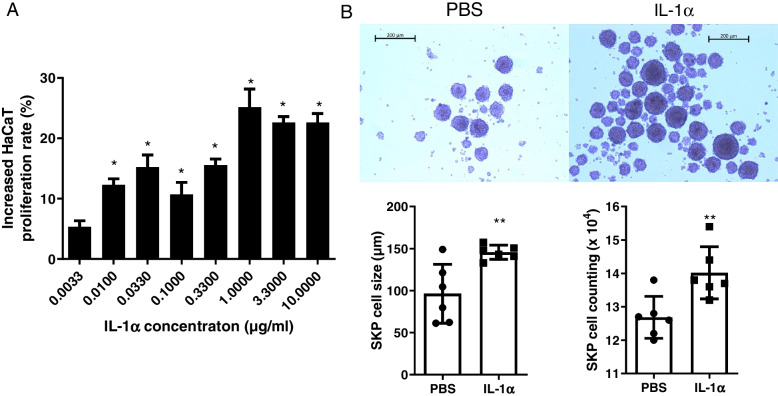
Mice under 3-week-old (3W) could regenerate HFs and Lgr5 HFSCs, which were highly correlated with the immune cells, cytokines, IL-17 signaling pathway, and IL-1α level in the regeneration microenvironment. Additionally, IL-1α injection induced de novo regeneration of HFs and Lgr5 HFSCs in 3W mouse model with a 5 mm wound, as well as promoted activation and proliferation of Lgr5 HFSCs in 7-week-old (7W) mice without wound. Dexamethasone and TEMPOL inhibited the effects of IL-1α. Moreover, IL-1α increased skin thickness and promoted the proliferation of human epidermal keratinocyte line (HaCaT) and skin-derived precursors (SKPs) in vivo and in vitro, respectively.
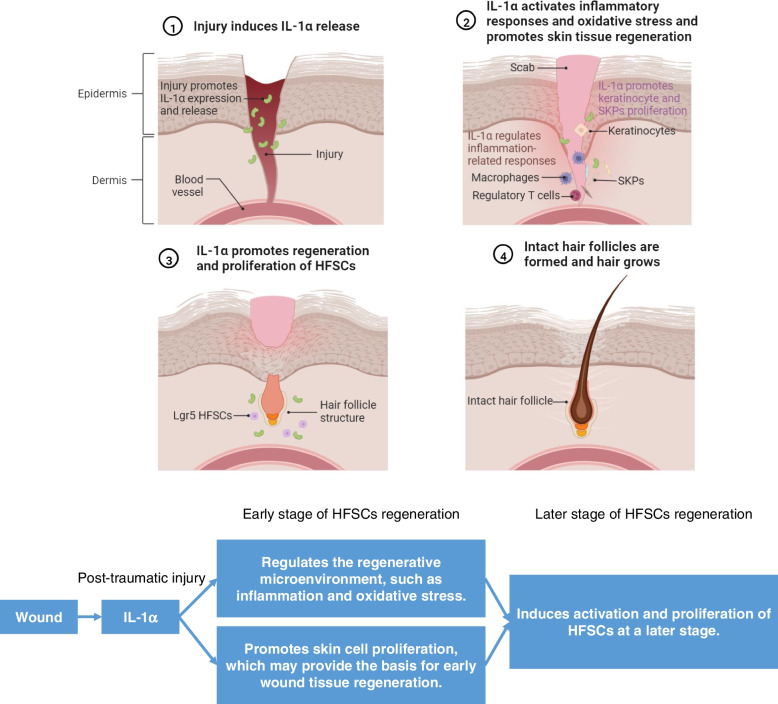
In conclusion, injury-induced IL-1α promotes HFs regeneration by modulating inflammatory cells and oxidative stress-induced Lgr5 HFSCs regeneration as well as promoting skin cell populations proliferation. This study uncovers the underlying molecular mechanisms enabling HFs de novo regeneration in an age-dependent model.
在哺乳动物以及人类中,毛囊在损伤后几乎无法再生。最近的研究表明,毛囊的再生能力与年龄有关;然而,这种现象与干细胞微环境之间的关系仍不清楚。本研究旨在寻找一种在再生微环境中促进毛囊再生的关键分泌蛋白。
为探究年龄为何影响毛囊的从头再生,我们在富含亮氨酸重复序列的G蛋白偶联受体5(Lgr5)+/mTmG小鼠中建立了年龄依赖性毛囊再生模型。通过高通量测序分析组织液中的蛋白质。通过体内实验研究候选蛋白在毛囊从头再生和毛囊干细胞(HFSCs)激活中的作用及机制。通过细胞实验研究候选蛋白对皮肤细胞群体的影响。
3周龄以下(3W)的小鼠能够再生毛囊和Lgr5 HFSCs,这与再生微环境中的免疫细胞、细胞因子、IL-17信号通路和IL-1α水平高度相关。此外,在有5毫米伤口的3W小鼠模型中,注射IL-1α可诱导毛囊和Lgr5 HFSCs的从头再生,在无伤口的7周龄(7W)小鼠中可促进Lgr5 HFSCs的激活和增殖。地塞米松和TEMPOL可抑制IL-1α的作用。此外,IL-1α分别在体内和体外增加了皮肤厚度,并促进了人表皮角质形成细胞系(HaCaT)和皮肤来源前体细胞(SKPs)的增殖。
总之,损伤诱导的IL-1α通过调节炎症细胞和氧化应激诱导Lgr5 HFSCs再生以及促进皮肤细胞群体增殖来促进毛囊再生。本研究揭示了在年龄依赖性模型中实现毛囊从头再生的潜在分子机制。