Oncocyte Corporation, 15 Cushing, Irvine, CA, 92618, USA.
Cancer Immunol Immunother. 2023 Jul;72(7):2075-2086. doi: 10.1007/s00262-023-03401-x. Epub 2023 Feb 19.
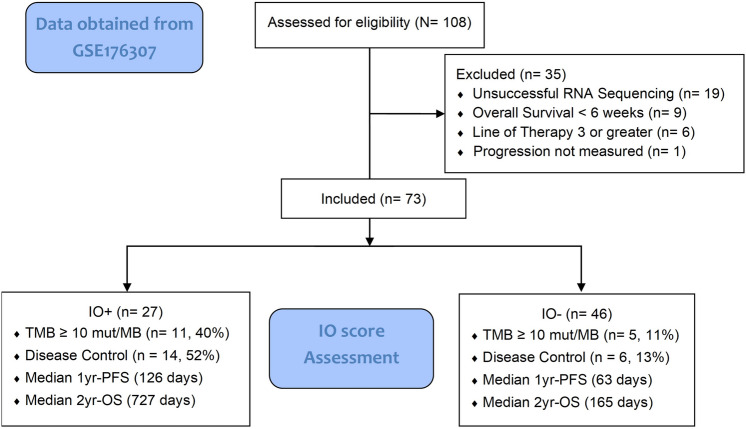
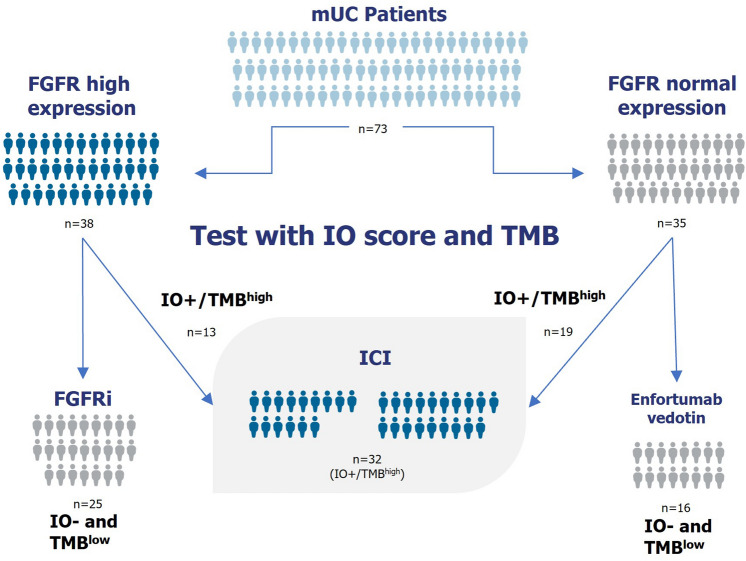
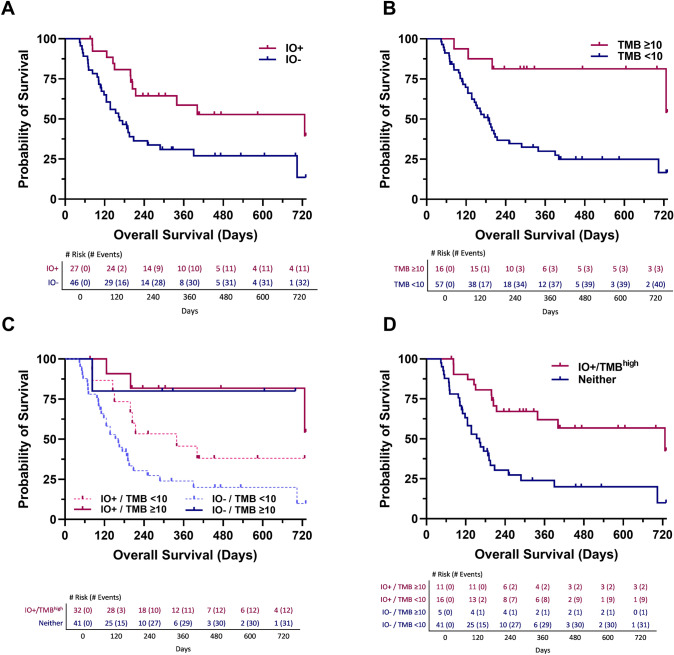
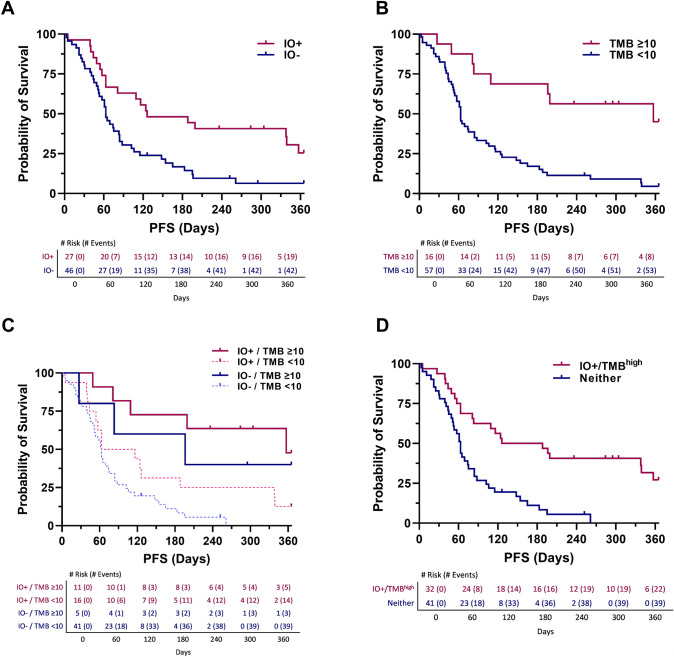
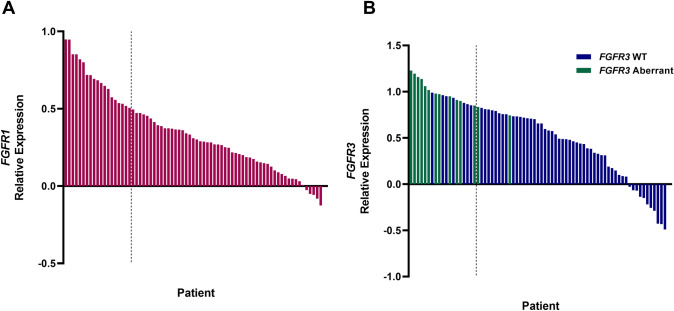
Multiple targeted therapeutics have been approved by the FDA for mUC, including immune checkpoint inhibitors (ICIs) and more recently targeted agents for both FGFR and Nectin-4. FGFR3-aberrant and Nectin-4 expressing cells have been associated with an immunosuppressed phenotype. Given that less than half of all patients respond to these agents as monotherapies and less than 20% are eligible to receive salvage therapy, effective personalized treatment plans are critical. Typical biomarkers for ICIs such as PD-L1 and TMB have not been definitive in mUC, yet a biomarker-driven optimization of first-line therapy and subsequent sequencing have the potential to achieve higher and more durable response rates. The IO score is a 27-gene tumor immune microenvironment (TIME) classifier that has been associated with the clinical benefits of ICIs in multiple cancer types, including mUC. This study demonstrates that the IO score was associated with both progression-free survival (PFS) and overall survival (OS) in a real-world cohort of mUC patients treated with ICIs. Furthermore, the IO score was independent of and provided information incremental to TMB. Interestingly, the IO score predicted benefit in patients with high FGFR expression, despite conflicting data regarding response rates among the FGFR aberrant population. Taken together, these results demonstrate that the IO score assessment of the TIME is associated with a clinical benefit from ICI therapy and that this novel biomarker may inform therapeutic sequencing decisions in mUC, potentially improving outcomes for this notoriously difficult-to-treat disease.
已经有多种靶向治疗药物被 FDA 批准用于治疗 mUC,包括免疫检查点抑制剂(ICIs),以及最近针对 FGFR 和 Nectin-4 的靶向药物。FGFR3 异常和表达 Nectin-4 的细胞与免疫抑制表型有关。鉴于这些药物作为单一疗法,只有不到一半的患者有反应,而且不到 20%的患者有资格接受挽救治疗,因此制定有效的个性化治疗方案至关重要。ICIs 的典型生物标志物,如 PD-L1 和 TMB,在 mUC 中并不明确,但生物标志物驱动的一线治疗优化和后续测序有可能实现更高和更持久的反应率。IO 评分是一个 27 基因肿瘤免疫微环境(TIME)分类器,与包括 mUC 在内的多种癌症类型中 ICIs 的临床获益相关。这项研究表明,IO 评分与接受 ICIs 治疗的 mUC 患者的无进展生存期(PFS)和总生存期(OS)相关。此外,IO 评分独立于 TMB,并提供了额外的信息。有趣的是,尽管在 FGFR 异常人群中存在关于反应率的矛盾数据,但 IO 评分预测了高 FGFR 表达患者的获益。总之,这些结果表明,TIME 的 IO 评分评估与 ICI 治疗的临床获益相关,这种新的生物标志物可能为 mUC 的治疗测序决策提供信息,有可能改善这种治疗难度极大的疾病的预后。