Bone Marrow Transplantation Center, The First Affiliated Hospital, Zhejiang University School of Medicine, Hangzhou, China.
Liangzhu Laboratory, Zhejiang University Medical Center, Hangzhou, China.
J Immunother Cancer. 2023 Feb;11(2). doi: 10.1136/jitc-2022-005701.
Murine chimeric antigen receptor T (CAR-T) cell therapy has demonstrated clinical benefit in patients with relapsed/refractory (R/R) B-cell acute lymphoblastic leukemia (B-ALL). However, the potential immunogenicity of the murine single-chain variable fragment domain may limit the persistence of CAR-T cell, leading to relapse.
We performed a clinical trial to determine the safety and efficacy of autologous and allogeneic humanized CD19-targeted CAR-T cell (hCART19) for R/R B-ALL. Fifty-eight patients (aged 13-74 years) were enrolled and treated between February 2020 and March 2022. The endpoints were complete remission (CR) rate, overall survival (OS), event-free survival (EFS), and safety.
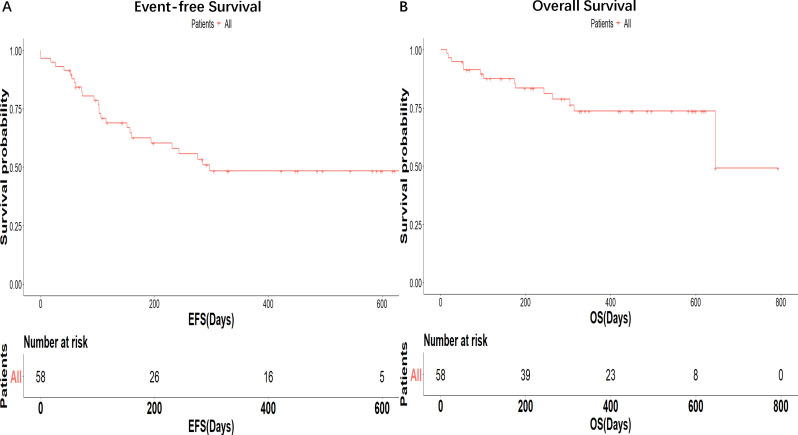
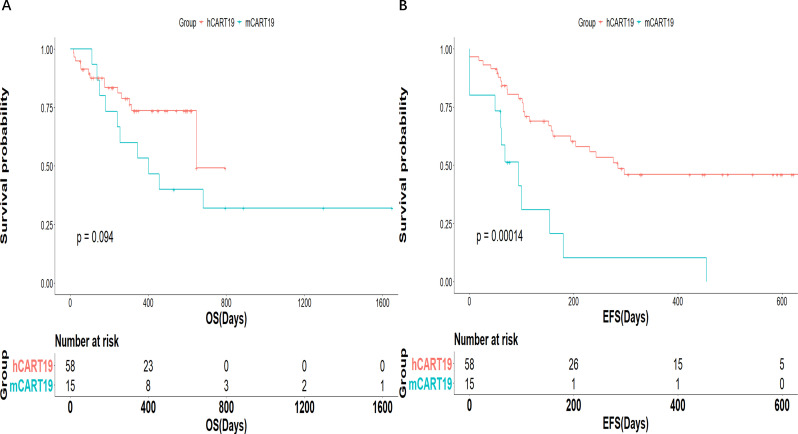
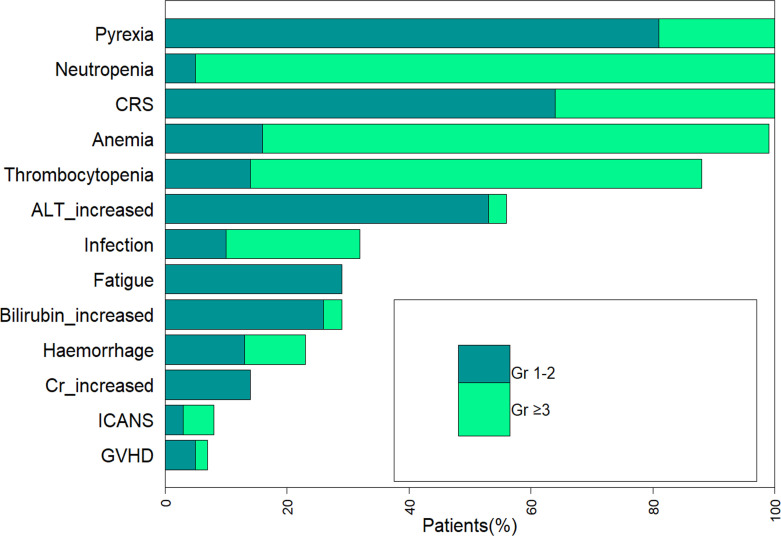
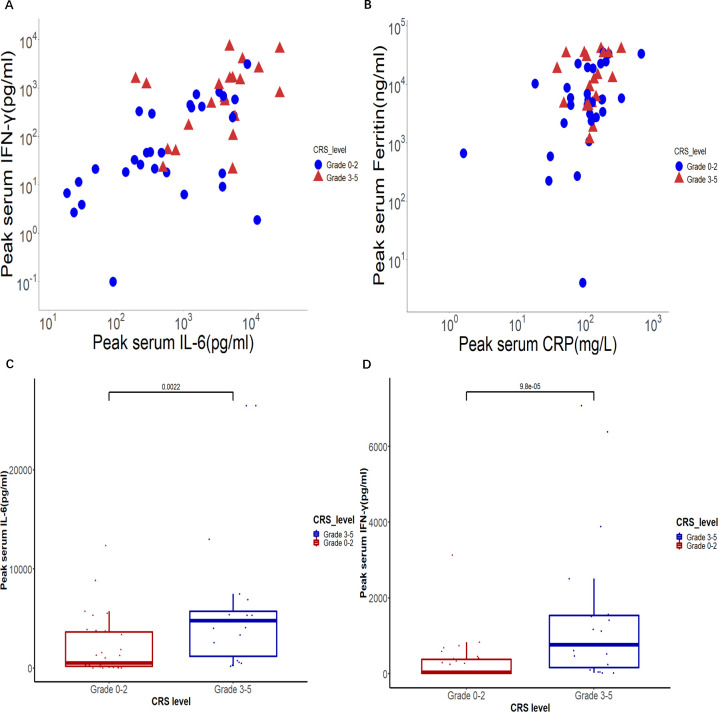
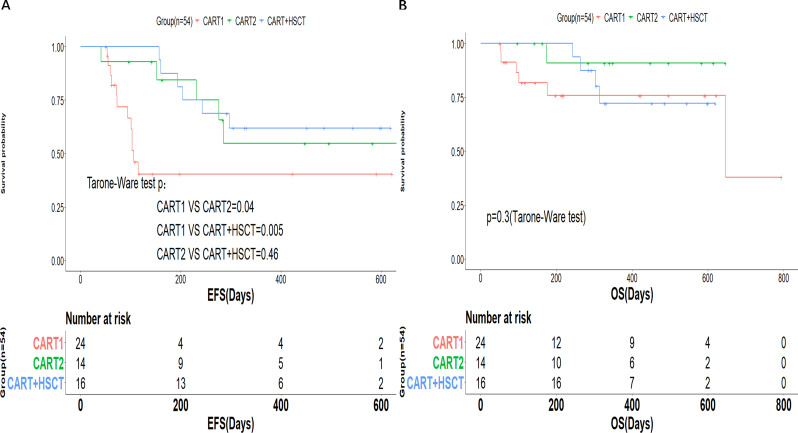
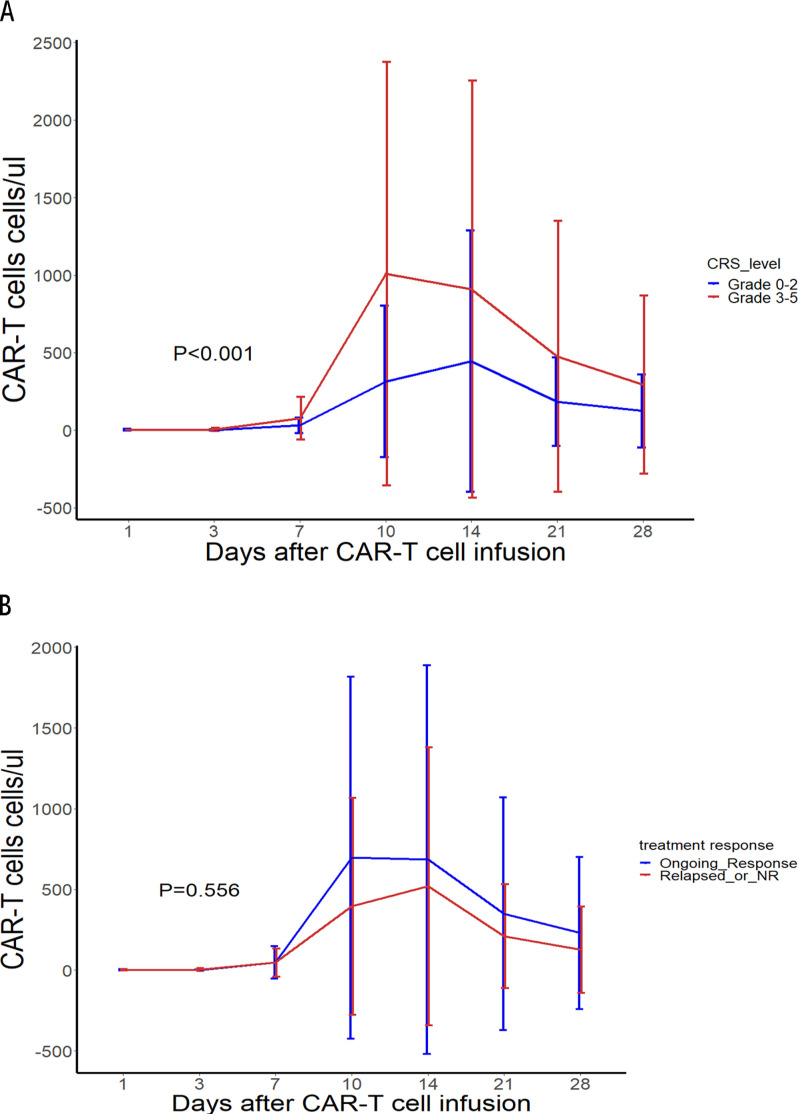
Overall, 93.1% (54/58) of patients achieved CR or CR with incomplete count recovery (CRi) by day 28, with 53 patients having minimal residual disease negativity. With a median follow-up of 13.5 months, the estimated 1-year OS and EFS were 73.6% (95% CI 62.1% to 87.4%) and 46.0% (95% CI 33.7% to 62.8%), with a median OS and EFS of 21.5 months and 9.5 months, respectively. No significant increase in human antimouse antibodies was observed following infusion (p=0.78). Duration of B-cell aplasia in the blood was observed for as long as 616 days, which was longer than that in our prior mCART19 trial. All toxicities were reversible, including severe cytokine release syndrome, which developed in 36% (21/58) of patients and severe neurotoxicity, which developed in 5% (3/58) of patients. Compared with our prior mCART19 trial, patients treated with hCART19 had longer EFS without increased toxicity. Additionally, our data also suggest that patients treated with consolidation therapy, including allogeneic hematopoietic stem cell transplantation or CD22-targeted CAR-T cell, following hCART19 therapy had a longer EFS than those without consolidation therapy.
hCART19 has good short-term efficacy and manageable toxicity in R/R B-ALL patients.
NCT04532268.
嵌合抗原受体 T(CAR-T)细胞疗法已在复发/难治性(R/R)B 细胞急性淋巴细胞白血病(B-ALL)患者中显示出临床获益。然而,鼠单链可变片段结构域的潜在免疫原性可能会限制 CAR-T 细胞的持久性,从而导致复发。
我们开展了一项临床试验,以评估自体和同种异体人源化 CD19 靶向 CAR-T 细胞(hCART19)治疗 R/R B-ALL 的安全性和有效性。该研究纳入了 2020 年 2 月至 2022 年 3 月间的 58 例年龄 13-74 岁的患者,并对其进行了治疗。主要终点为完全缓解(CR)率、总生存(OS)、无事件生存(EFS)和安全性。
28 天内,93.1%(54/58)的患者达到 CR 或不完全计数恢复的 CR(CRi),53 例患者的微小残留病灶呈阴性。中位随访 13.5 个月后,估计 1 年 OS 和 EFS 分别为 73.6%(95%CI 62.1%至 87.4%)和 46.0%(95%CI 33.7%至 62.8%),中位 OS 和 EFS 分别为 21.5 个月和 9.5 个月。输注后未观察到明显的人抗鼠抗体增加(p=0.78)。在血液中 B 细胞缺失持续时间最长可达 616 天,长于我们之前的 mCART19 试验。所有毒性均为可逆性,包括 36%(21/58)的患者出现严重细胞因子释放综合征和 5%(3/58)的患者出现严重神经毒性。与我们之前的 mCART19 试验相比,接受 hCART19 治疗的患者 EFS 更长,而毒性未增加。此外,我们的数据还表明,在接受 hCART19 治疗后接受巩固治疗(包括同种异体造血干细胞移植或 CD22 靶向 CAR-T 细胞)的患者 EFS 更长,而未接受巩固治疗的患者 EFS 更短。
hCART19 治疗 R/R B-ALL 患者具有良好的短期疗效和可管理的毒性。
NCT04532268。