Department of Biology, Stanford University, Stanford, California, United States of America.
Cary Institute of Ecosystem Studies, Millbrook, New York, United States of America.
PLoS Negl Trop Dis. 2023 Feb 21;17(2):e0010749. doi: 10.1371/journal.pntd.0010749. eCollection 2023 Feb.
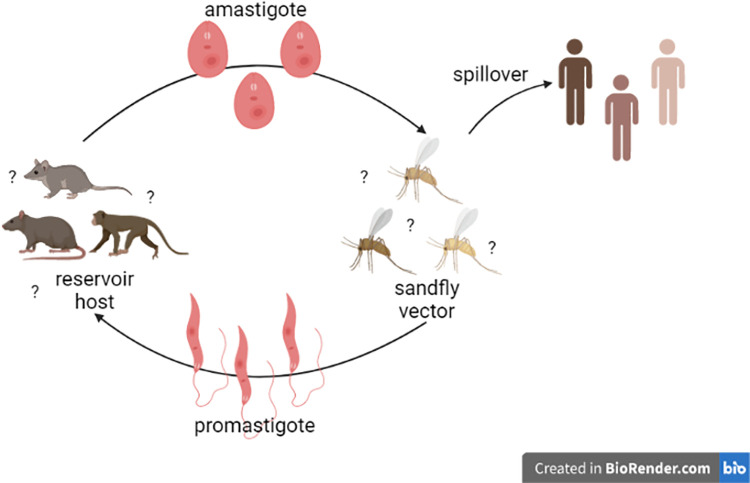
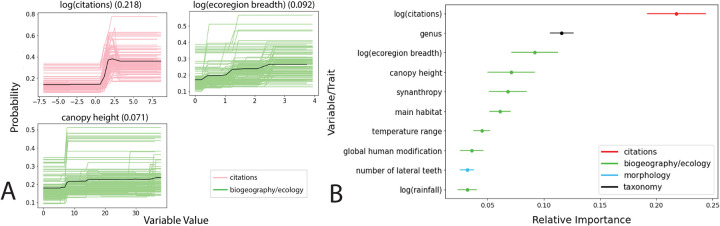
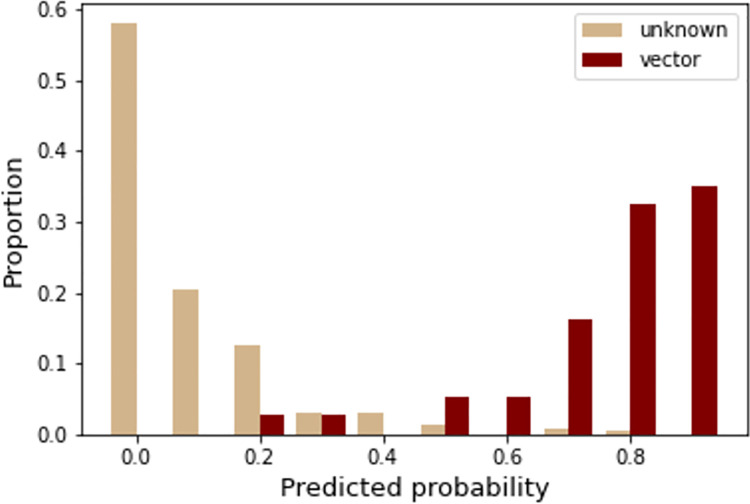
The incidence of vector-borne diseases is rising as deforestation, climate change, and globalization bring humans in contact with arthropods that can transmit pathogens. In particular, incidence of American Cutaneous Leishmaniasis (ACL), a disease caused by parasites transmitted by sandflies, is increasing as previously intact habitats are cleared for agriculture and urban areas, potentially bringing people into contact with vectors and reservoir hosts. Previous evidence has identified dozens of sandfly species that have been infected with and/or transmit Leishmania parasites. However, there is an incomplete understanding of which sandfly species transmit the parasite, complicating efforts to limit disease spread. Here, we apply machine learning models (boosted regression trees) to leverage biological and geographical traits of known sandfly vectors to predict potential vectors. Additionally, we generate trait profiles of confirmed vectors and identify important factors in transmission. Our model performed well with an average out of sample accuracy of 86%. The models predict that synanthropic sandflies living in areas with greater canopy height, less human modification, and within an optimal range of rainfall are more likely to be Leishmania vectors. We also observed that generalist sandflies that are able to inhabit many different ecoregions are more likely to transmit the parasites. Our results suggest that Psychodopygus amazonensis and Nyssomia antunesi are unidentified potential vectors, and should be the focus of sampling and research efforts. Overall, we found that our machine learning approach provides valuable information for Leishmania surveillance and management in an otherwise complex and data sparse system.
随着森林砍伐、气候变化和全球化使人类与能够传播病原体的节肢动物接触,虫媒病的发病率正在上升。特别是,由于以前完整的栖息地被开垦为农业和城市地区,导致由沙蝇传播的寄生虫引起的美洲皮肤利什曼病(ACL)的发病率正在上升,这可能使人们接触到媒介和储存宿主。以前的证据已经确定了几十种感染了利什曼原虫寄生虫和/或传播寄生虫的沙蝇物种。然而,对于哪些沙蝇物种传播寄生虫的了解并不完整,这使得限制疾病传播的工作变得复杂。在这里,我们应用机器学习模型(增强回归树)利用已知沙蝇媒介的生物学和地理特征来预测潜在媒介。此外,我们生成了已确认媒介的特征档案,并确定了传播中的重要因素。我们的模型表现良好,平均样本外准确率为 86%。这些模型预测,生活在树冠高度较大、人为干扰较少、降雨量在最佳范围内的嗜人沙蝇更有可能成为利什曼原虫的媒介。我们还观察到,能够栖息在许多不同生态区的多栖沙蝇更有可能传播寄生虫。我们的结果表明,Psychodopygus amazonensis 和 Nyssomia antunesi 是未被识别的潜在媒介,应成为采样和研究工作的重点。总的来说,我们发现我们的机器学习方法为在复杂且数据稀疏的系统中进行利什曼病监测和管理提供了有价值的信息。