Zeng Chuijie, Qin Tao, Tan Wei, Lin Chuan, Zhu Zhaoqiang, Yang Jing, Yuan Shangwei
Electrical Engineering College, Guizhou University, Guiyang 550025, China.
College of Forestry, Guizhou University, Guiyang 550025, China.
Biomimetics (Basel). 2023 Feb 6;8(1):70. doi: 10.3390/biomimetics8010070.
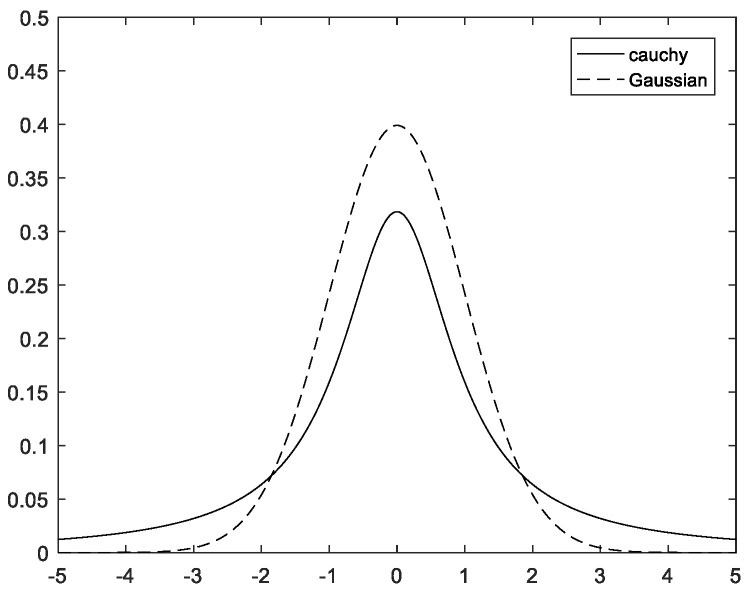
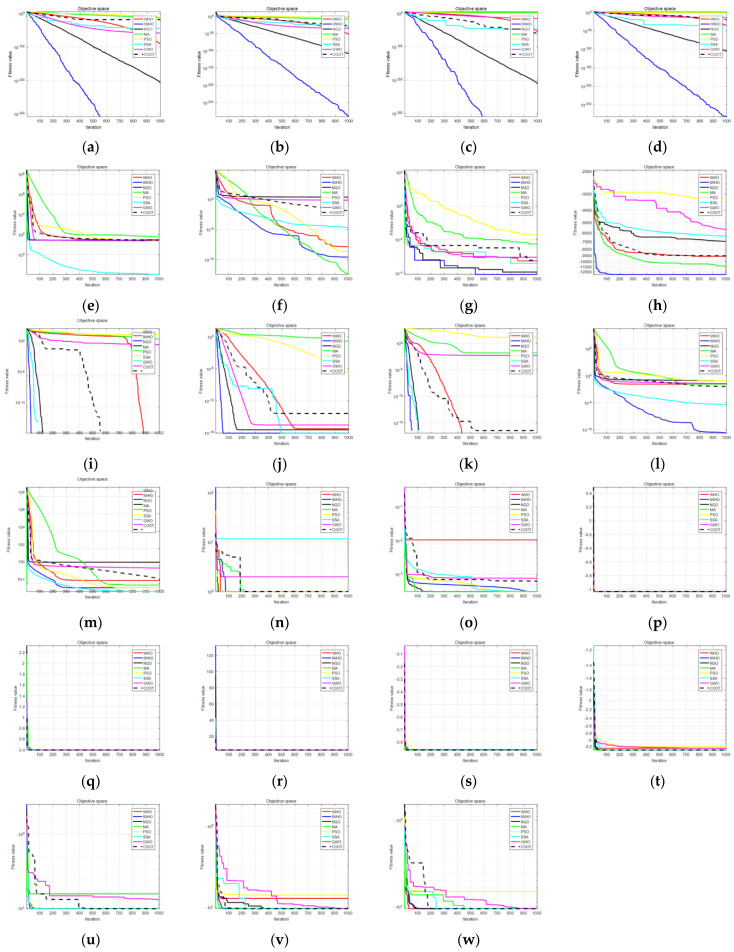
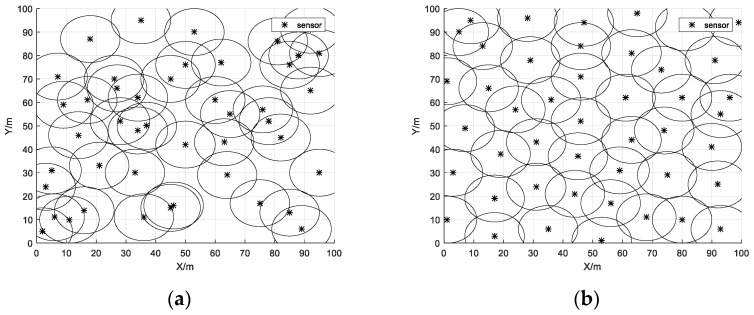
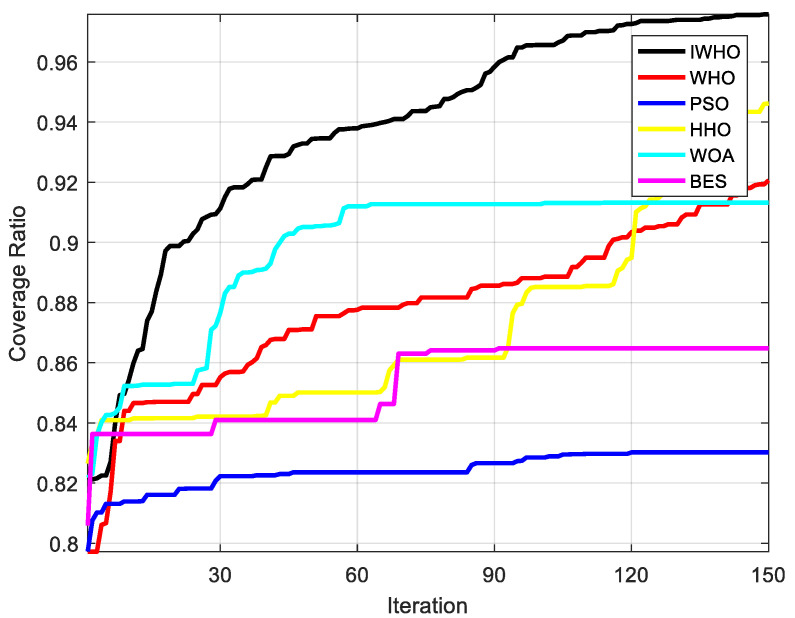
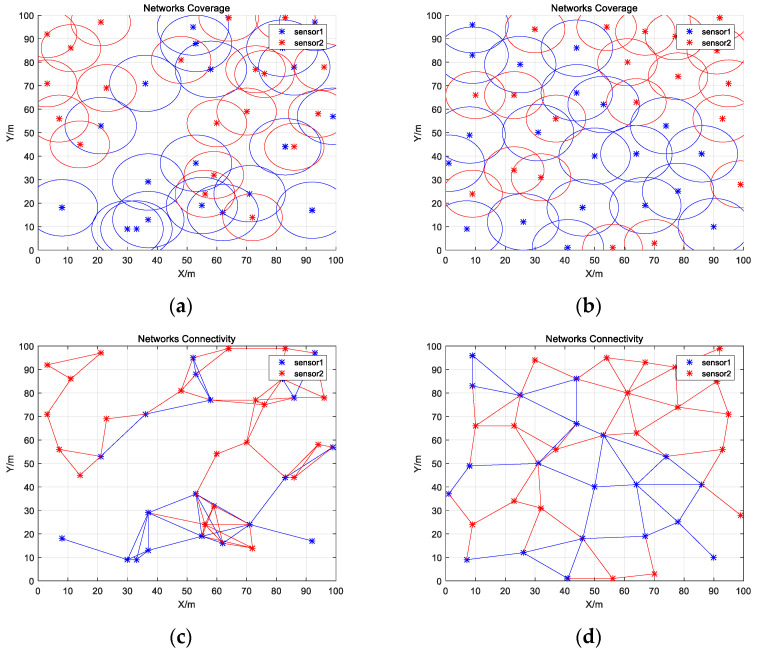
One of the most important challenges for heterogeneous wireless sensor networks (HWSNs) is adequate network coverage and connectivity. Aiming at this problem, this paper proposes an improved wild horse optimizer algorithm (IWHO). Firstly, the population's variety is increased by using the SPM chaotic mapping at initialization; secondly, the WHO and Golden Sine Algorithm (Golden-SA) are hybridized to improve the WHO's accuracy and arrive at faster convergence; Thirdly, the IWHO can escape from a local optimum and broaden the search space by using opposition-based learning and the Cauchy variation strategy. The results indicate that the IWHO has the best capacity for optimization by contrasting the simulation tests with seven algorithms on 23 test functions. Finally, three sets of coverage optimization experiments in different simulated environments are designed to test the effectiveness of this algorithm. The validation results demonstrate that the IWHO can achieve better and more effective sensor connectivity and coverage ratio compared to that of several algorithms. After optimization, the HWSN's coverage and connectivity ratio attained 98.51% and 20.04%, and after adding obstacles, 97.79% and 17.44%, respectively.
异构无线传感器网络(HWSN)面临的最重要挑战之一是实现足够的网络覆盖和连通性。针对这一问题,本文提出了一种改进的野马优化算法(IWHO)。首先,在初始化时使用SPM混沌映射增加种群多样性;其次,将野马优化算法(WHO)与黄金正弦算法(Golden-SA)进行杂交,以提高WHO的精度并实现更快的收敛;第三,IWHO可以通过基于反向学习和柯西变异策略摆脱局部最优并拓宽搜索空间。结果表明,通过在23个测试函数上与七种算法进行对比模拟测试,IWHO具有最佳的优化能力。最后,设计了三组在不同模拟环境下的覆盖优化实验来测试该算法的有效性。验证结果表明,与几种算法相比,IWHO能够实现更好、更有效的传感器连通性和覆盖率。优化后,HWSN的覆盖率和连通率分别达到98.51%和20.04%,添加障碍物后分别为97.79%和17.44%。