Department of Cell and Developmental Biology, Feinberg School of Medicine, Northwestern University, Chicago, IL 60611, USA.
Department of Cell and Developmental Biology, Feinberg School of Medicine, Northwestern University, Chicago, IL 60611, USA.
Cell Metab. 2023 Apr 4;35(4):620-632.e5. doi: 10.1016/j.cmet.2023.01.011. Epub 2023 Feb 21.
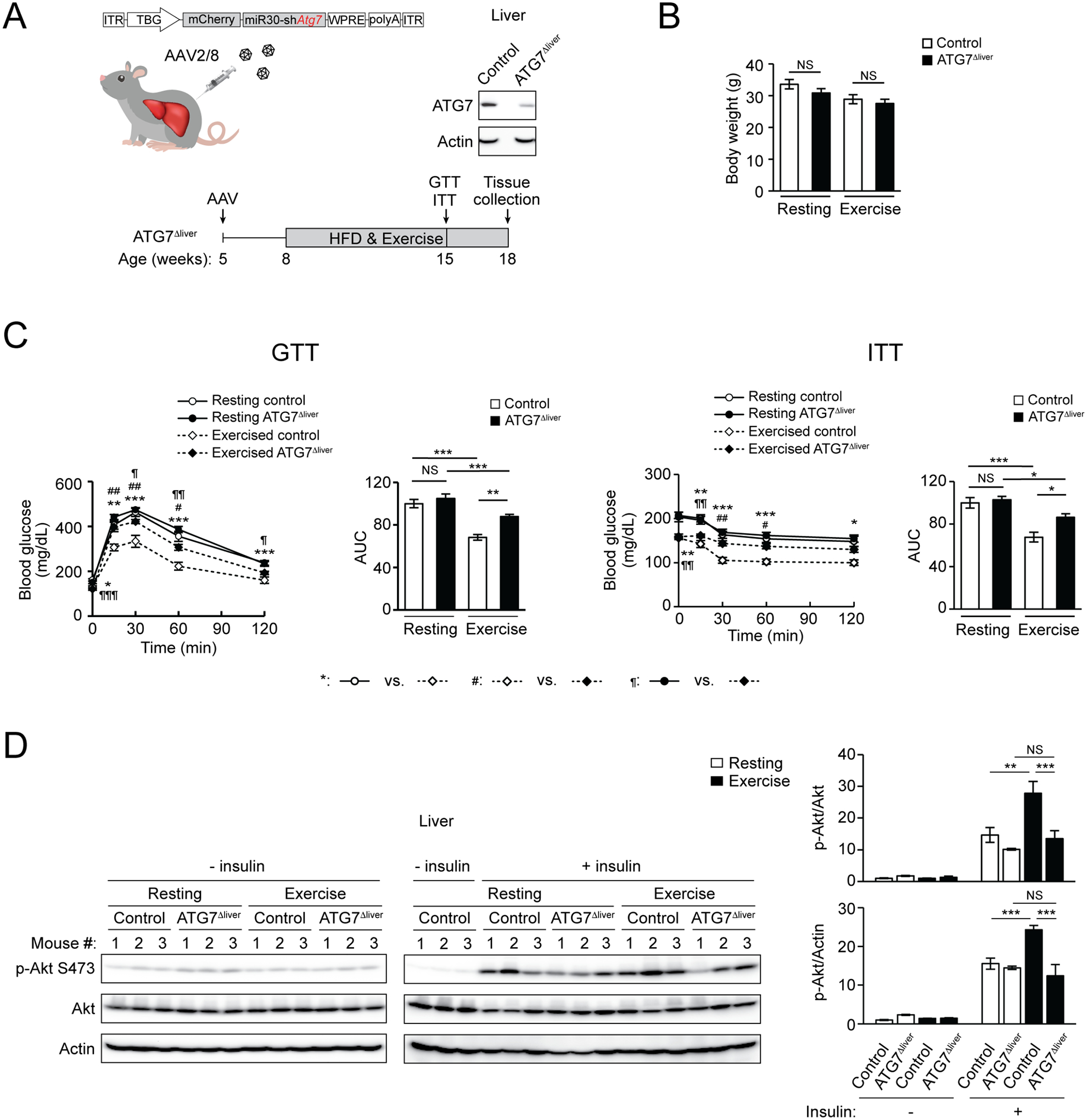
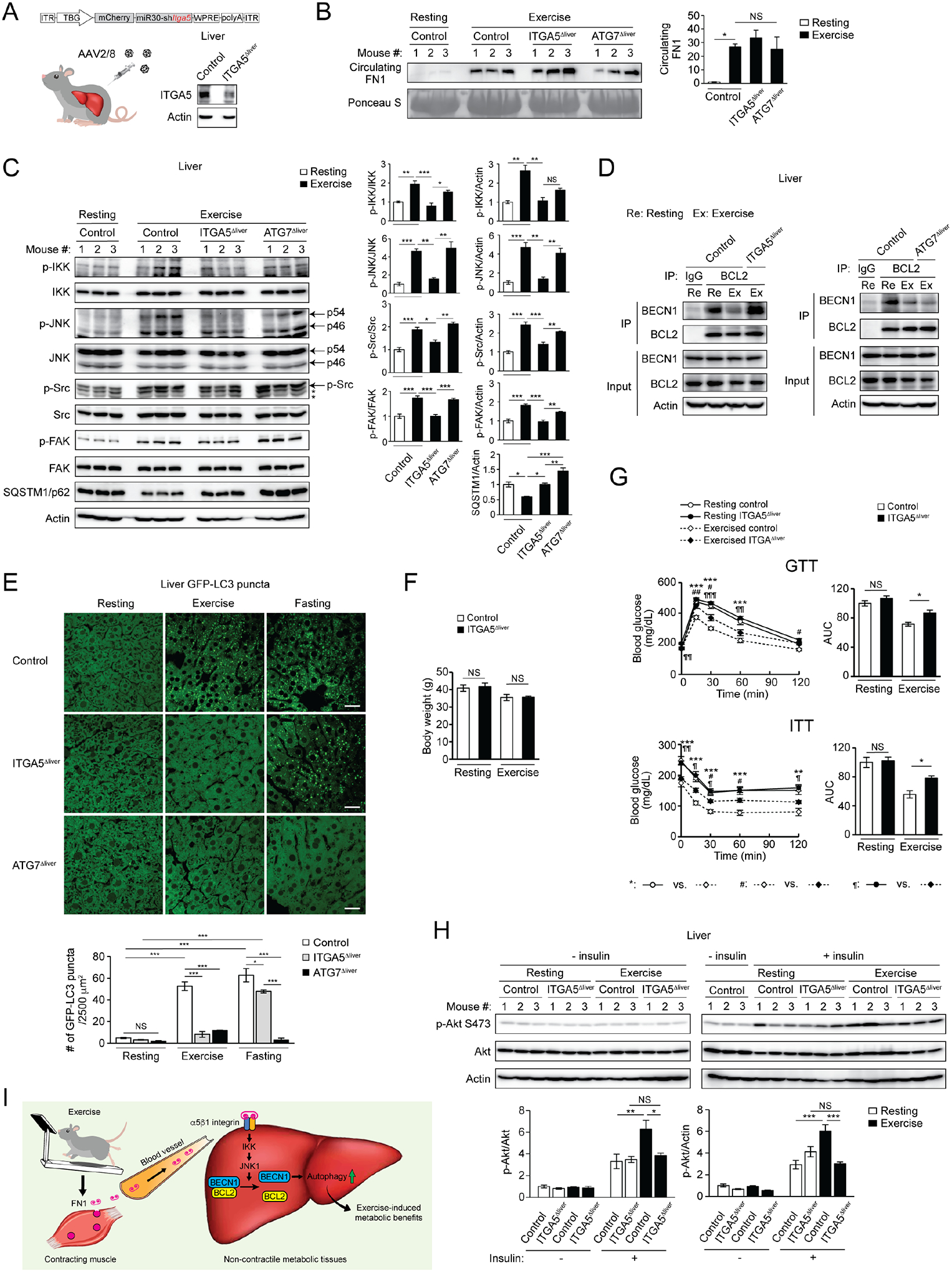
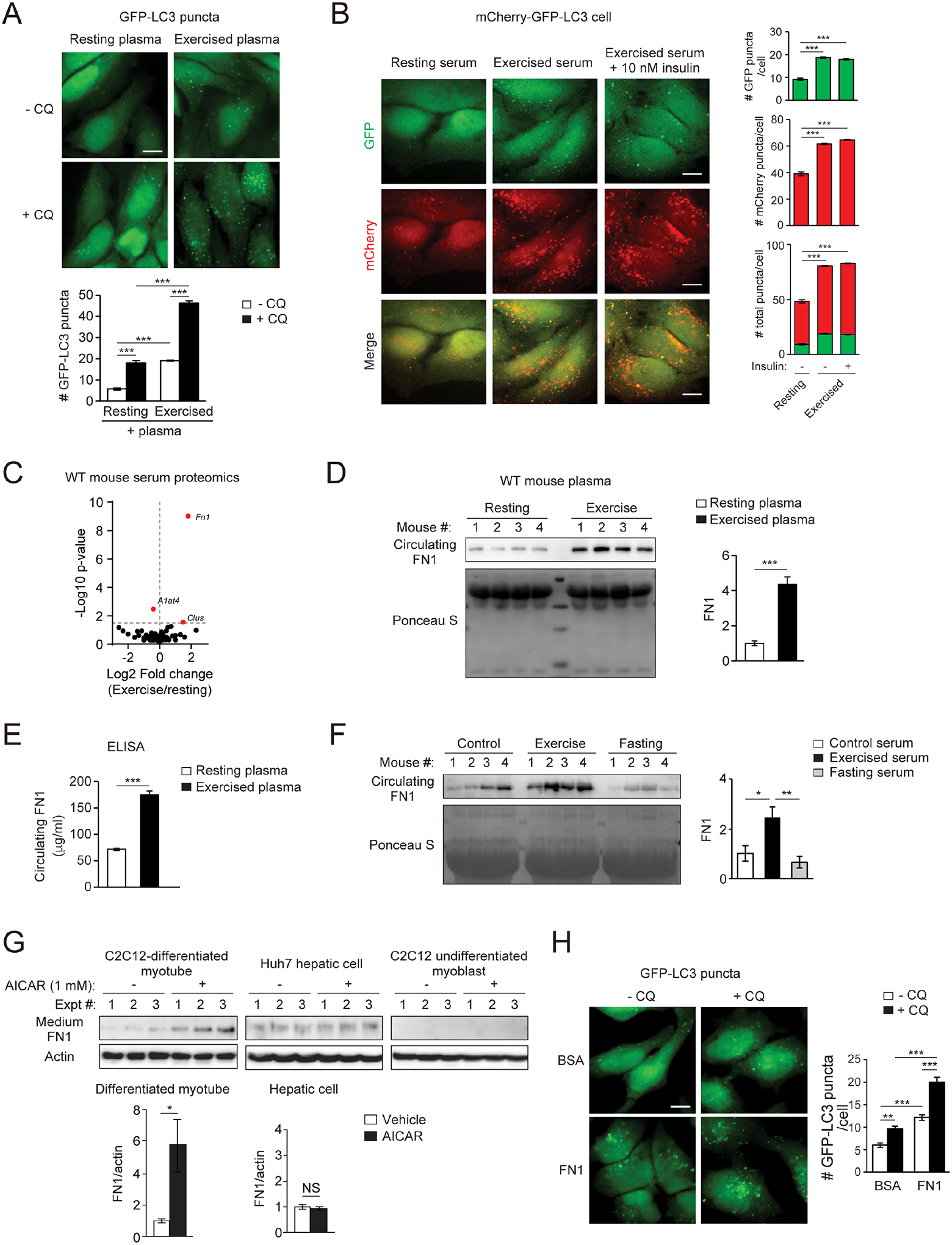
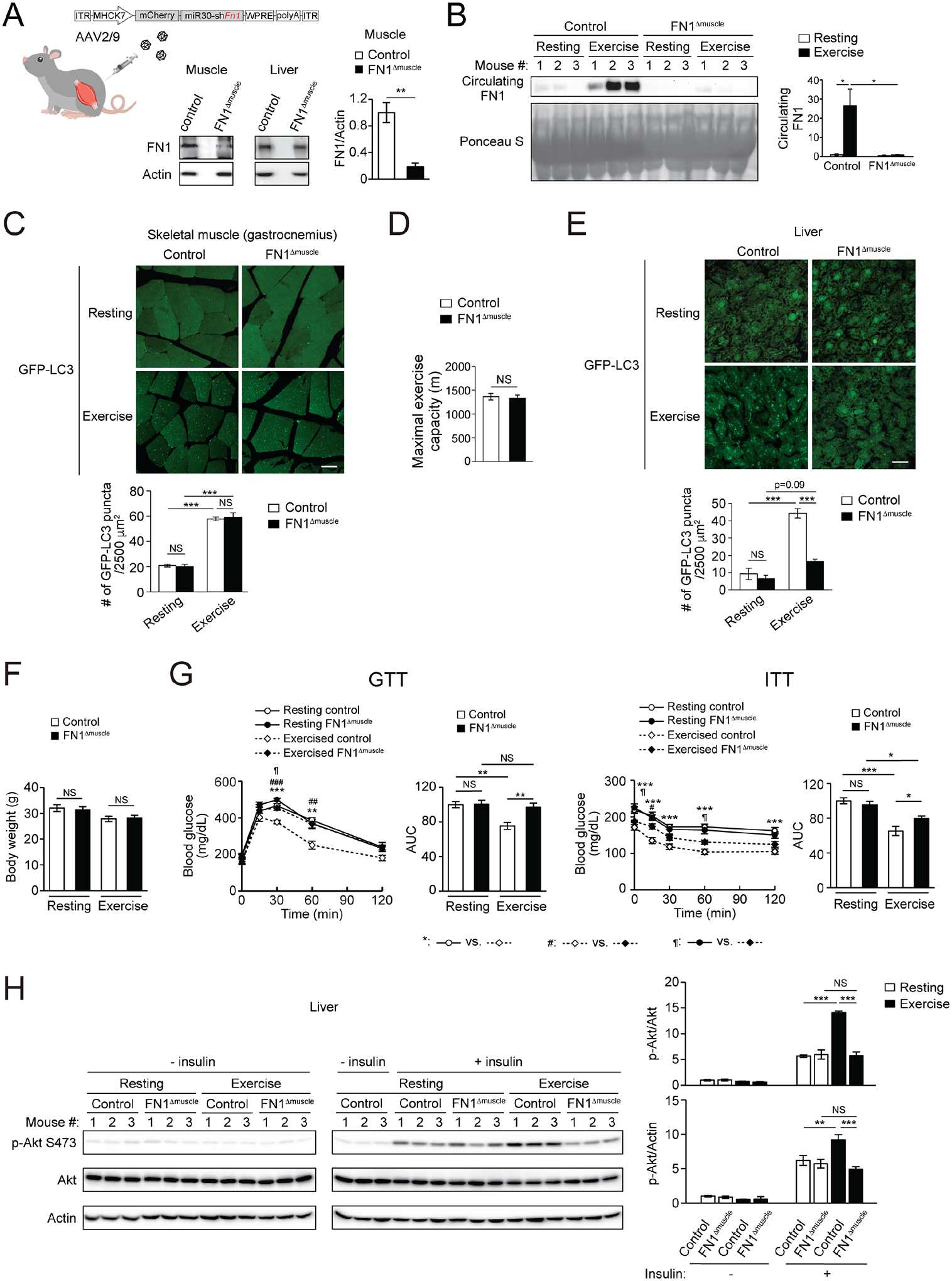
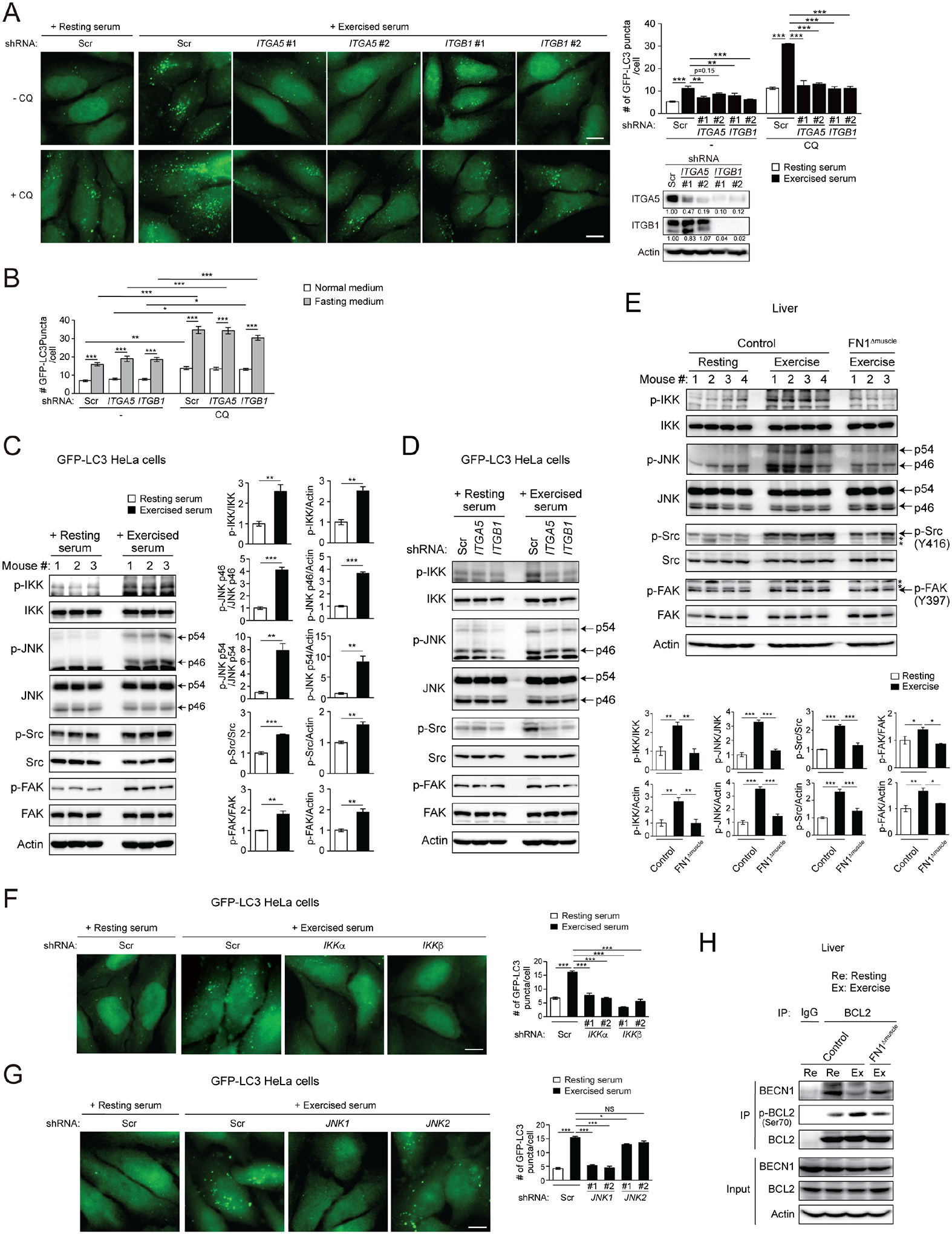
How exercise elicits systemic metabolic benefits in both muscles and non-contractile tissues is unclear. Autophagy is a stress-induced lysosomal degradation pathway that mediates protein and organelle turnover and metabolic adaptation. Exercise activates autophagy in not only contracting muscles but also non-contractile tissues including the liver. However, the role and mechanism of exercise-activated autophagy in non-contractile tissues remain mysterious. Here, we show that hepatic autophagy activation is essential for exercise-induced metabolic benefits. Plasma or serum from exercised mice is sufficient to activate autophagy in cells. By proteomic studies, we identify fibronectin (FN1), which was previously considered as an extracellular matrix protein, as an exercise-induced, muscle-secreted, autophagy-inducing circulating factor. Muscle-secreted FN1 mediates exercise-induced hepatic autophagy and systemic insulin sensitization via the hepatic receptor α5β1 integrin and the downstream IKKα/β-JNK1-BECN1 pathway. Thus, we demonstrate that hepatic autophagy activation drives exercise-induced metabolic benefits against diabetes via muscle-secreted soluble FN1 and hepatic α5β1 integrin signaling.
运动如何在肌肉和非收缩组织中引起全身性代谢益处尚不清楚。自噬是一种应激诱导的溶酶体降解途径,介导蛋白质和细胞器的周转和代谢适应。运动不仅能激活收缩肌肉中的自噬,还能激活包括肝脏在内的非收缩组织中的自噬。然而,运动激活的自噬在非收缩组织中的作用和机制仍然神秘。在这里,我们表明肝自噬的激活对于运动引起的代谢益处是必不可少的。来自运动小鼠的血浆或血清足以激活细胞中的自噬。通过蛋白质组学研究,我们确定了纤连蛋白(FN1),它以前被认为是细胞外基质蛋白,是一种运动诱导的、肌肉分泌的、诱导自噬的循环因子。肌肉分泌的 FN1 通过肝受体α5β1 整联蛋白和下游 IKKα/β-JNK1-BECN1 途径介导运动诱导的肝自噬和全身胰岛素敏感性。因此,我们证明了肝自噬的激活通过肌肉分泌的可溶性 FN1 和肝 α5β1 整联蛋白信号驱动运动引起的代谢益处,以对抗糖尿病。